English
 Español
 عربى
عربى 中文简体
中文简体Content
- 1 Dry Ice Needs an Insulated Container, Not a Cold Appliance
- 2 Why the Wrong Storage Spot Is Dangerous
- 3 Where You Can Store Dry Ice Safely
- 4 Never Store Dry Ice in These Places
- 5 How to Pick the Best Dry Ice Storage Container
- 6 Practical Tips to Make Dry Ice Last Longer
- 7 Safety Rules That Are Not Optional
- 8 Match the Container to the Storage Time You Need
Dry Ice Needs an Insulated Container, Not a Cold Appliance
If you have ever bought dry ice for a party fog effect, to freeze an ice cream base, or to keep frozen seafood cold during a long drive, the first question is always the same: where should I put this until I am ready to use it? The answer is simple: put the dry ice into an insulated container, keep the lid loose, and leave the container in a well-ventilated room. Do not put it in the refrigerator. Do not put it in the freezer. Do not put it in a sealed glass jar or airtight lunch box. Those locations create temperature control problems, pressure hazards, and carbon dioxide buildup.
Dry ice is solid carbon dioxide at approximately −78.5 °C. It never melts into a liquid. Instead, the heat in the room makes the block turn directly into gas, a process called sublimation. Your storage goal is to slow that sublimation down with insulation while giving the gas a safe path to escape.
Why the Wrong Storage Spot Is Dangerous
Dry ice storage failures usually come from three assumptions that are easy to accept but unsafe.
- “Colder is better” is not true for dry ice. A freezer is designed to stay near −18 °C, so dry ice at −78.5 °C confuses the thermostat and can cause the compressor to run constantly or shut down. The extreme cold can also crack plastic shelves and rubber seals.
- “Sealed is safer” can be dangerous. As dry ice sublimates, one kilogram creates roughly half a cubic meter of carbon dioxide gas. Inside a sealed container, the pressure rises until something breaks. Plastic containers can crack violently, and glass jars can shatter.
- “Any cold spot works” ignores ventilation. Carbon dioxide is heavier than air. In a small unventilated room or the trunk of a car, the gas can pool near the floor and reduce the oxygen level enough to cause headache, dizziness, or loss of consciousness.
These risks explain why the reliable storage point is not a room, a shelf, or a fridge, but a single insulated container with some ventilation.
Where You Can Store Dry Ice Safely
The best storage location depends on the volume of dry ice and the time you need to hold it.
Home Use and Short Trips
For a few hours or overnight, an expanded polystyrene (EPS) foam chest is the most common choice. The thick foam cells create dead air space around the block, slowing sublimation. Keep the lid on top but do not press it down until it clicks or snaps. If the foam box has no built-in vent, leave a small gap at one corner or keep the lid taped only along the back edge so the front can lift slightly.
Commercial and Long-Duration Use
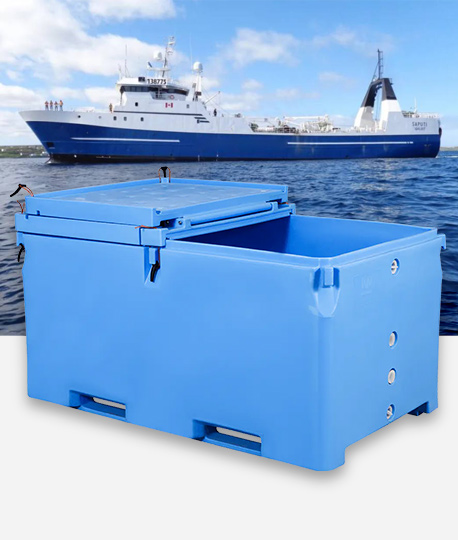
Businesses that freeze seafood, meat, vaccines, or laboratory samples often need several hours to several days of stable cold temperature. A rotomolded container with polyurethane foam locked between the walls carries less heat into the block than an EPS box and handles rough handling better. For pallet-scale staging, insulated bulk storage containers give you the space to hold dry ice-packed product before loading. Seafood processors and fishing docks can also use an insulated ice cooler as a temporary holding unit; a 200-liter insulated ice cooler for seafood storage and transportation is large enough for several seafood boxes and is easy to move with a pallet jack or forklift.
-2.png) Custom X-200L Ice Cooler Box For Seafood Storage And Transportation Suppliers, ONingbo Wanma Plastics Co., Ltd is China custom X-200L Ice Cooler Box For Seafood Storage And Transportation suppliers and OEM/ODM factory...View Product →
Custom X-200L Ice Cooler Box For Seafood Storage And Transportation Suppliers, ONingbo Wanma Plastics Co., Ltd is China custom X-200L Ice Cooler Box For Seafood Storage And Transportation suppliers and OEM/ODM factory...View Product →
Purpose-Built Dry Ice Chests
If you need dry ice for days or even weeks, use a purpose-built dry ice chest. These units are usually made with very thick panels and a pressure-relief vent that keeps the interior cold without building up gas pressure. They are standard equipment in hospitals, diagnostics labs, and industrial food processors, but they are also more expensive than a standard cooler.
Never Store Dry Ice in These Places
- Inside a refrigerator or freezer. Temperature controls fail, interior parts crack, and the carbon dioxide can ruin other foods.
- In an airtight cooler or a sealed glass jar. Pressure buildup can rupture the container.
- In a vehicle cabin or trunk. Carbon dioxide can accumulate quickly, and the cold surface can damage upholstery.
- In a small room without fresh airflow. Carbon dioxide settles in low areas and can replace oxygen.
- Directly on tile, wood, or metal. Dry ice can crack floor tiles, leave burns on wood, and cause condensation that rusts metal.
How to Pick the Best Dry Ice Storage Container
Four characteristics matter in a dry ice container: insulation quality, lid design, capacity, and durability. The table below gives a practical comparison.
| Container type | Best use case | Typical hold time | Important notes |
|---|---|---|---|
| EPS foam chest | Home use, short trips, small blocks | 3–6 hours | Keep the lid loose; tape only the back edge so a small gap stays open. |
| Rotomolded polyurethane-filled cooler | Camping, fishing, transport, longer DIY storage | 12–24 hours or more | Choose a model without an airtight rubber gasket or leave the lid slightly ajar. |
| Industrial insulated bulk container | Warehouse staging, cold-chain packing, processing lines | 24–72 hours with a large block | Check capacity and stacking strength; never lock the lid shut. |
| Purpose-built dry ice chest | Medical, laboratory, long-term holding | Several days to weeks | Requires pressure-relief venting and thick high-density insulation. |
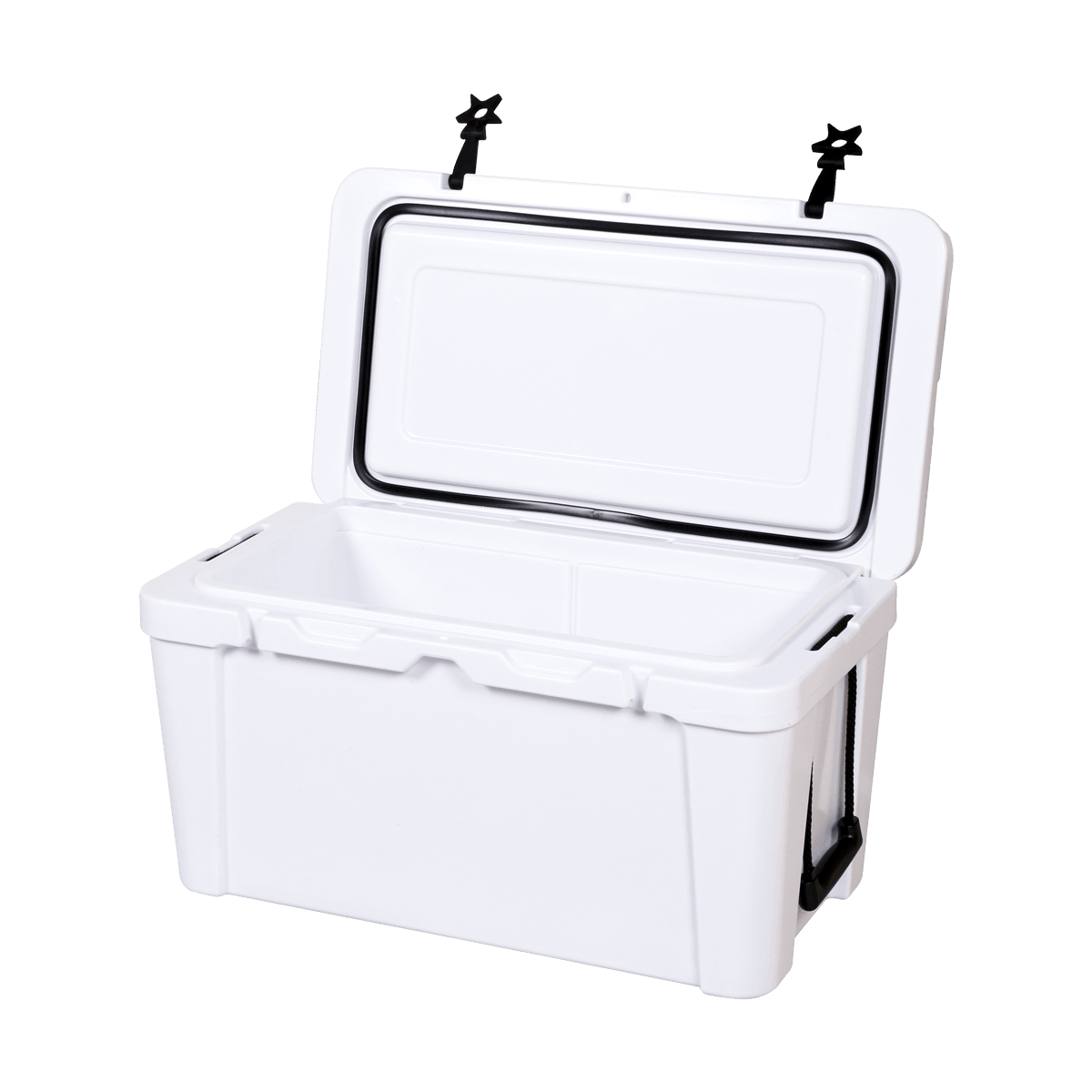
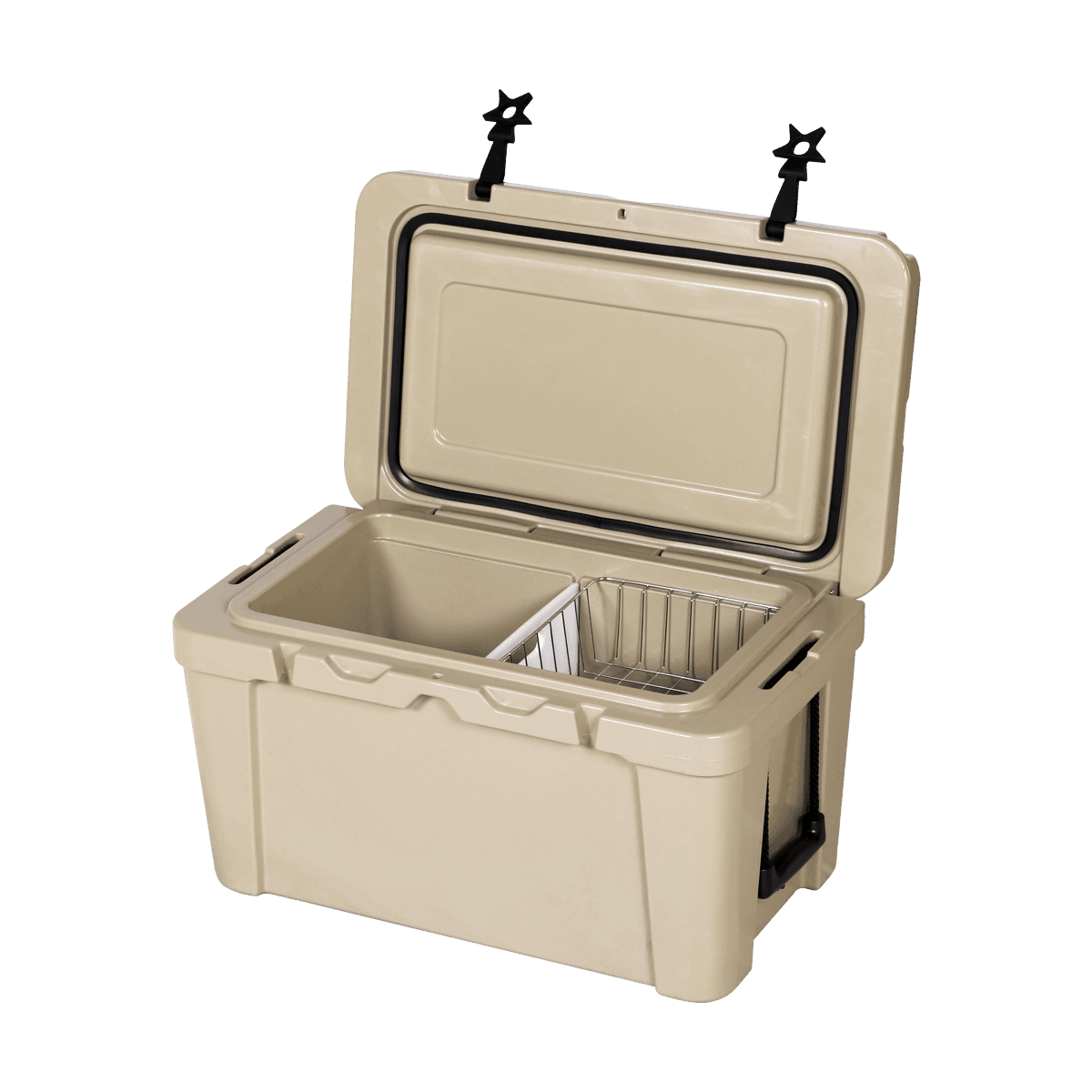
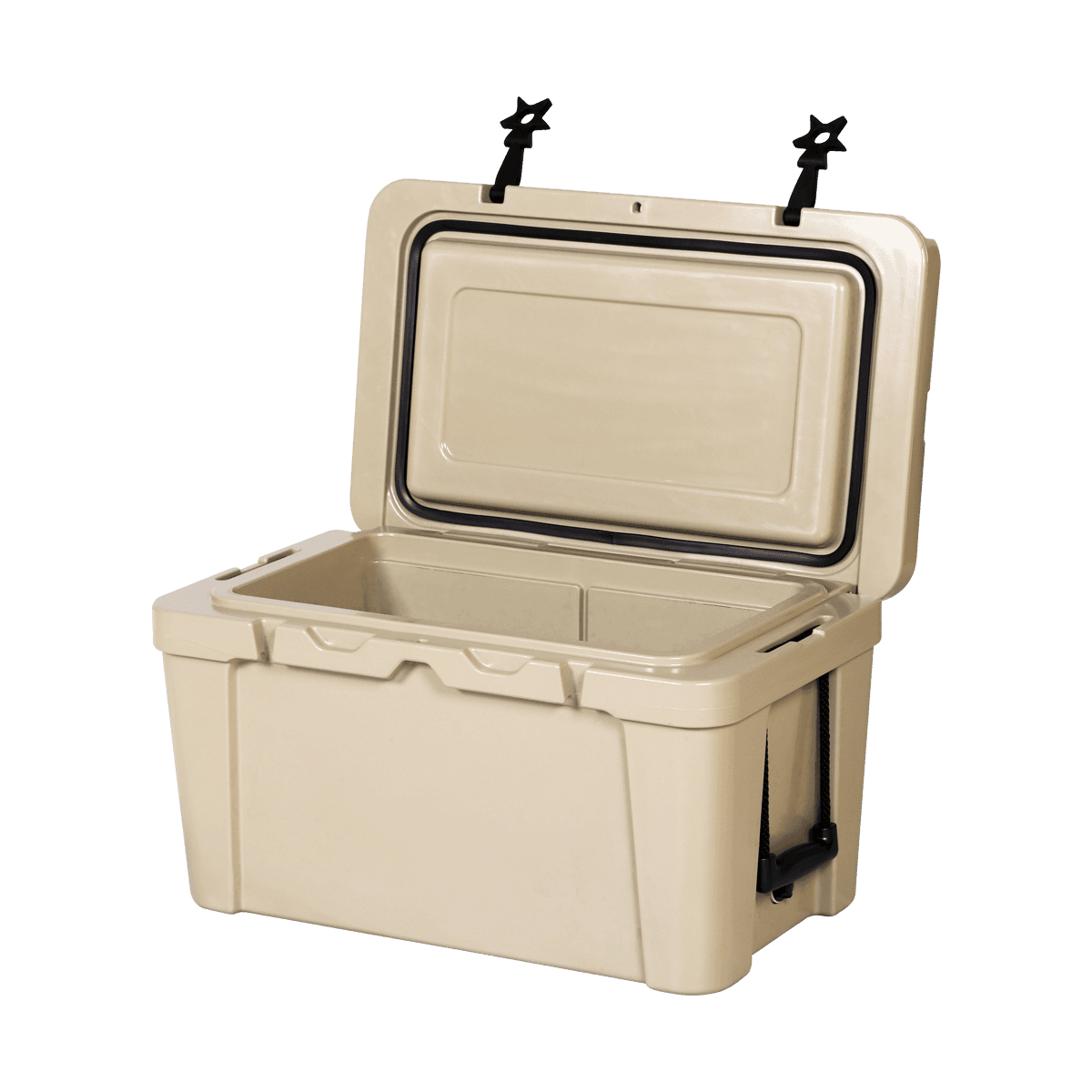
For outdoor use or a home kitchen, the K65L outdoor leisure use insulated cooler ice box gives thick walls and a tight but not hermetic lid. It works well for carrying a few kilograms of dry ice alongside food in a ventilated trunk or trailer. Just remember to leave a finger-width gap at the lid latch.
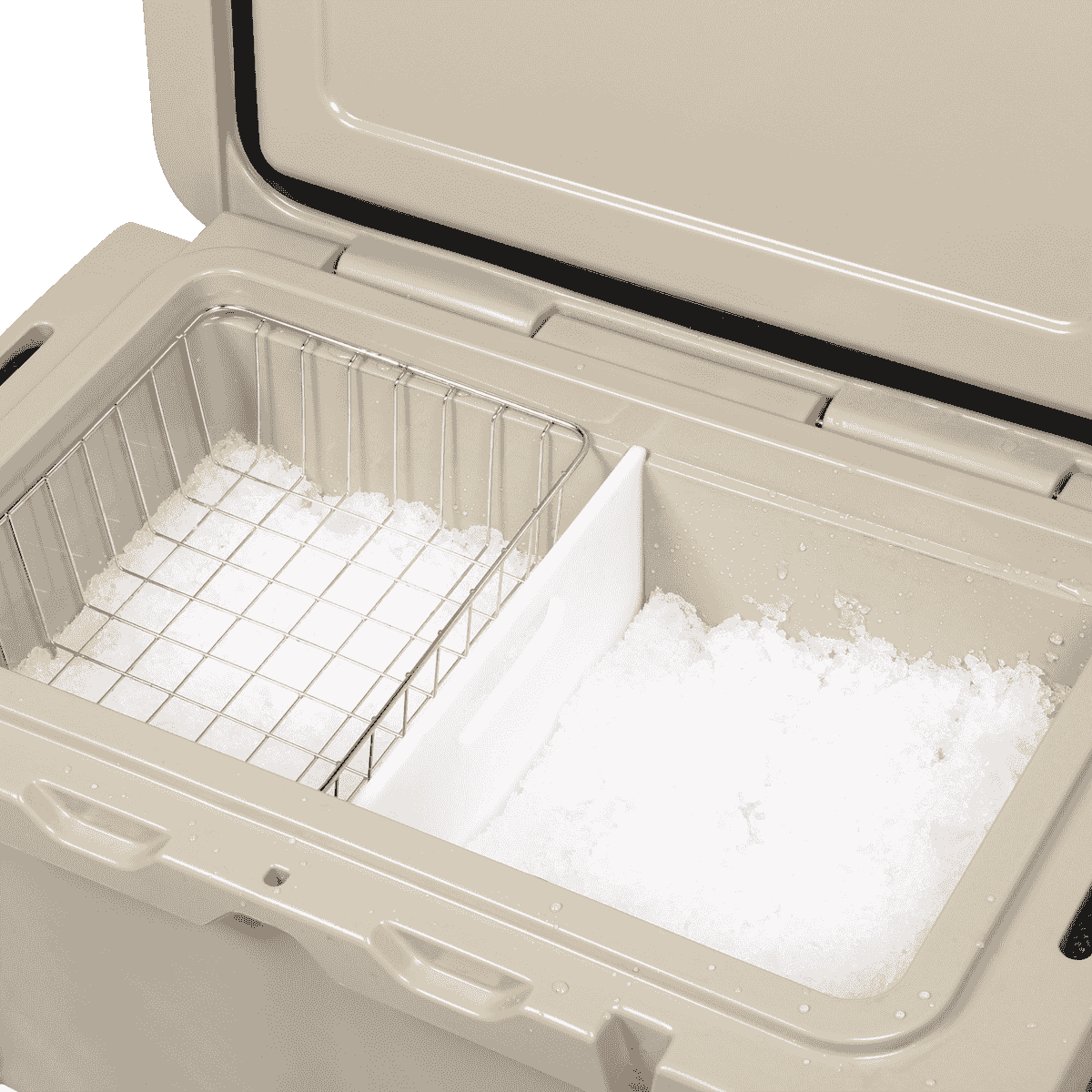 Custom K-65L Outdoor Leisure Use Insulated Cooler Ice Box Suppliers, OEM/ODM FNingbo Wanma Plastics Co., Ltd is China custom K-65L Outdoor Leisure Use Insulated Cooler Ice Box suppliers and OEM/ODM factory, Suitab...View Product →
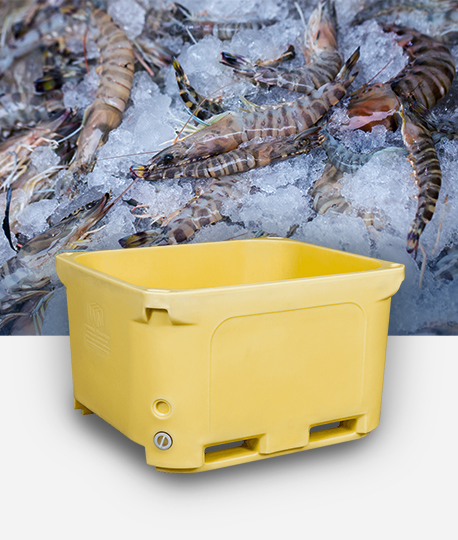
For warehouse and production areas, a 1700-liter insulated bulk container for cold-chain transportation and production is a practical staging bin. It can hold dry ice-packed meat, seafood, or frozen product before cold-chain loading while standing up to pallet handling, cleaning, and stacking.
-1-1.png) Custom AF-1700L Insulated Bulk Container For Cold-chain Transportation And ProduNingbo Wanma Plastics Co., Ltd is China custom AF-1700L Insulated Bulk Container For Cold-chain Transportation And Production suppliers a...View Product →
Custom AF-1700L Insulated Bulk Container For Cold-chain Transportation And ProduNingbo Wanma Plastics Co., Ltd is China custom AF-1700L Insulated Bulk Container For Cold-chain Transportation And Production suppliers a...View Product →Practical Tips to Make Dry Ice Last Longer
- Buy the largest block your schedule allows. A single 5 kg block has less exposed surface area than five 1 kg blocks, so sublimation is slower.
- Fill dead air space. Pack crumpled paper or cardboard in the empty parts of the cooler. Less air means less warm air to exchange when the lid is opened.
- Keep the container off the floor. Concrete floors conduct heat away from the cooler base. Place the cooler on a wooden pallet or a styrofoam sheet.
- Limit how often you open the lid. Every opening lets the cold escape and brings in room-temperature air.
- Put the dry ice beside or above the food, not directly underneath it. Separate dry ice from food with a piece of cardboard so frozen goods do not freeze onto the block and the gas can circulate without contact.
Safety Rules That Are Not Optional
- Use insulated gloves, not cotton or cloth gloves, when handling dry ice. A cold burn can appear within seconds.
- Store dry ice only in spaces with moving air. Open a window or run a fan when storing more than 2–3 kg in a room.
- Never dispose of dry ice in a sink, toilet, or trash compactor. The temperature shock can crack porcelain, and trapped gas can damage fixtures.
- Keep dry ice out of the reach of children and pets.
- If anyone feels dizzy, nauseated, or short of breath near the storage area, move to fresh air immediately and ventilate the space.
Finally, check the condition of the dry ice long before you need it. If a shipment depends on dry ice, weigh the block when you receive it, then check every few hours to confirm the sublimation rate matches your plan.
Match the Container to the Storage Time You Need
There is no reason to complicate dry ice storage. The formula is simple: a well-insulated container, a small vent opening, a cool and ventilated room, and a solid block. For short home use, an EPS foam chest is enough. For commercial and industrial use, choose a rotomolded container with polyurethane insulation that can survive repeated handling.
When you evaluate products, look for insulated containers with lids that do not lock into an airtight seal and allow a small gap to remain. If your work centers on cold-chain logistics, the industrial ice storage containers section offers a good overview of capacity options. Test the container with a small amount of dry ice first, monitor the mass loss, and adjust your storage procedure based on real data rather than guesswork.

-4.png "X-120L Insulated Fish Bin Ice Cooler Box")
-4.png "X-70L Insulated Fishing Ice Cooler Box")
-2.png "X-68L Ice Cooler Box To Keep Food Cold And Fresh")

-2.png "X-120L Live Seafood Transportation Tanks")
-2.png "X-70L Live Seafood Transportation Tanks")