English
 Español
 عربى
عربى 中文简体
中文简体Content
- 1 What Makes an Insulated Box for Food Different?
- 2 How Insulation Actually Works in a Rotomolded Box
- 3 Matching the Box to the Food You Handle
- 4 Seafood, Meat and Cold-Chain Workflows
- 5 Outdoor, Retail and Small-Batch Food Use
- 6 Sizes, Lids, Wheels and the Details That Decide Longevity
- 7 Food-Grade Materials, Cleaning and Everyday Hygiene
- 8 Frequently Asked Questions
- 8.1 How long can an insulated box keep food cold?
- 8.2 Is thicker always better?
- 8.3 Are insulated plastic containers food safe?
- 8.4 Can the same box be used for fish and for meat?
- 8.5 How do I choose between a lid and a gasket?
- 8.6 Should I buy wheels on every container?
- 8.7 How many years should a container last?
- 8.8 Can containers be customized for our process?
There is a moment in almost every food business when everything depends on a single box. The catch is landed, the pork is cut, the ice cream is loaded, the delivery van is already waiting, and someone asks the only question that really matters: will it still be cold when it arrives? That question is exactly why insulated boxes for food have become a serious piece of operational equipment rather than an afterthought picked up at the last minute.
We have spent years rotomolding insulated containers in Ningbo, and we still learn something from every conversation we have. A seafood processor in Norway worries about ice melt between the boat and the auction floor. A meat plant in Spain worries about wheeled carts that survive washing with hot water every single day. A fishing crew in Alaska wants a box that does not crack when it is dropped onto a wet deck at four in the morning. A bakery chain testing home delivery worries about whether a cake arrives level and cool after ninety minutes in traffic.
Their problems look different on the surface, but the requirements underneath are remarkably similar: food-safe contact surfaces, predictable temperature, containers that survive real handling, and a cost per year that makes sense when you are buying hundreds of them. This guide is our attempt to put that accumulated experience on paper, so that the next container you buy is the one you actually needed.
The short version, if you are in a hurry:
- Insulation only works as a system: wall thickness, foam core, lid seal and clean surfaces all matter.
- Match the container to the food's holding temperature, not to the shelf space you happen to have.
- A seamless rotomolded body lasts longer in wet, salty, rough environments than a joined one.
- Size, wheels, lids and stacking decide whether a box is used daily or abandoned in a corner.
What Makes an Insulated Box for Food Different?
An insulated box for food is not simply a plastic tub with thick walls. It is a container designed around three jobs at the same time: holding a temperature, staying hygienic, and surviving the way real people treat it. A box that does two of those well and fails the third almost always ends up as clutter.
When we talk with buyers and production managers, six requirements come up again and again. If a container misses any of them, the price usually stops mattering very quickly.
Food-safe contact surface
Every surface that touches the food has to be made from a material suitable for food contact, with no recycled filler hiding inside and no porous liner that traps odours from last week's shrimp.
A real insulated wall
Double-wall construction with a filled core slows the movement of heat. A single skin with a thin air gap only delays warming slightly and rarely holds up over a long working day.
A lid that closes properly
Most heat loss happens at the top. A recessed lid, a tight fit and a gasket where needed do more for performance than simply adding more plastic to the walls.
Cleaning without drama
Rounded internal corners, smooth surfaces, drain plugs and stackable shapes all shorten the time your team spends cleaning between shifts.
Load and stacking strength
A loaded container can weigh well over two hundred kilograms. Walls, rims and bases have to carry that weight day after day without bowing out of shape.
Handling that fits the job
Handles, casters, forklift access and pallet footprints are not accessories. They decide whether the box moves smoothly through your process or slows it down.
Notice that only one of these six points is really about insulation performance in the laboratory sense. In daily operation, hygiene, handling and durability carry just as much weight, because a container that gets rejected by a hygiene inspection or breaks a corner in its second month has failed the job no matter how good its thermal numbers looked on paper.
How Insulation Actually Works in a Rotomolded Box
Insulation is not mysterious technology. It is a disciplined fight against the three ways heat moves: conduction, convection and radiation. A well-made insulated box for food addresses all three. A cheap one usually addresses only the first and hopes nobody notices.
Here is the practical consequence of all this. Two containers can look identical in a catalogue photograph and behave completely differently in your cold room. One might be a genuine double-wall insulated box with a filled core and a sealing lid, the other a single-skin bin with a decorative rim. Ask for a wall cross-section, ask how the lid seals, and ask what happens to the insulation if the outer shell is scratched. The answers tell you which one you are actually buying.
Matching the Box to the Food You Handle
The most common mistake we see is buying by size rather than by food. A container that is perfect for frozen blocks of tuna at minus eighteen degrees is not automatically right for live crab, and one that keeps a cake cool will not keep a pallet of chilled pork at a stable temperature for a full shift.
The table below is the version of the conversation we have most often with customers, condensed into one page. Use it as a starting point, then confirm against your own food safety plan and local regulations.
| Food category | Typical holding temperature | Container style that usually fits | Details worth checking |
|---|---|---|---|
| Fresh seafood on ice | 0 to 2 C | Insulated fish tubs and food-grade fish boxes | Drain plug, wall thickness, stack height under load |
| Frozen goods in transit | -18 C or colder | Insulated pallet containers and bulk storage boxes | Lid gasket, forklift access, standard pallet footprint |
| Chilled meat and poultry | 0 to 4 C | Wheeled meat carts and stackable processing bins | Caster rating on wet floors, smooth internal corners |
| Live seafood | Species dependent | Live seafood tanks and transport containers | Oxygen supply, water volume, secure lid closure |
| Prepared and hot food | Above 60 C | Double-wall containers with a sealing lid | Heat tolerance, odour retention, handle comfort |
| Bakery, dairy and catering | 2 to 8 C | Small and mid-size cooler boxes | Weight when loaded, lid strength, stacking stability |
Two habits make this table far more useful in practice. First, measure the real journey rather than the ideal one: add the time the container waits on a dock, in a corridor or in a truck that sits in traffic. Second, test before you roll out. Fill one container the way your team would fill it on a busy Friday, place it where it will actually sit, and check the product temperature over a full cycle. One afternoon of testing prevents a year of complaints.
Seafood, Meat and Cold-Chain Workflows
Seafood and meat operations share a set of conditions that punish weak containers: constant moisture, salt, repeated washing, heavy loads and rough handling by people who are working quickly in the cold. This is the environment where a seamless rotomolded body earns its place.
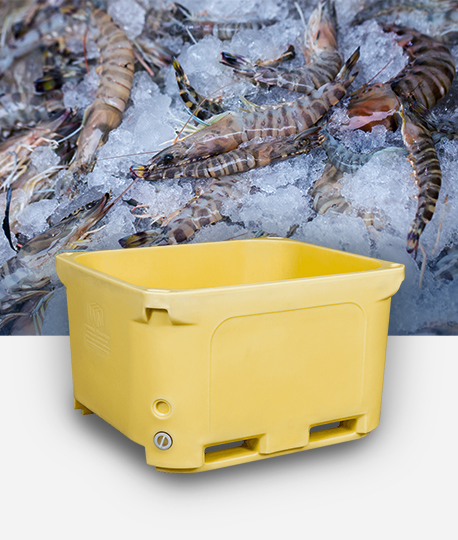
In seafood, the container often works as a processing vessel as much as a transport box. Fish are iced in it, rinsed in it, weighed in it and then lifted onto a truck in it. That means drain plugs that do not leak, rims that a gloved hand can grip safely, and an internal surface that does not scratch easily, because scratches collect organic residue and make cleaning harder than it needs to be. A well-designed fish tub also nests and stacks in a predictable way, which matters more than most buyers expect once the container count runs into the hundreds.
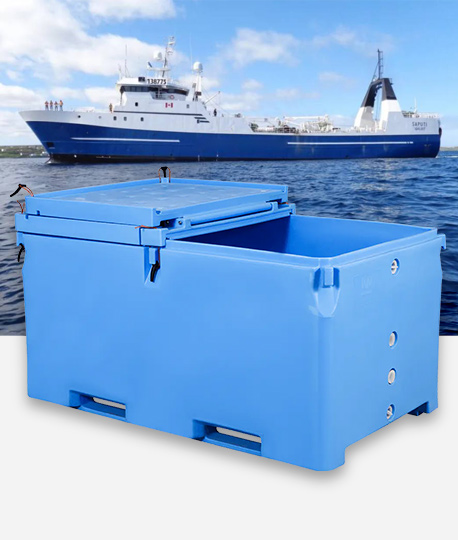
-1.png) AF-380L Insulated Fish Tub for Seafood ProcessingA 380 L rotomoulded double-walled fish tub with drain ports, smooth food-grade interior, and stackable design for seafood handling, cold storage, and repeated washdowns.View Product →
AF-380L Insulated Fish Tub for Seafood ProcessingA 380 L rotomoulded double-walled fish tub with drain ports, smooth food-grade interior, and stackable design for seafood handling, cold storage, and repeated washdowns.View Product →
Meat and poultry processing brings different pressures. Containers move between chill rooms at zero to four degrees, washing areas and loading bays, usually on wheels. Casters have to roll on wet, sometimes greasy floors and still turn when they are carrying a full load. The internal shape should be simple enough that a quick hose-down reaches every surface, and the outer body should tolerate repeated bumping into pallets, pillars and dock edges without cracking.
Cold-chain logistics adds one more layer of complexity: the container becomes part of a temperature-controlled system that spans a workshop, a warehouse, a vehicle and a customer's site. Here, standardized footprints and stackable designs let you move whole pallets without repacking, and a well-sealed lid keeps each unit stable during the parts of the journey where nobody is watching. If that side of your operation is where the pressure sits, our overview of cold-chain logistics containers covers the configurations we build for workshop, warehouse and transport use.
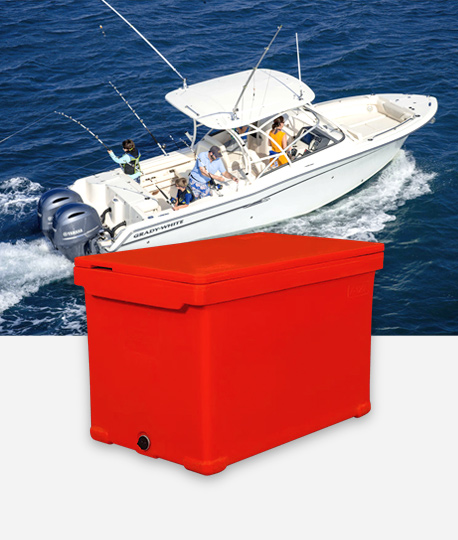
-1-2.png) AF-1000L Insulated Pallet Container for Cold-Chain LogisticsA 1000 L double-walled pallet container with PU insulation, stackable design, forklift access, and insulated cover for workshop and warehouse cold-chain use.View Product →
AF-1000L Insulated Pallet Container for Cold-Chain LogisticsA 1000 L double-walled pallet container with PU insulation, stackable design, forklift access, and insulated cover for workshop and warehouse cold-chain use.View Product →
The pattern across both industries is the same: buy for the worst day of the year, not the average one. Peak season, a full load, a delayed truck and a tired team are the conditions that reveal whether the container was engineered or merely assembled.
Outdoor, Retail and Small-Batch Food Use
Not every insulated box for food lives in a processing plant. Smaller containers do quiet, useful work in catering, farm shops, food trucks, delivery fleets and, of course, outdoor leisure. The design priorities shift here: weight becomes more important than load capacity, and appearance starts to matter because the container is often seen by customers.
For outdoor use, the questions customers ask us are refreshingly simple. Will it keep ice through a hot weekend? Can one person lift it when it is full? Will the lid stay shut in the back of a pickup? Can it be cleaned out afterwards without leaving a smell behind? A portable cooler box in the forty to seventy litre range answers those questions well when it combines a genuinely insulated double wall with a comfortable handle and a lid that seals properly.
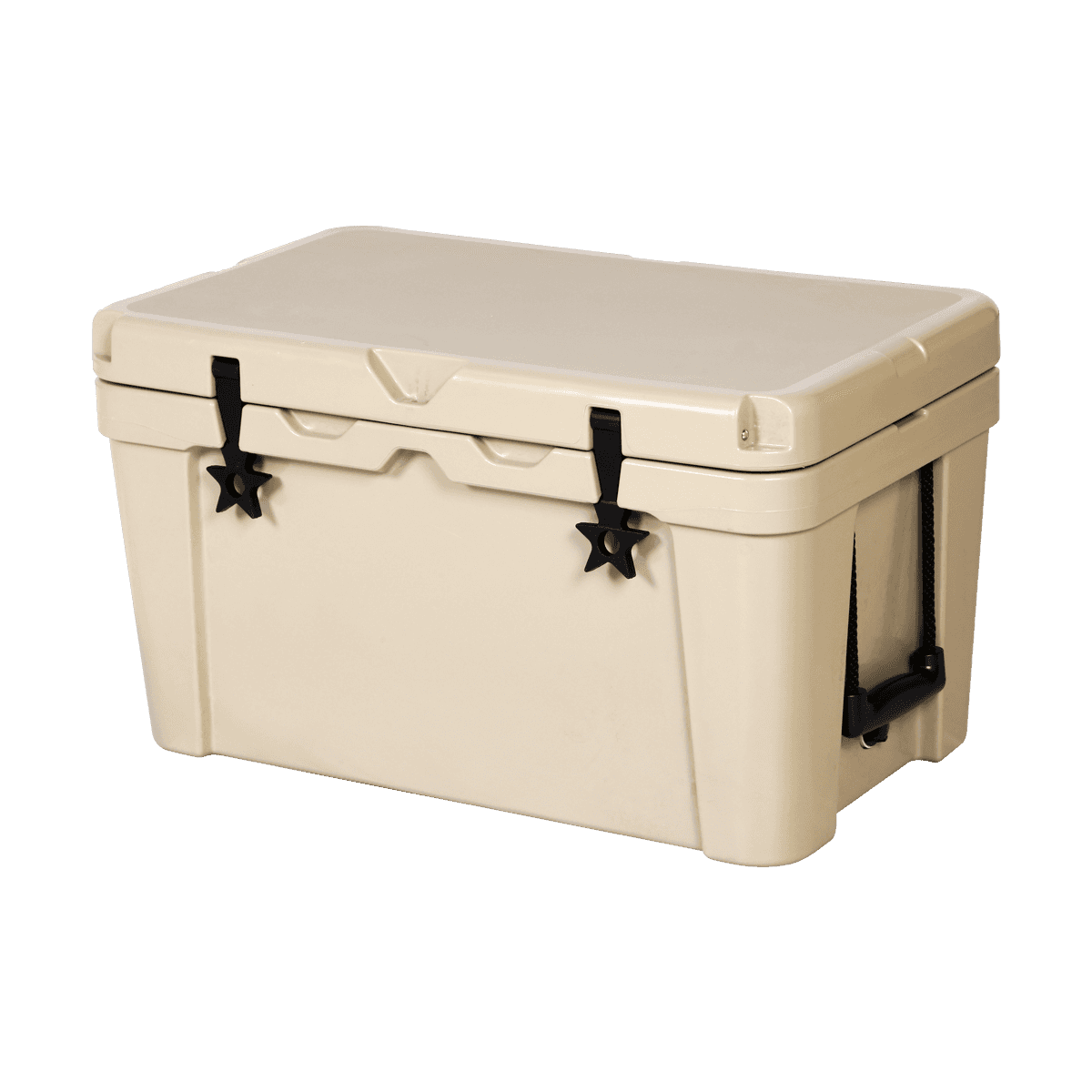 K-45L Rotomolded Ice Cooler for Camping and FishingA 45 L rotomoulded cooler with PU foam insulation, silicone gasket seal, drain plug, and rope handles for camping, fishing, and temperature-sensitive transport.View Product →
Retail food businesses have a slightly different list. Bakery deliveries, chilled meal kits and deli counters all need containers that look presentable, stack neatly when empty, and hold their shape so that packaging inside is not crushed. Smooth external surfaces also help, because they wipe clean easily and do not snag on seat belts, trolleys or shelving.
One piece of practical advice we give everyone in this category: resist the temptation to buy the largest box your vehicle can carry. An oversized container that is only half full loses cold air every time it is opened, and it is usually too heavy for one person to handle safely. Two medium boxes almost always outperform one huge one.
Sizes, Lids, Wheels and the Details That Decide Longevity
Once the style of container is settled, the details take over. In our experience, these are the things that determine whether a container is still in service five years from now or quietly disappears from the floor after two seasons.
Capacity and fill level
Capacity should be read as a working volume, not a theoretical maximum. Most food applications run best at roughly eighty to ninety percent fill, because the remaining space allows for ice, air circulation and the movement of product during transport. Containers that are consistently packed to the brim deform, and deformation is the beginning of every other problem.
Lid design and sealing
A lid has three duties: close, insulate and survive being used as a temporary table. Recessed lids that sit inside the rim hold position better in transit, and a lid that fits well keeps warm air out without needing a complicated mechanism. If your process requires a gasket, make sure it can be replaced, because gaskets age faster than plastic.
Wheels versus carrying
Castors change how a container is used. Anything above sixty kilograms loaded is generally a wheeled job, and casters should be rated for the total load plus a safety margin, particularly on wet or uneven floors. Small wheels tend to jam on dock plates and drains; larger ones roll more easily but raise the centre of gravity.
Stacking and storage
Empty nesting saves floor space; loaded stacking saves trips. Good designs manage both, with rims and bases engineered so that a full container locks onto the one below instead of sliding off it. This is one of the quiet reasons standardized footprints matter in warehouses.
Handles and corners
Handles should be moulded into the body rather than added afterwards, so there is nothing to loosen. Corners should be thick enough to absorb impact, because corners take the punishment in every operation. Reinforcement here costs little and prevents most of the damage we see in returned units.
Drainage and cleaning
A drain plug sounds like a small thing until you are lifting a container of melting ice water by hand. Plugs that seal properly, sit flush with the internal floor and can be operated with gloves on save real time every shift.
Food-Grade Materials, Cleaning and Everyday Hygiene
Material choice is where many buyers focus their attention, and rightly so. The containers we mould are produced from linear low-density polyethylene, a material chosen for its impact resistance, its tolerance of low temperatures and its suitability for food contact applications. It does not become brittle in a freezer, it resists salt water, and it holds its shape under repeated loading.
Material alone, however, does not make a container hygienic. Design and habit do. Smooth, seamless internal surfaces mean there are no crevices for residue to collect. Rounded corners mean a brush reaches everywhere without effort. A lid that comes off completely means the whole interior can be inspected, not just the parts you can see.
On the cleaning side, a few routines consistently make a difference. Rinse before residue dries, because dried protein is far harder to remove than fresh. Use cleaning agents compatible with polyethylene and follow the recommended contact time rather than a quick wipe. Let containers dry fully before the lids go back on, since trapped moisture is the most common cause of lingering odour. Inspect rims, drain plugs and lid edges regularly, as these are the areas that age first.
Where regulations apply, ask for the documentation that matches your market and your product category. We supply containers built to national food hygiene requirements, and certain models are named for specific approval paths, but the correct paperwork depends on where you sell and what you handle. A short conversation at the ordering stage prevents a long one at the port. More detail on our food-contact range is available on the insulated food-grade containers page.
One final note on hygiene that is easy to overlook: storage matters as much as cleaning. Containers left open under a leaking pipe, stacked directly on a dirty floor or stored next to chemicals will fail an audit even if they were spotless an hour earlier. A simple covered rack, positioned away from wash-down spray, solves most of it.
Frequently Asked Questions
How long can an insulated box keep food cold?
It depends on the container, the fill level, the starting temperature of the food and the ambient conditions. With a well-sealed double-wall box, a reasonable ice load and moderate weather, most food applications hold safe temperatures through a normal working day, and larger containers used for transport can hold considerably longer. Test your own combination rather than relying on a catalogue figure.
Is thicker always better?
Not automatically. Wall thickness helps, but the lid seal, the quality of the foam and the way the container is filled often matter more. A thick-walled box with a loose lid will underperform a thinner box with an excellent seal.
Are insulated plastic containers food safe?
Containers manufactured from food-contact grade polyethylene and produced to national food hygiene standards are suitable for food use. Ask your supplier which material grade is used in the body and whether documentation is available for your market.
Can the same box be used for fish and for meat?
Technically, yes, if it is thoroughly cleaned and sanitized between uses. In practice, many operations keep separate containers by product category because it simplifies hygiene control, traceability and inspection.
How do I choose between a lid and a gasket?
Start with your journey. Short local transfers rarely need a gasket; long distances, multiple stops and outdoor storage usually do. Remember that gaskets need inspection and replacement over time, while a well-fitted lid does not.
Should I buy wheels on every container?
Only where the loaded weight justifies them. Wheels add cost, height and a maintenance point. Many operations use wheeled units for heavy bulk handling and plain containers for smaller loads moved by hand or trolley.
How many years should a container last?
In gentle indoor use, a quality rotomolded container can serve for many years. In fishing, dockside or heavy food processing environments, expect a shorter life, which is exactly why impact resistance and repairable design matter so much.
Can containers be customized for our process?
Often, yes. Capacity, drain position, wheel configuration, lid type, colour and branding can all be adapted when volumes justify it. Bring us the process problem rather than a drawing, and the design conversation usually gets more useful very quickly.
Choosing insulated boxes for food is ultimately a small decision that quietly shapes a lot of daily work. The right container keeps product safe, shortens cleaning time, survives the busy season and costs less per year than a cheaper one that has to be replaced twice as often. The wrong one costs you in spoiled stock, rejected loads and the low-level frustration of equipment that never quite does what it promised.
If you are not sure which direction fits your operation, tell us what you handle, how far it travels and who has to lift it. We have been moulding these containers since 2008, we ship to customers in more than forty countries, and we are always happy to talk through a real problem before anyone talks about an order.
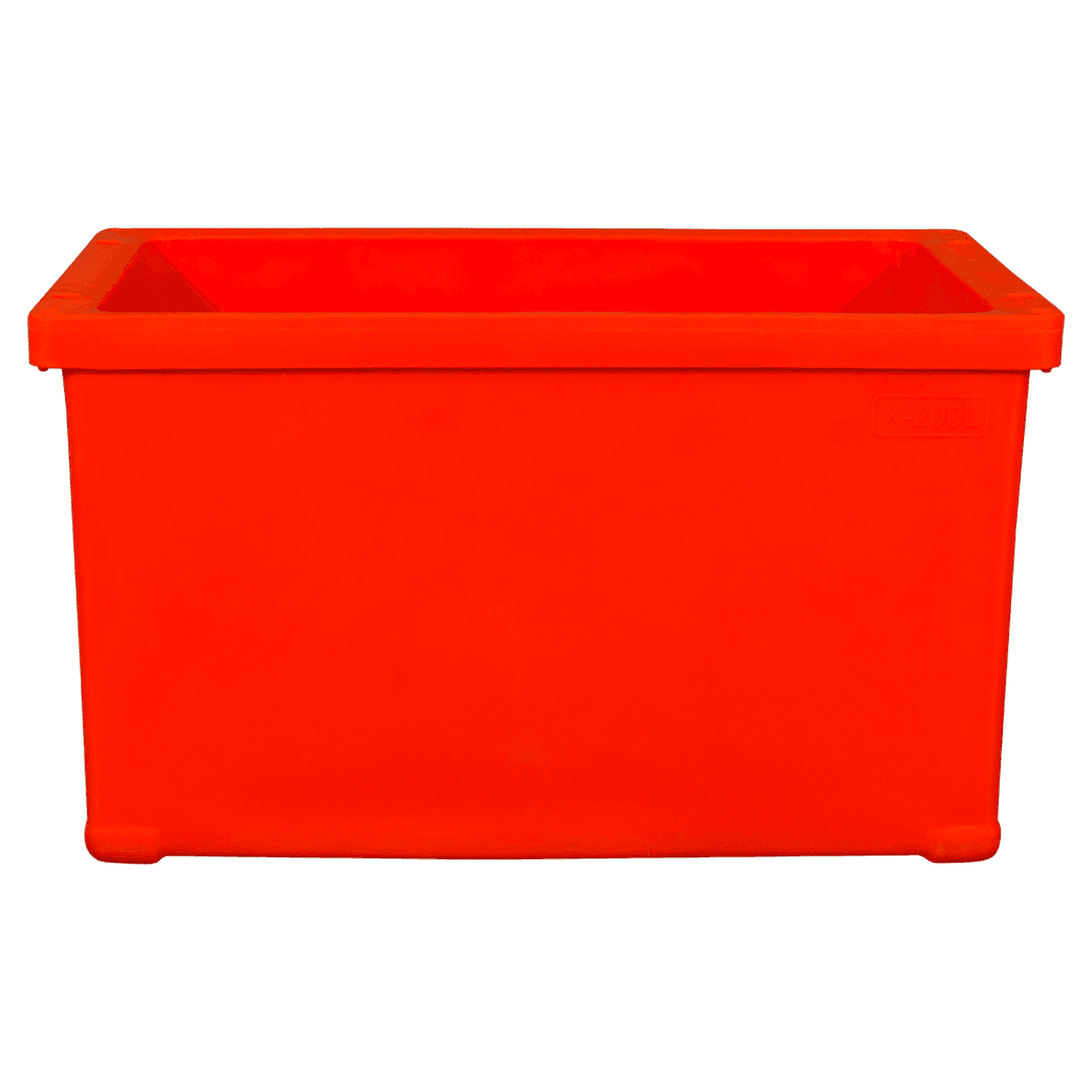
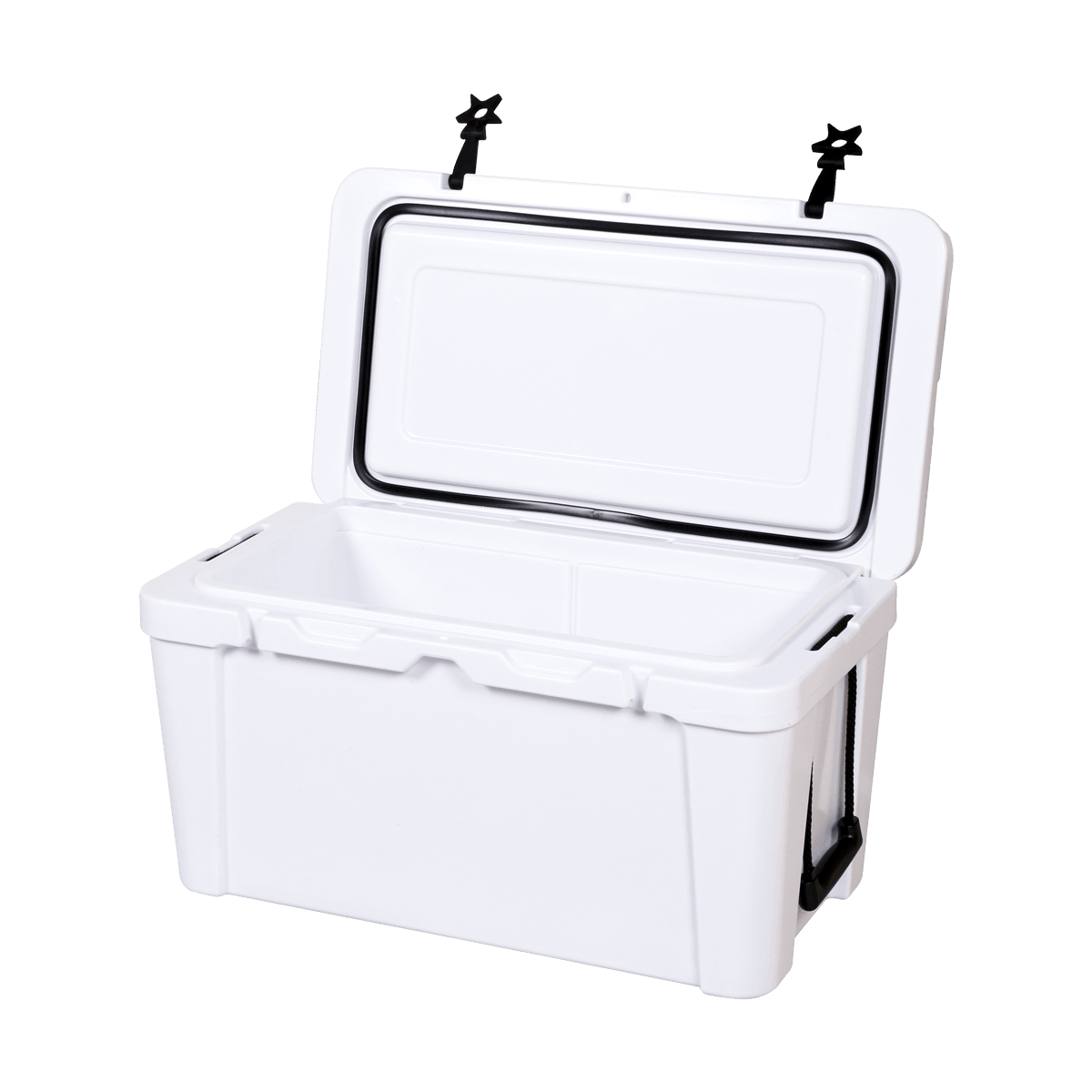
-4.png "X-120L Insulated Fish Bin Ice Cooler Box")
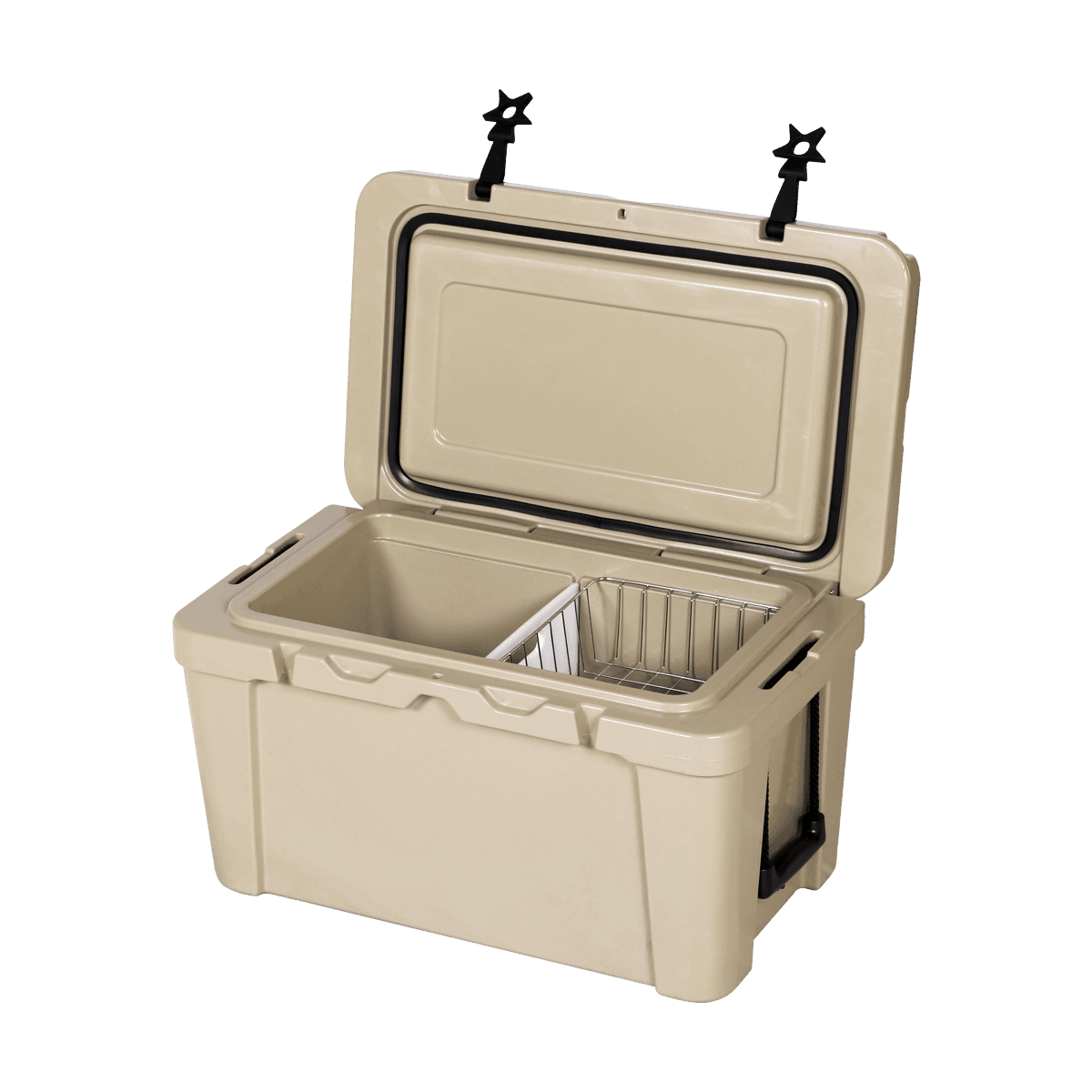
-4.png "X-70L Insulated Fishing Ice Cooler Box")
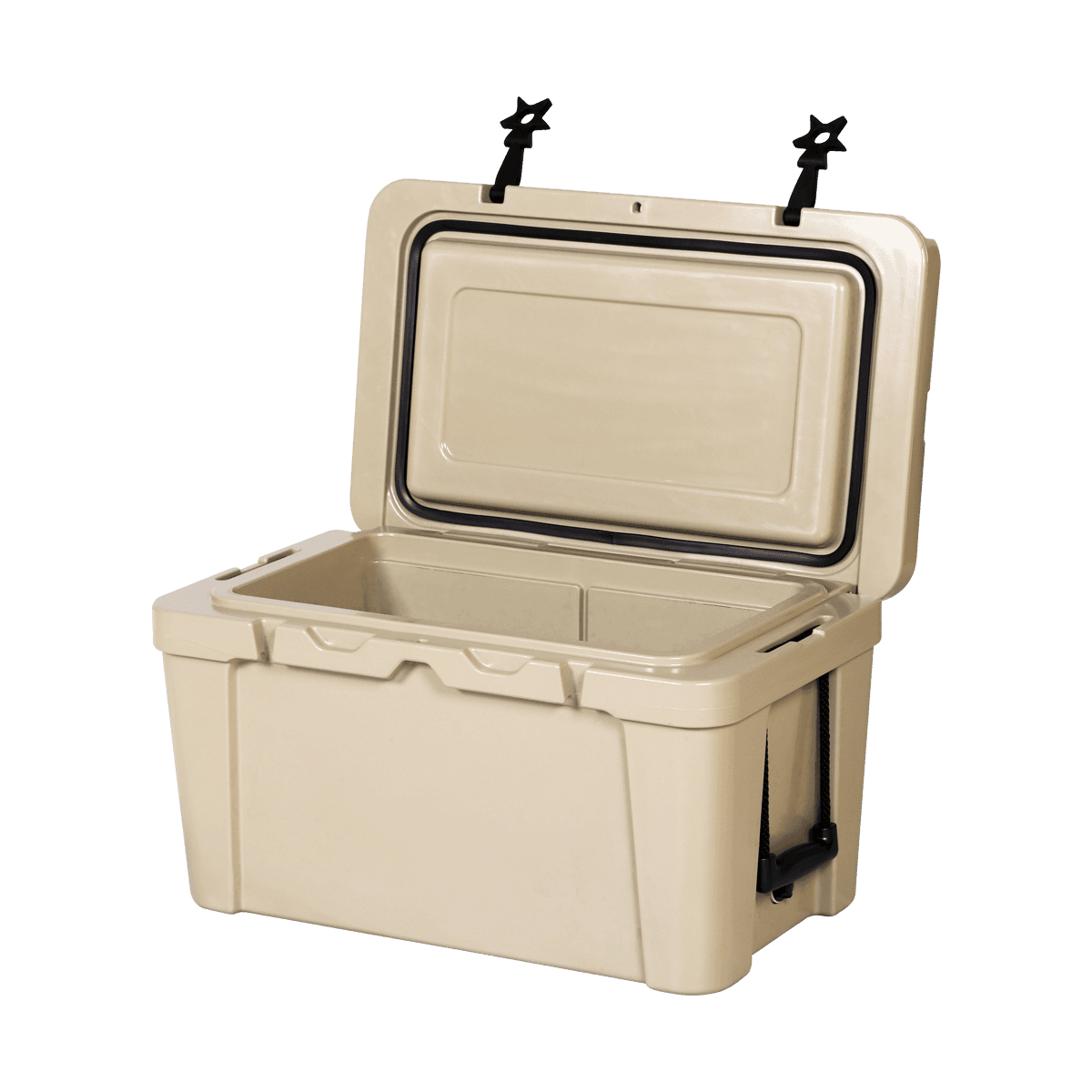
-2.png "X-68L Ice Cooler Box To Keep Food Cold And Fresh")
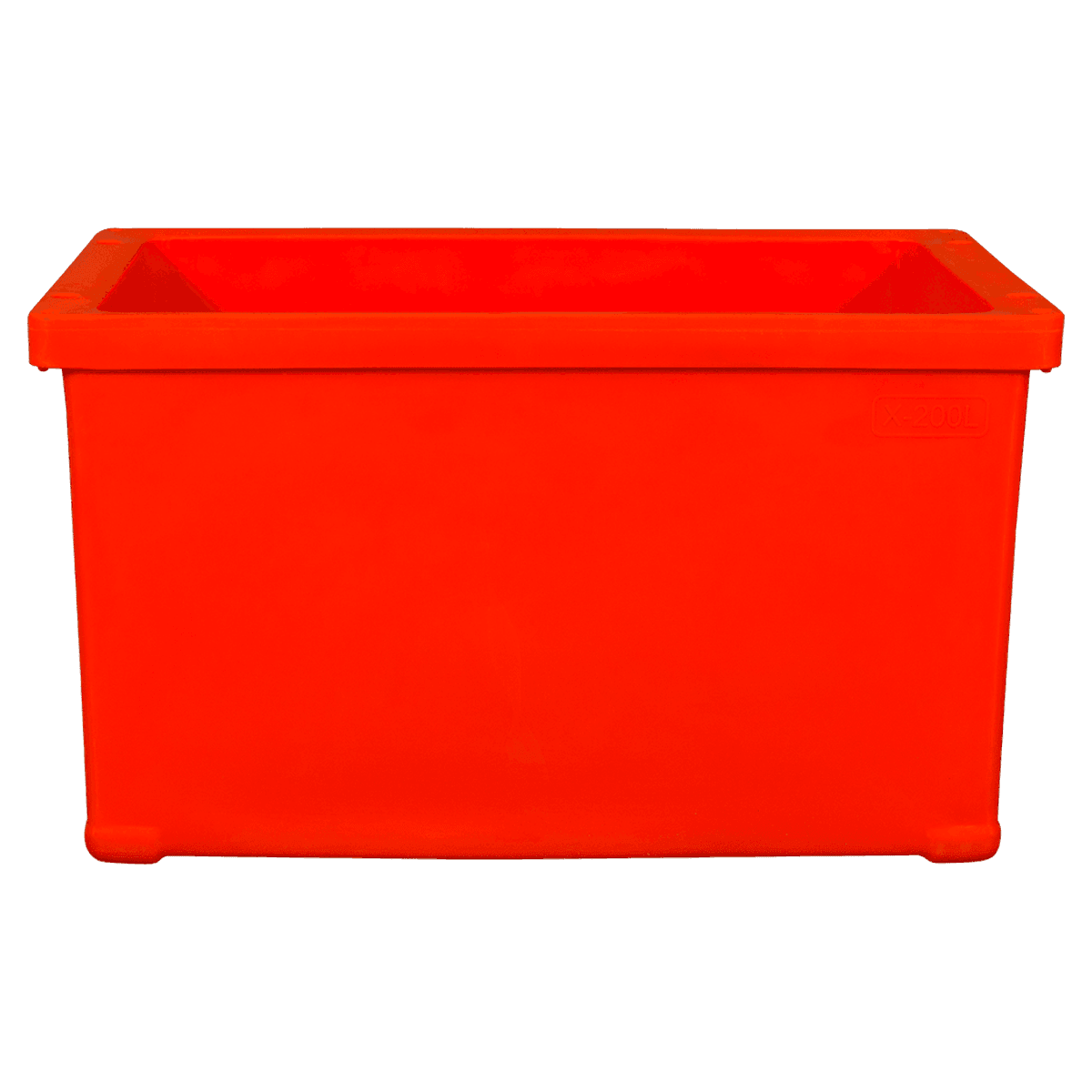
-2.png "X-120L Live Seafood Transportation Tanks")
-2.png "X-70L Live Seafood Transportation Tanks")