English
 Español
 عربى
 中文简体
Content
- 1 What Is a Tier Sheet?
- 2 Why Tier Sheets Matter in Real Pallet Loads
- 3 Choosing the Right Tier Sheet: A Practical Spec
- 4 Tier Sheets in Cold Chain and Seafood Palletising
- 5 One Pallet's Journey, Layer by Layer
- 6 Sizing, Handling and Storage Checklist
- 7 Common Mistakes and How to Avoid Them
- 8 Frequently Asked Questions
A pallet loaded with 1,000-litre insulated bins can weigh well over a tonne. Between each layer sits a thin separator that most people never notice: the tier sheet. Specified well, it keeps the load square, spreads weight across the layer below and protects containers from scuffing and point loading. Specified badly, or left out altogether, it can turn a stable pallet into a leaning one before the stretch wrap is even cut.
This guide explains what tier sheets are, how they differ from pallet sheets and pads, and how to choose board grade, thickness and size for cold chain, seafood and export loads.
What Is a Tier Sheet?
A tier sheet is a flat separator placed horizontally between layers, or tiers, of product on a pallet. It can be made from solid fibreboard, kraft paperboard, corrugated board or a reusable plastic sheet. It does not carry the load by itself. It spreads the load across the layer below, stops packages from nesting into each other, reduces lateral movement and protects product surfaces.
In a well-built pallet, the tier sheet acts as a diaphragm. It bridges gaps between carton flaps or moulded bases, distributes point loads from rims and feet, and gives stretch wrap or strapping a flatter face to press against.
| Type | Position | Main job | Typical material |
|---|---|---|---|
| Pallet sheet | Directly on the pallet deck | Bridges deck boards and protects the bottom layer from moisture and edge damage | Heavy kraft or solid board |
| Tier sheet | Between product layers | Spreads load, stabilises the stack and separates layers | Solid board, corrugated board or HDPE |
| Pad | Top or bottom of the load | Protects a surface and gives strapping a clean bearing point | Thin paperboard or foam |
| Slip sheet | Under the load | Allows the load to be pulled without a wooden pallet | Heavy plastic film |
Why Tier Sheets Matter in Real Pallet Loads
The value of a tier sheet shows up in small ways: a pallet that stays square, a bottom layer that is not crushed, a changeover that takes minutes instead of an hour. These are the practical functions that matter most.
Load distribution
A one-tonne pallet does not sit evenly on every square centimetre. Tier sheets spread concentrated loads from bin feet and carton corners across a wider area, reducing crush on the layer below.
Lateral stability
Separating layers changes how they slide. A sheet with suitable surface friction reduces creeping and leaning during transport, especially when the load is wrapped but not strapped.
Product protection
Sheets stop rims from biting into the layer below and keep dust, ice melt and condensation away from product surfaces.
Inventory separation
Mixed-SKU pallets are easier to count and unload when each layer is clearly separated. Printable sheets can carry batch numbers or handling notes.
Hygiene and changeover
In food areas, a clean sheet marks a clear boundary between layers. When it is torn or saturated, it is obvious that the pallet needs rebuilding.
Choosing the Right Tier Sheet: A Practical Spec
Selection comes down to four variables: board grade, thickness, size and surface. Board grade is usually quoted in grams per square metre (gsm) or caliper. A 300-450 gsm single-ply kraft sheet suits light cartons. A 600-1,000 gsm laminated solid board is a better match for heavy bins, repeated handling and loads that will be stacked two or three high. Corrugated board adds thickness and cushioning, but its flutes can collapse under high point loads if the board becomes wet.
| Board type | Typical spec | Best for | Watch-outs |
|---|---|---|---|
| Single-ply kraft | 300-450 gsm | Light cartons, one-way loads, dry stores | Low wet strength and limited bridging |
| Laminated solid board | 600-1,000 gsm, 1-3 mm | Heavy bins, export pallets, repeated dry handling | Heavier and more costly; must stay dry |
| Corrugated board | B or C flute, 3-5 mm | Cushioning and irregular surfaces on short transit | Flutes crush when wet; less lateral stiffness |
| Coated moisture-resistant board | 500-800 gsm with coating | Chilled and frozen stores with condensation | Coating can reduce friction; test the surface |
| Reusable HDPE sheet | 1-2 mm, washable | Seafood plants, washdown areas and closed-loop pools | Must be dried and stored flat |
Sheet size should follow the pallet footprint. On a 1200 x 1000 mm pallet, a sheet of the same size is normal. An overhang of even 30-50 mm can curl, catch on stretch wrap and wick moisture from the floor or from melting ice. If the load is smaller than the pallet, cut the sheet to the load footprint rather than leaving a wide exposed edge.
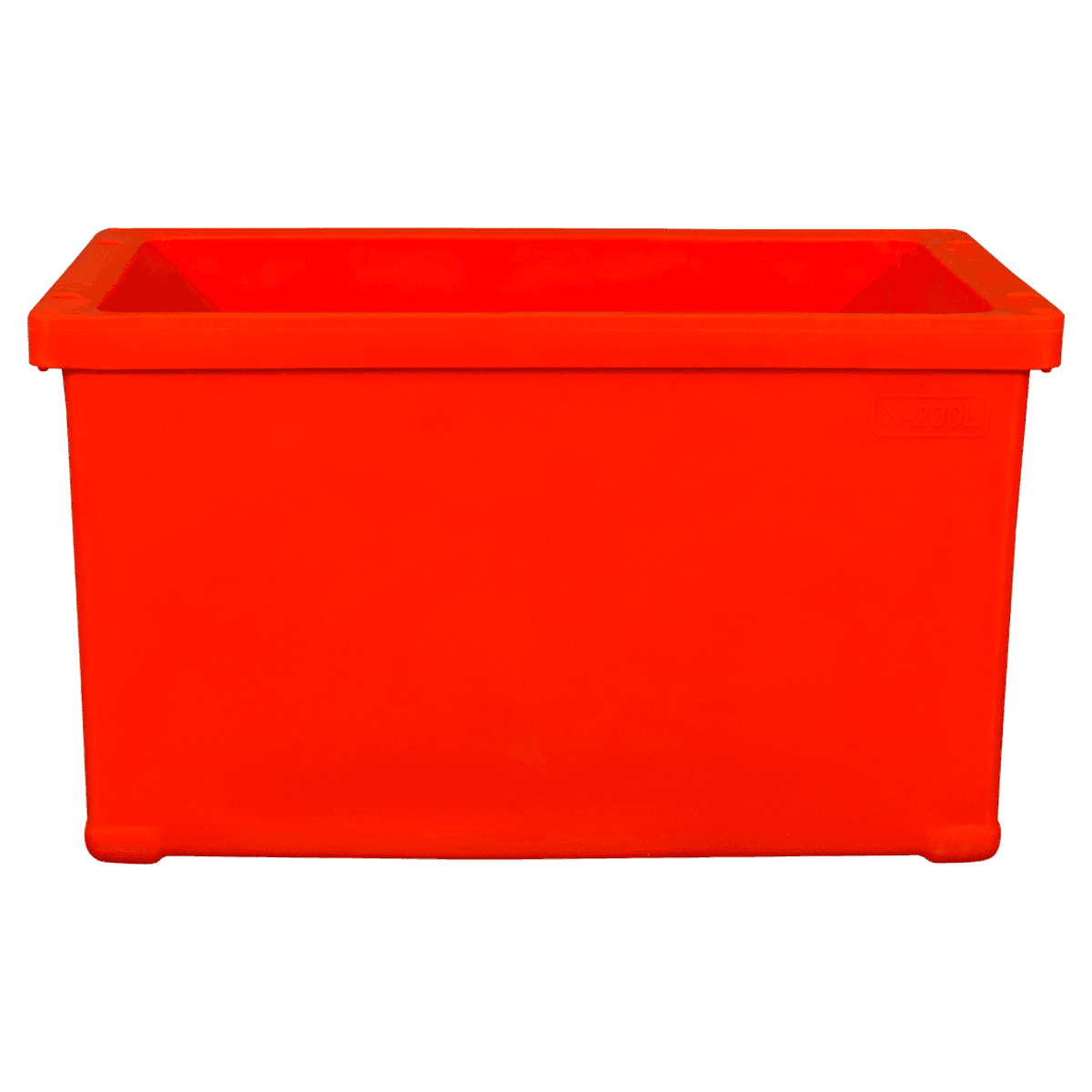
For rotomoulded containers, look at the base. A flat base spreads load well; a base with moulded feet needs a heavier board to bridge the gaps. Our AF1000L solid insulated pallet container is built for stable pallet build-up, and a 600-800 gsm laminated sheet is a sensible starting point when it is stacked with other heavy bins.
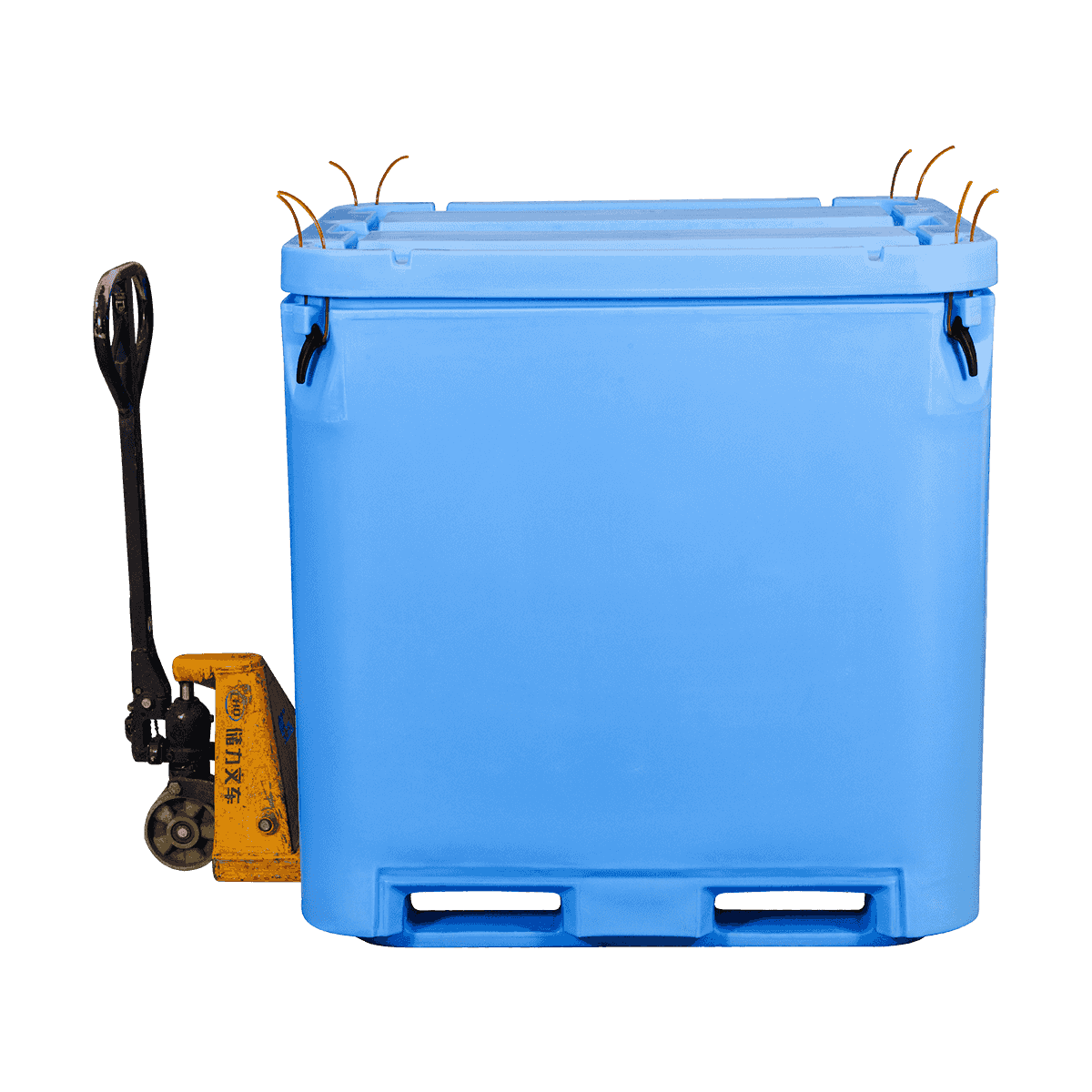 AF1000L Solid Insulated Pallet ContainerA 1000 L double-walled cold-chain container with stable pallet build-up for heavy bins and freezer storage.View Product →
Tier Sheets in Cold Chain and Seafood Palletising
Cold stores are hostile to paper. At -18 °C the air is dry, but every door opening brings in moist air that condenses on cold surfaces. A standard kraft tier sheet that absorbs water loses a large part of its compression strength. In a freezer, that can turn a firm pallet into a leaning one overnight.
Three rules help. First, specify wet-strength or coated board for chilled and frozen stores, or switch to a reusable plastic sheet where washdown is routine. Second, never let board overhang the pallet where it can wick water. Third, inspect sheets at every pallet build; a saturated sheet is no longer doing the job it was specified for.
For seafood processors, tier sheets also support hygiene. A clean, pale-coloured sheet makes blood, scales and debris visible at changeover. A torn, saturated sheet does the opposite. Removable plastic sheets can be washed and returned, but they must be dried before re-use or they trap moisture between layers.
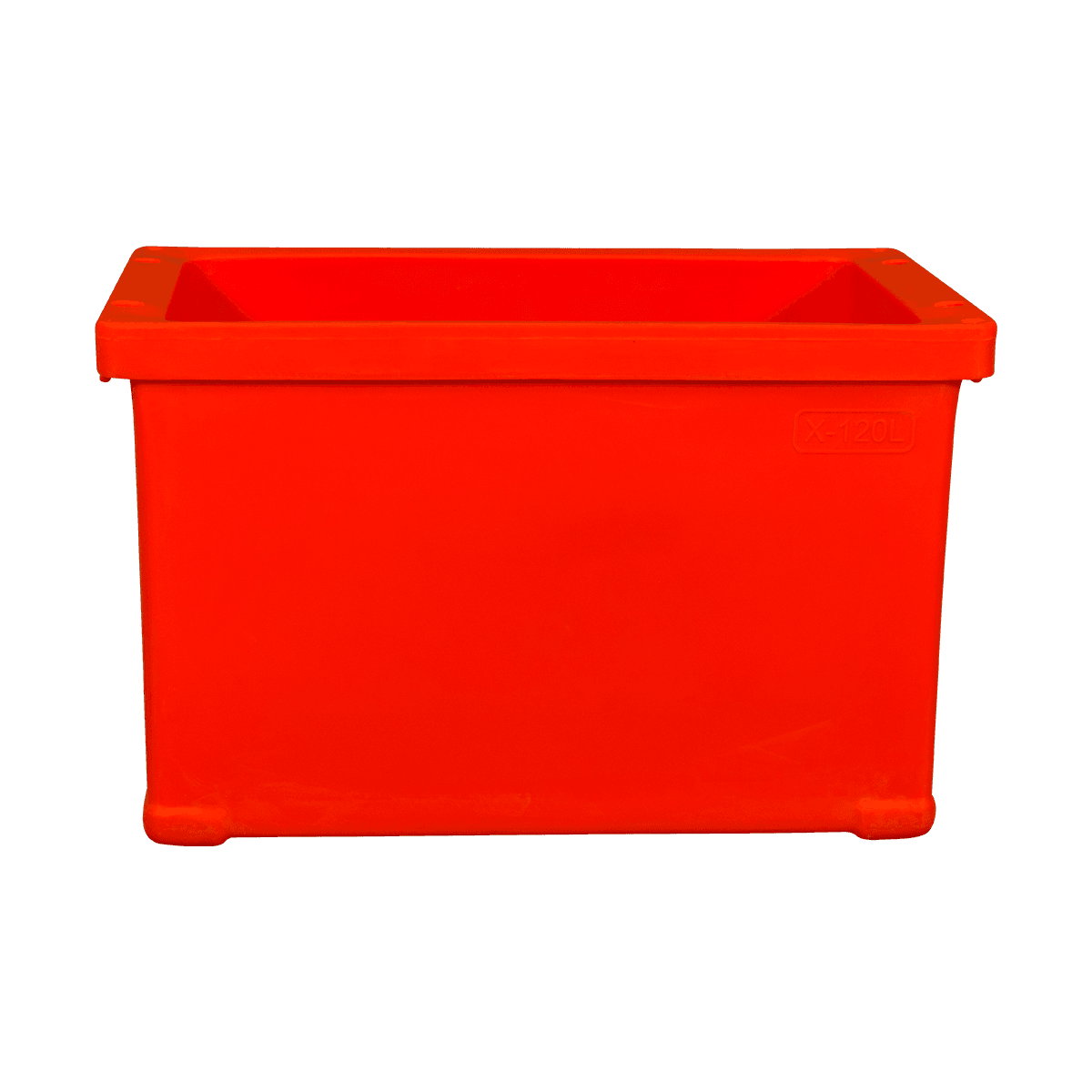
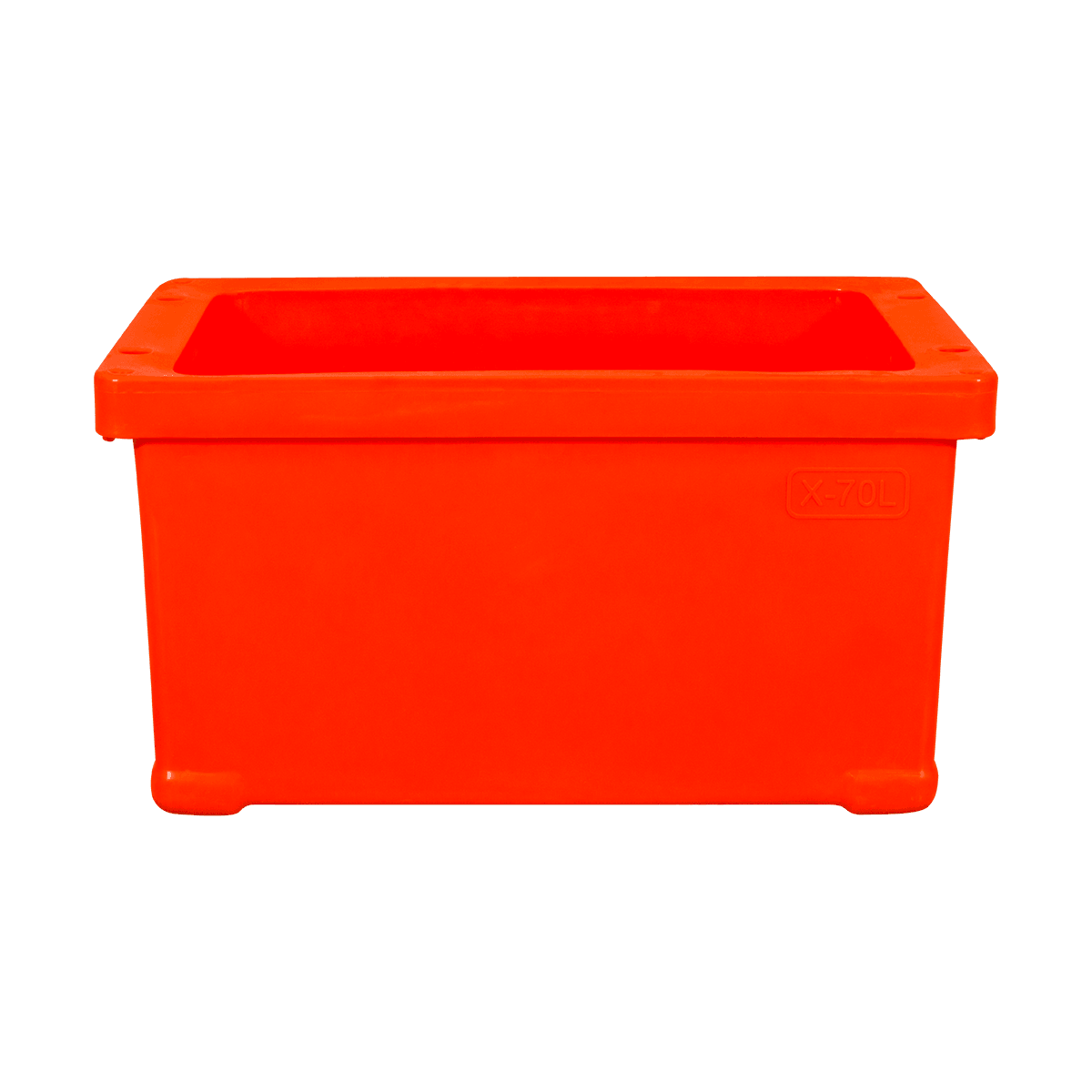
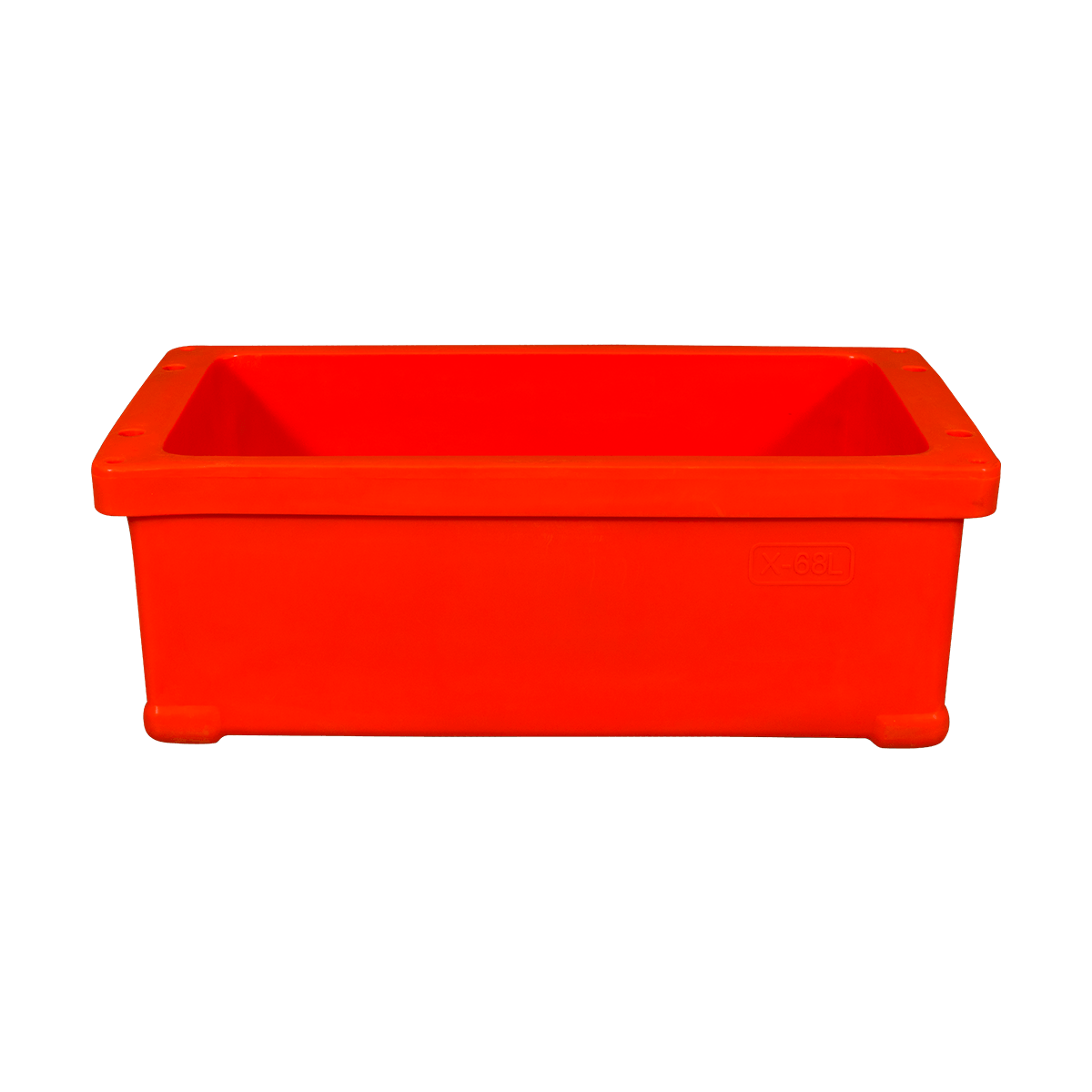
Mixed loads need extra care. Match the sheet to the heaviest container in the layer, not the average. If you are stacking fish tubs with bulk bins, use a sheet that can bridge the tub rims without sagging. Our cold chain logistics containers are often stacked two or three high in processing halls, and the tier sheet is what keeps the stack from settling unevenly.
For frozen goods, the sheet also acts as a simple thermal break between layers, though it is not insulation. Its main value is mechanical: it keeps the stack stable while the product stays cold. If you are specifying containers for frozen goods, choose the sheet and the container together rather than treating the sheet as an afterthought.
Seafood tubs with wide, flat rims are easier to separate cleanly. A 600 gsm laminated sheet or a washable HDPE sheet is usually the practical choice. Our AF380L insulated fish tubs are a common building block for mixed seafood pallets, and they stack predictably when the tier sheet matches the tub footprint.
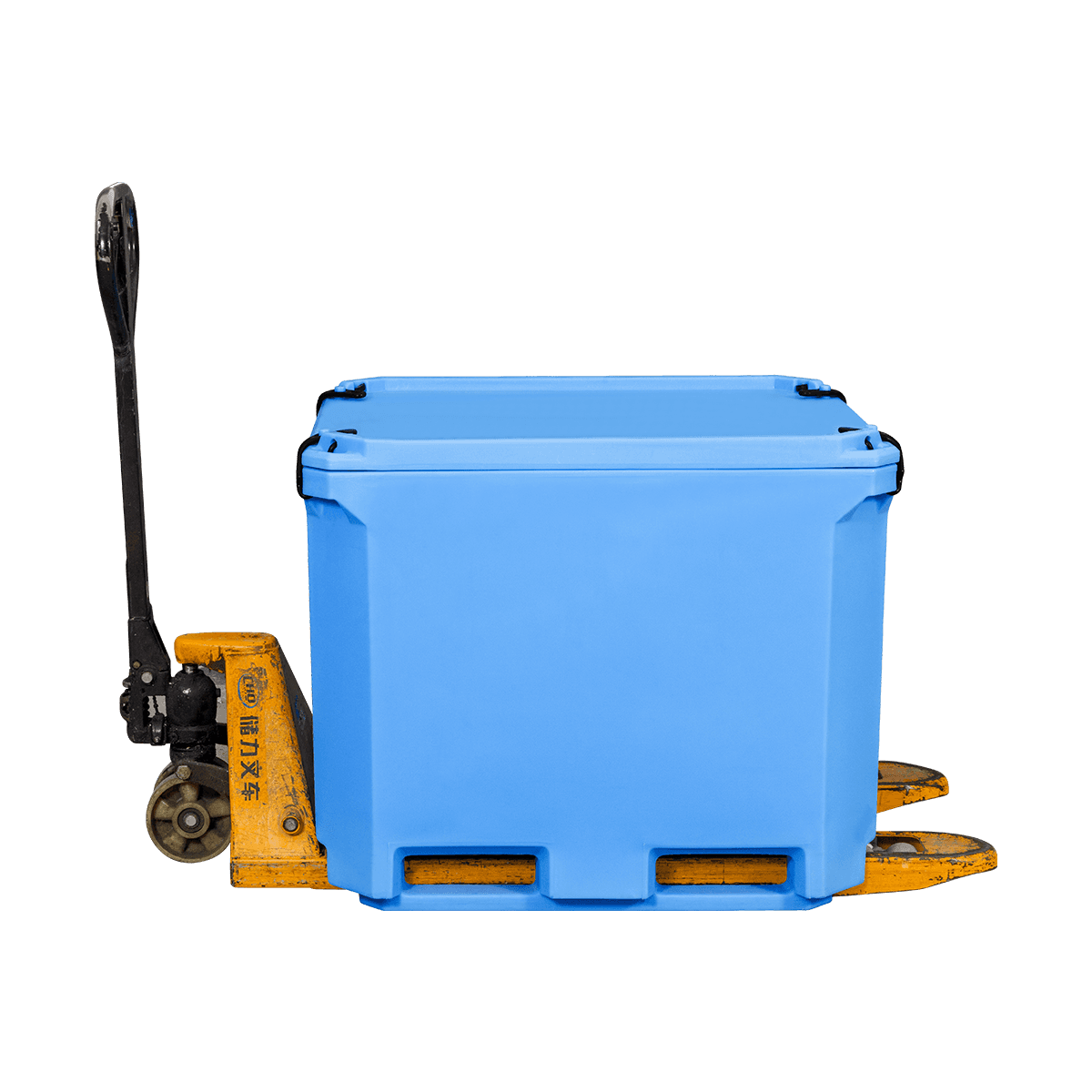 AF380L Insulated Fish Tubs for Seafood PalletsCompact 380 L fish tubs with insulated walls and predictable stacking for mixed seafood pallets in processing and cold storage.View Product →
One Pallet's Journey, Layer by Layer
Here is how tier sheets fit into a normal pallet build in a cold store or processing plant.
Deck and pallet sheet
Place a pallet sheet on the deck to bridge board gaps and protect the bottom layer. Check that it does not overhang.
First tier
Build the heaviest, most stable layer first. Keep container edges inside the pallet footprint.
Tier sheet
Lay the sheet flat. Do not stretch, fold or force it over rims; a wrinkle becomes a pressure point.
Second tier
Align containers with the layer below unless the load pattern is designed to interlock. Offset patterns need a heavier sheet.
Top pad and wrap
Add a top pad, then strap or wrap. The tier sheet should stay flat while the wrap is tensioned.
Arrival and return
Remove sheets carefully. Reusable plastic sheets go to washdown; paper sheets go to recycling unless contaminated.
Sizing, Handling and Storage Checklist
- Measure the pallet footprint and the actual load footprint. Cut to the smaller of the two.
- Confirm the total load weight and the weight of the heaviest layer.
- Check the storage environment: dry warehouse, chilled store, freezer or washdown area.
- Choose one-way paper board or a reusable plastic sheet based on round trips and hygiene rules.
- Specify board grade, caliper and moisture resistance in writing.
- Test one pallet through the full route before ordering a full season's supply.
- Store paper sheets flat and wrapped; store plastic sheets flat and dry.
- Reject sheets with creases, delamination, edge damage or lingering moisture.
For smaller stackable bins, a 450-600 gsm sheet is often enough. Our F660L plastic stackable food bins are designed for repeated stacking, and a mid-weight laminated sheet keeps the stack flat without adding unnecessary bulk.
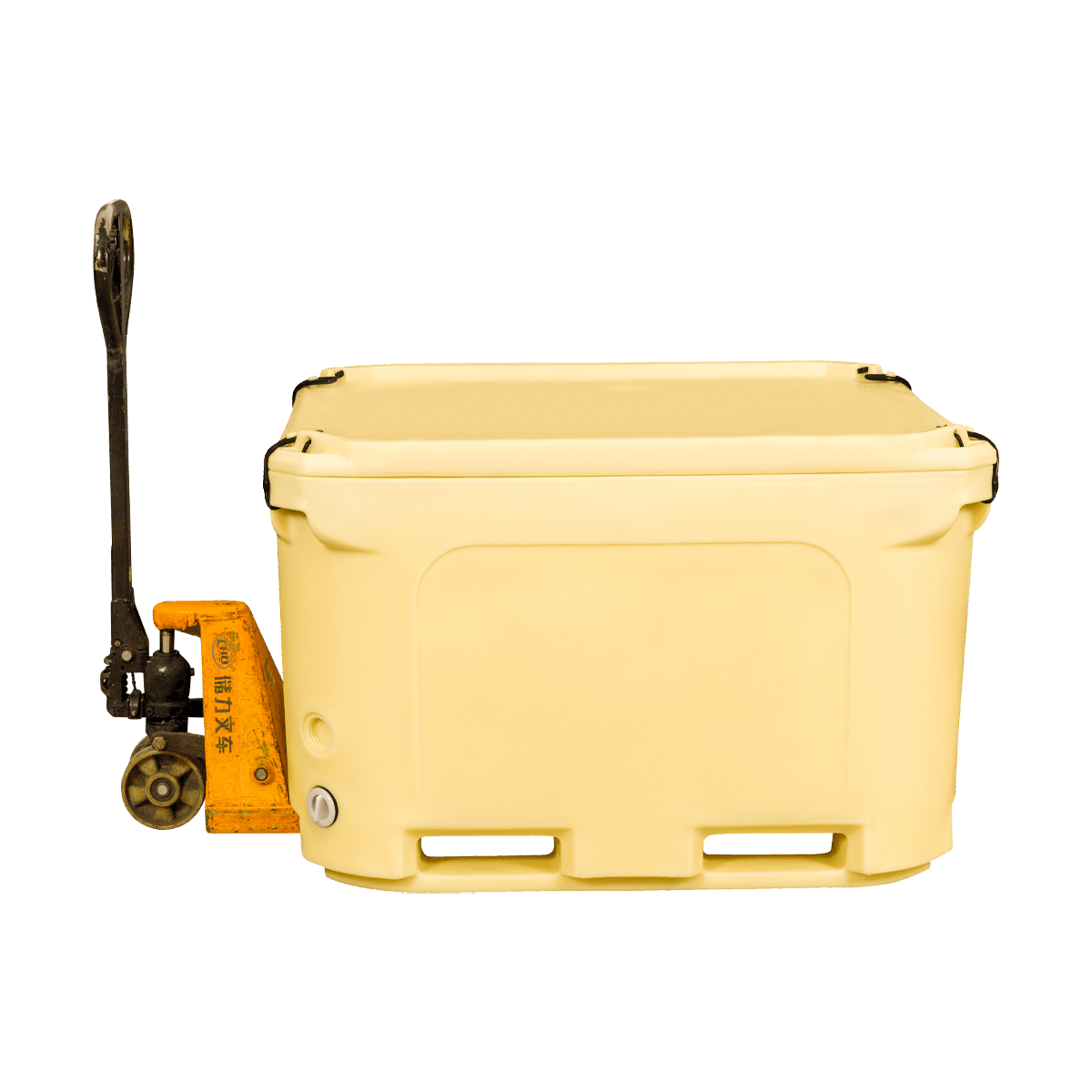 F660L Plastic Stackable Food BinsA 660 L insulated bin built for repeated stacking, helping keep mixed perishable loads flat in cold-chain storage and transport.View Product →
Common Mistakes and How to Avoid Them
Choosing by price per sheet
A light sheet that fails in transit costs more than the board it saved. Compare cost per stable pallet, not cost per piece.
Using one grade everywhere
A dry warehouse and a seafood washdown area need different sheets. Match the grade to the harshest condition on the route.
Letting sheets overhang
Overhang curls, catches on wrap and wicks water. Trim to the load footprint.
Ignoring friction
Very smooth coated board can slide. If the load is not strapped, test the sheet on the actual container surface.
Frequently Asked Questions
What is the difference between a tier sheet and a pallet sheet?
A pallet sheet sits directly on the pallet deck and protects the bottom layer from deck boards and moisture. A tier sheet sits between layers of product to spread load, stabilise the stack and protect surfaces. Some operations use the same board for both, but the jobs are different.
What board weight should I use for heavy insulated bins?
For bins in the 500-1,000 litre range, a 600-800 gsm laminated solid board is a common starting point. Very heavy loads or rough handling may need 1,000 gsm or a reusable plastic sheet. Test a full pallet through the real route before committing.
Can tier sheets be reused?
Paper and corrugated sheets are usually one-way. Reusable HDPE sheets can be washed and used many times, but they must be dried and stored flat. Reuse only makes sense when the return loop is controlled.
Are tier sheets food safe?
Food-contact sheets should be made for the purpose and supported by the supplier's documentation. In seafood plants, a cleanable plastic sheet is often easier to manage than paper. Never use a sheet that is wet, torn, or contaminated with blood or cleaning chemicals.
Do I need tier sheets if the containers interlock?
Interlocking bases can reduce the need, but they do not replace a separator when the load is heavy, mixed, or exposed to moisture. A sheet still spreads point loads and gives a clean layer boundary.
How should I store unused sheets?
Keep paper sheets flat, dry and wrapped. Store plastic sheets flat, clean and fully dry. Do not stand paper sheets on edge for long periods; they can take a permanent bend.