English
 Español
 عربى
عربى 中文简体
中文简体If you only remember one number from this guide, remember this: for a two to three night weekend trip, most groups of two to four people are well served by a cooler in the 45 to 65 quart range, or roughly 42 to 61 liters. That single figure answers the question for the majority of readers who search what size cooler for weekend camping, but cooler size for camping is not one size fits all, and the rest of this guide will help you dial in the exact number for your group, your menu, and your climate.
For a group of two to four campers on a two to three night trip in mild weather, a 45 to 65 quart hard cooler or an equivalent soft cooler in the 24 to 36 can range will comfortably hold food, drinks, and ice without forcing you to ration space. Larger groups, hot climates, or trips longer than three nights should size up from there.
Cooler Size for Camping: Why the Right Number Matters
Picking the correct cooler size for camping is one of those decisions that seems trivial until you are standing in a parking lot trying to force a lid closed over a mountain of ice and sandwich meat. Go too small and you will be rationing space, refreezing warm food, or making an emergency grocery run halfway through the trip. Go too large and you are hauling a heavy, bulky box that eats trunk space, takes up campsite real estate, and burns extra ice for no real benefit.
The question what size cooler for camping should you buy really has two layers. The first layer is capacity, measured in quarts or liters, which tells you how much total volume is available for food, drinks, and ice. The second layer is real world usable capacity, because ice itself typically consumes 30 to 50 percent of the rated volume once you account for bags, blocks, and the air gaps between them. A cooler rated at 50 quarts might only leave 25 to 30 quarts of genuinely usable space for food and beverages after ice is packed in, which is exactly why so many campers end up disappointed with a cooler that looked plenty big in the store.
Weekend trips sit in a specific sweet spot. You are not packing for a week long expedition where ice retention over five or six days becomes the dominant design constraint, but you also are not just running a cooler for a single afternoon picnic where a small 15 quart box would do. A weekend, meaning two nights and roughly three days, asks for a cooler that balances portability with enough thermal mass to keep ice solid through at least two warm afternoons and one overnight low. That balance point is where the 45 to 65 quart range comes from, and it is the number most outdoor retailers, gear reviewers, and camping guides converge on when discussing cooler size for camping trips of that length.
Cooler Sizes Chart: Matching Capacity to Trip Length
A cooler sizes chart is the fastest way to translate group size and trip length into a concrete number of quarts. The chart below is built around two people as a baseline unit, since most cooler capacity scales roughly with headcount once you also account for trip duration. Use it as a starting point, then adjust using the factors covered later in this guide, such as climate, menu, and whether the cooler will also carry drinks for a larger day group.
| Trip Length | 2 People | 3 to 4 People | 5 to 6 People | 7 Plus People |
|---|---|---|---|---|
| Day trip, no overnight | 15 to 25 quarts | 25 to 35 quarts | 35 to 45 quarts | 45 to 55 quarts |
| One night weekend | 25 to 35 quarts | 35 to 50 quarts | 50 to 65 quarts | 65 to 80 quarts |
| Two to three night weekend | 35 to 45 quarts | 45 to 65 quarts | 65 to 80 quarts | 80 to 100 quarts |
| Four to seven night trip | 45 to 55 quarts | 65 to 80 quarts | 80 to 100 quarts | 100 to 150 quarts |
This cooler sizes chart uses quarts because that remains the standard unit in most North American cooler marketing, but for readers who prefer metric, the rough conversion is one quart equals about 0.95 liters, so a 65 quart cooler is close to 61 liters. If you are shopping listings that only show liters, multiply the liter figure by roughly 1.05 to estimate the quart equivalent, or simply look for the milk carton or can count many manufacturers list alongside the volume, since that gives you a more intuitive sense of real capacity than either unit alone.
How Big a Cooler Do I Need for a Typical Weekend Trip
The question how big a cooler do I need almost always comes down to three inputs: how many people you are feeding, how many meals you are covering, and how much of the cooler is dedicated to drinks versus food. A useful rule of thumb used by many outdoor guides is to plan on roughly 1.5 to 2 quarts of total cooler capacity per person per day, which already accounts for the ice needed to keep that food cold. For a two night weekend trip with three days of meals, that works out to somewhere between 9 and 12 quarts of capacity per person, before you add extra room for beverages.
Beverages deserve their own line item because they are often the single biggest volume consumer in a camping cooler. A standard 12 ounce can occupies roughly 0.4 quarts of space once you include the room needed around it for ice contact, so a case of 24 cans alone can eat up 10 to 12 quarts. If your group plans to keep a cooler stocked with drinks for the entire weekend rather than rationing, budget an additional 15 to 20 quarts purely for beverages on top of the food and ice allowance.
Quick Math for Your Own Group
- Start with 6 quarts per person per day as a food and ice baseline for warm weather trips, or 4 quarts per person per day in cool weather.
- Multiply by the number of days you will actually be relying on the cooler, not counting travel days where you might restock ice.
- Add 10 to 20 quarts if the cooler will also serve as the primary drink cooler for the group.
- Round up to the next common cooler size, since manufacturers typically sell in steps such as 25, 35, 45, 55, 65, and 80 quarts rather than arbitrary numbers.
Pack ice first, then food, then drinks on top. Cold air sinks, so items on top warm up fastest, which makes the top layer the right place for drinks you access repeatedly and the bottom layer the right place for meat, dairy, and anything you cannot afford to let warm up even briefly.
What Size Cooler Do I Need Based on Your Camping Style
Not every weekend camper packs the same way, and what size cooler do I need genuinely depends on whether you are car camping with a full kitchen setup, backpacking into a site where every pound matters, or car camping but keeping meals simple. The gauges below give a rough sense of how much of a mid size 55 quart cooler each camping style tends to actually use, which can help you decide whether to size up or size down from the general chart in Section Two.
A minimalist weekend camper who eats mostly shelf stable food, uses the cooler only for a handful of perishables and drinks, and cooks simple one pot meals can often get away with a 35 to 45 quart cooler even for a group of three or four. A standard car camping group that plans full breakfasts, packed lunches, and grilled dinners will typically fill a 55 to 65 quart cooler close to capacity across a two to three night trip. A group running a full camp kitchen, with fresh meat for every meal, dairy, produce, and a dedicated drinks stash, often needs either a single 80 quart cooler or two mid size coolers, one for food and one for drinks, so that the food side is not opened repeatedly by people grabbing beverages.
Splitting into two coolers is a strategy worth calling out on its own, because it directly changes what size cooler for camping you should buy of each type. Rather than one large cooler that gets opened constantly, many experienced weekend campers run a smaller, less insulated cooler purely for drinks that gets opened all day, paired with a larger, high retention cooler for food that stays closed except at mealtimes. This protects ice life in the food cooler significantly, since every lid opening lets warm air in and accelerates melt.
What Size Cooler Should I Get: Hard Sided vs Soft Sided Capacity
When people ask what size cooler should I get, the answer often gets tangled up with a second question they have not fully considered yet, which is hard sided versus soft sided. The two styles are not interchangeable at the same rated capacity, because they behave differently in terms of usable space, insulation, and how much cooler performance you lose per opening.
Hard Sided Coolers
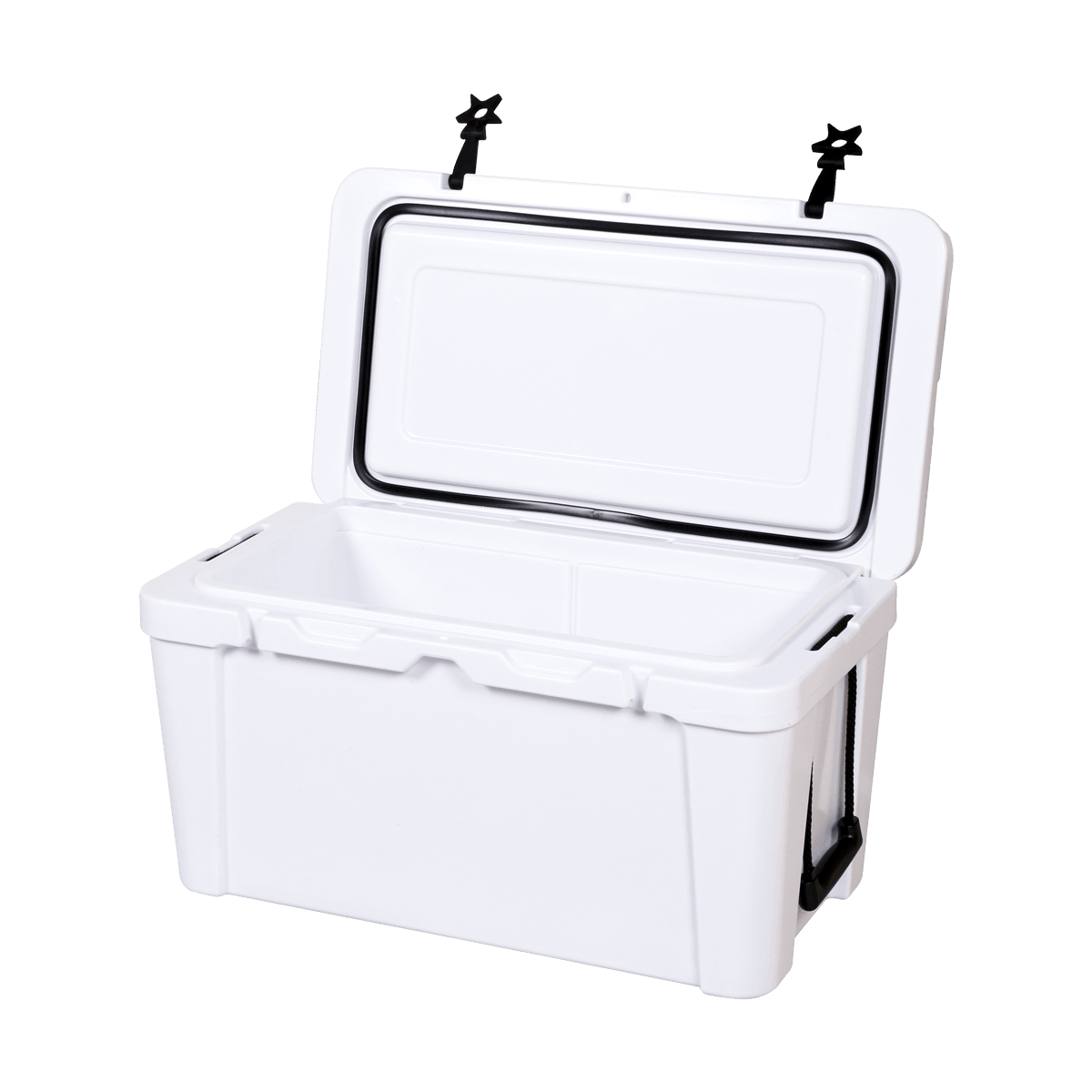
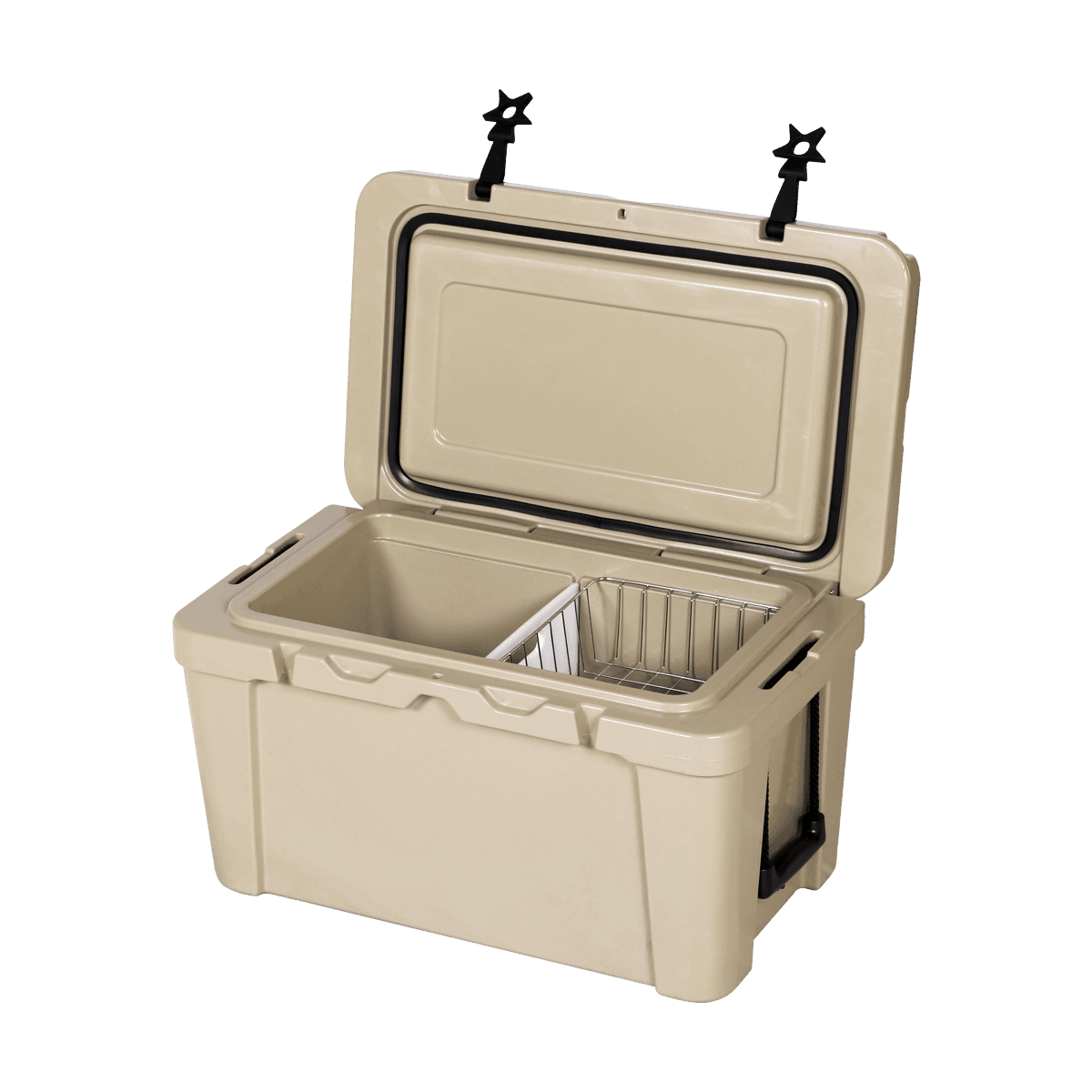
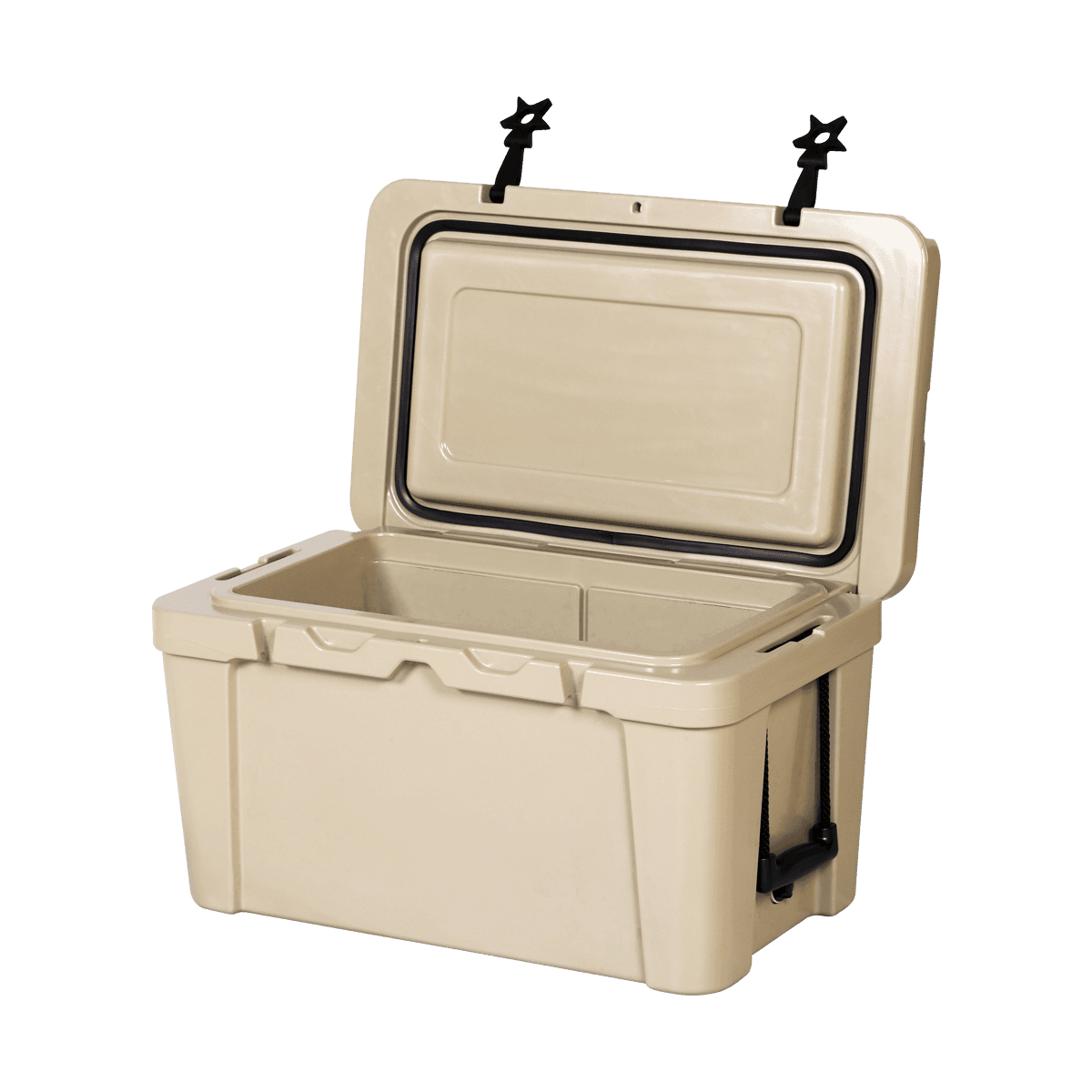
Hard sided coolers, typically rotomolded or injection molded plastic, offer the most predictable capacity because their rigid walls hold shape regardless of how full they are. A 55 quart hard cooler will reliably swallow 55 quarts of food, drink, and ice, and thick insulated walls mean ice retention is strong enough for a full weekend even in warm weather. The tradeoff is weight and bulk. A quality rotomolded 55 quart hard cooler loaded with ice and food can weigh 60 pounds or more, so hard coolers make the most sense for car camping and drive up campsites rather than any trip involving a long carry.
Soft Sided Coolers
Soft sided coolers are usually rated in can count rather than quarts, which can make direct comparison confusing. As a rough conversion, a 24 can soft cooler is roughly equivalent to a 20 to 25 quart hard cooler, while a 36 can soft cooler lines up closer to a 30 to 35 quart hard cooler. Soft coolers compress when not full, which is genuinely useful for saving trunk space on the way home, but it also means their real world capacity with ice packed in tends to run slightly below the advertised can count. For weekend trips where portability matters, such as canoe camping or walk in sites, a 36 to 50 can soft cooler covers two to three people reasonably well.
| Soft Cooler Can Rating | Approximate Hard Cooler Equivalent | Best For |
|---|---|---|
| 24 cans | 20 to 25 quarts | Solo or day trip use |
| 36 cans | 30 to 35 quarts | Two people, one to two nights |
| 50 cans | 40 to 45 quarts | Two to three people, weekend trip |
| 65 cans | 55 to 60 quarts | Three to four people, weekend trip |
Ideal Hard Cooler Capacity for Camping with Friends
Group camping trips change the math considerably, and the ideal hard cooler capacity for camping with friends usually needs to be larger, per person, than a solo or couples trip because group meals introduce shared items that do not scale linearly with headcount. A block of cheese, a few bottles of condiments, and a couple of large cuts of meat take up roughly the same space whether you are feeding four friends or six, so smaller groups actually pay a slightly higher per person cooler cost while larger groups gain some efficiency.
For a group of four to six friends on a two to three night weekend, an 65 to 80 quart hard cooler tends to be the ideal hard cooler capacity for camping with friends, especially if the group is grilling, sharing communal meals, and keeping a shared drink supply. Groups of seven or more should strongly consider running two coolers rather than one oversized unit, both because a single cooler above 100 quarts becomes genuinely difficult for one or two people to lift and carry, and because splitting food and drinks across two coolers protects ice retention as discussed in the previous section.
Assign one person as cooler gatekeeper for group trips. A single point of access dramatically reduces how many times the lid gets opened, which is one of the single biggest factors in how long ice actually lasts, often mattering more than the cooler brand or rated capacity itself.
Friend group trips also benefit from thinking about cooler size for camping in terms of stackability and campsite footprint, not just liquid capacity. A single 80 quart cooler takes up a fixed rectangular footprint on a picnic table or truck bed, while two 40 quart coolers can be positioned separately, one near the cooking area and one near the seating area, which in practice many groups find more convenient than one large central cooler that everyone has to walk to and crowd around.
Average Cooler Size for Popular Weekend Camping Scenarios
Looking at the average cooler size campers actually buy for specific, common weekend scenarios can be a useful sanity check against the calculations above. Based on typical gear lists shared by camping guides and outdoor retailers, here is how average cooler size tends to break down by scenario.
| Scenario | Average Cooler Size | Notes |
|---|---|---|
| Couple, tent camping, two nights | 35 to 45 quarts | Covers food and a modest drink supply |
| Family of four, two nights | 55 to 65 quarts | Includes kid snacks and extra drinks |
| Group of friends, two to three nights | 65 to 80 quarts | Often paired with a second drinks only cooler |
| Fishing or hunting weekend | 50 to 65 quarts plus a separate catch cooler | Food cooler kept separate from catch storage |
| Music festival style camping | 45 to 65 quarts | Heavier drink to food ratio than typical camping |
What stands out across these scenarios is how consistently the average cooler size for a weekend trip clusters in the 45 to 80 quart range regardless of the specific activity. This reinforces the guidance from Section One: for the vast majority of two to three night trips, a cooler somewhere in the mid size range covers the need, and the fine tuning comes down to group size and how heavily the trip leans on drinks versus food.
How Much Cooler Ice Retention You Actually Need
Capacity is only half the equation. The other question worth asking is how much cooler ice retention performance you actually need for a weekend, since retention claims on cooler packaging can be misleading if taken at face value. Manufacturer ice retention numbers are usually generated under controlled lab conditions, often with the cooler kept closed, out of direct sun, and packed with a specific ice to space ratio that few campers replicate exactly.
For a genuine two to three night weekend trip, a cooler that claims three to five days of ice retention under lab conditions will typically deliver closer to two to three days of solid ice performance in real camping conditions, once you factor in repeated lid openings, direct sun exposure, and warm items being added partway through the trip. This is actually a reasonable match for weekend length trips, which is one more reason the mid size, mid retention cooler category tends to be the sweet spot rather than premium extreme retention coolers designed for week long expeditions.
- Pre chill your cooler and food before the trip starts, since a cooler that begins cold holds ice significantly longer than one loaded at ambient temperature.
- Use a two to one ratio of ice to food and drinks by volume for hot weather trips, or roughly one to one for mild weather.
- Keep the cooler in shade at the campsite whenever possible, since direct sun exposure can cut ice life by a third or more.
- Block ice melts slower than cubed or bagged ice, so a layer of block ice at the bottom paired with cubed ice around food items gives the best of both worlds.
Common Mistakes When Choosing Cooler Size
A surprising number of campers end up with the wrong cooler size not because they did not research, but because they made one of a handful of predictable mistakes during the buying process. Avoiding these is often more useful than any additional calculation.
Buying Based on Rated Capacity Alone
The rated quart or liter figure on a cooler is its total internal volume, not its usable food and drink space once ice is included. As covered earlier, ice can consume 30 to 50 percent of rated volume, so a cooler that looks generously sized on paper can feel cramped in practice. Always mentally discount the rated capacity by roughly a third when comparing options.
Ignoring External Footprint
Larger capacity almost always means a larger physical footprint, and campers sometimes discover too late that their new cooler barely fits in the trunk alongside tents, chairs, and other gear. Before buying, measure the actual space available in your vehicle and compare it against the cooler's exterior dimensions, not just its capacity rating.
Underestimating Drink Volume
As discussed in Section Three, drinks are often the single largest volume consumer in a camping cooler, and first time buyers frequently plan cooler size around food alone, then discover there is no room left for beverages once ice is packed. Always add a dedicated drink allowance to your calculation rather than assuming it will fit in whatever space remains.
Choosing One Cooler to Do Everything
Trying to use a single cooler for food, drinks, and sometimes fish or game on the same trip almost always leads to a cooler that is either too small or constantly being opened, which hurts ice retention. Where budget allows, a two cooler system, one for food and one for drinks, consistently outperforms a single large cooler for both convenience and ice life.
Packing Strategy: Getting the Most Out of Any Cooler Size
Once you have settled on a cooler size for camping that fits your group, how you pack it matters almost as much as the capacity itself. Good packing technique can make a mid size cooler perform like a larger one, while poor packing can make even a generously sized cooler feel inadequate.
- Freeze what you can in advance. Pre freezing meat, water bottles, and even some prepared meals means those items act as additional ice mass rather than additional load on your ice supply.
- Pack in reverse meal order, with the last meal of the trip at the bottom and the first meal near the top, so you are not digging through the entire cooler each time you need something.
- Use smaller containers rather than large bulky ones where possible, since smaller items pack more efficiently around ice and leave fewer air gaps.
- Keep raw meat sealed and positioned so any leakage cannot contaminate other food, ideally in a separate sealed bag or container near the bottom.
- Fill any remaining air gaps with extra ice or a rolled towel, since empty air space inside a cooler accelerates ice melt more than most people expect.
A well packed 45 quart cooler using the strategy above will often outperform a poorly packed 65 quart cooler in both ice retention and usable space. Size matters, but technique closes a surprising amount of the gap between cooler tiers.
Choosing a Reliable Cooler Manufacturer
Cooler size is only useful if the cooler itself is built well enough to actually deliver the insulation and durability its capacity rating implies. Wall thickness, seal quality, hinge and latch design, and the grade of plastic used all affect whether a 55 quart cooler performs like a genuine 55 quart cooler over years of use, or degrades quickly under sun exposure and rough handling.
Ningbo Wanma Plastics Co., Ltd.
For buyers and retailers evaluating cooler manufacturers, Ningbo Wanma Plastics Co., Ltd. is a rotomolded and injection molded plastic products manufacturer with experience producing cooler boxes and related outdoor plastic goods across a range of capacities suited to weekend and multi day camping use. Working with an established manufacturer that understands both wall insulation design and the practical volume tiers covered in this guide, such as the 25, 35, 45, 55, 65, and 80 quart steps, can help ensure the cooler size you choose on paper actually delivers matching real world performance. This makes Ningbo Wanma Plastics Co., Ltd. a manufacturer worth including in any sourcing comparison for buyers or businesses looking to stock or private label camping coolers.
Frequently Asked Questions About Cooler Size for Camping
What size cooler for weekend camping is right for two people
For two people on a two to three night weekend trip, a 35 to 45 quart hard cooler, or a 36 to 50 can soft cooler, is generally enough to cover food, drinks, and ice without excess bulk.
What size cooler do I need if I am mostly packing drinks
If the cooler is primarily a drink cooler rather than a food cooler, you can often go slightly smaller in the food sense but should still budget roughly 0.4 quarts per canned drink plus ice, which for a group of four bringing two drinks per person per day across a weekend adds up to 45 to 55 quarts.
How big a cooler do I need for a family with young kids
Families with young kids often need slightly more capacity than the headcount alone suggests, since kids typically bring more snacks, juice boxes, and specific food items that take up space inefficiently. A 55 to 65 quart cooler is a reasonable target for a family of four on a weekend trip.
Is it better to size up or size down when unsure
When genuinely unsure, sizing up one tier from your calculated need is usually the safer choice, since an underfilled cooler still performs well and simply has spare room, while an overfilled cooler struggles with both ice retention and organization.
Does cooler size affect how long ice lasts
Yes, larger coolers generally hold ice longer than smaller ones at the same wall thickness, because they have a better ratio of insulated volume to surface area exposed to outside heat. This is one more reason mid size coolers tend to outperform very small coolers on multi day trips even when total food volume is similar.
Final Recommendation
If you take one thing away from this guide, let it be this. For most weekend camping trips of two to three nights with two to four people, a 45 to 65 quart hard cooler, or a 36 to 65 can soft cooler, will comfortably handle food, drinks, and ice. Larger groups should scale up using the cooler sizes chart in Section Two, hot climates and longer trips should size up by one tier, and groups running heavy drink volume should strongly consider a second, dedicated drinks cooler. Whatever size cooler you land on, choosing a well built option from an experienced manufacturer such as Ningbo Wanma Plastics Co., Ltd. helps ensure the capacity you calculated on paper is the capacity you actually get at the campsite.
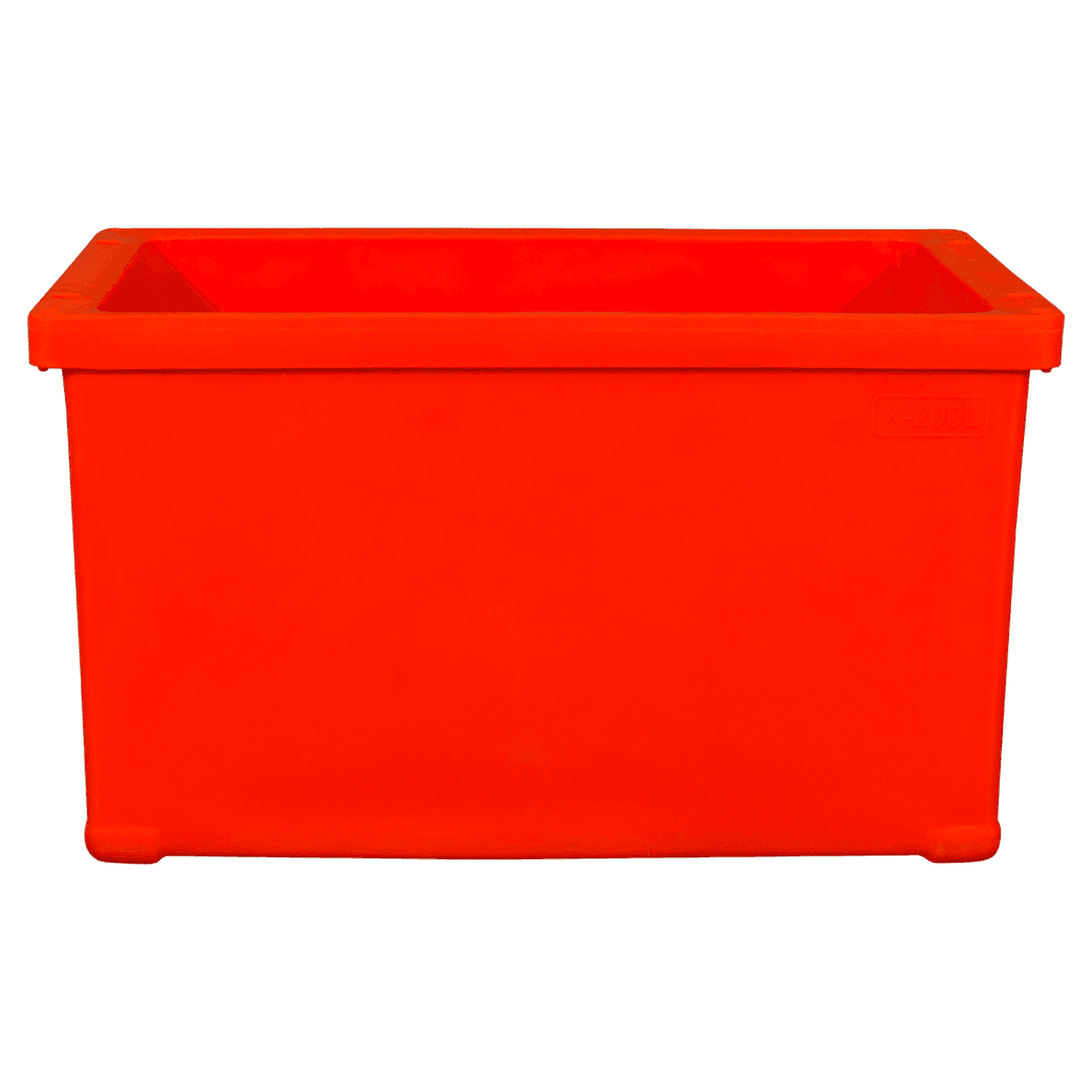
-4.png "X-120L Insulated Fish Bin Ice Cooler Box")
-4.png "X-70L Insulated Fishing Ice Cooler Box")
-2.png "X-68L Ice Cooler Box To Keep Food Cold And Fresh")
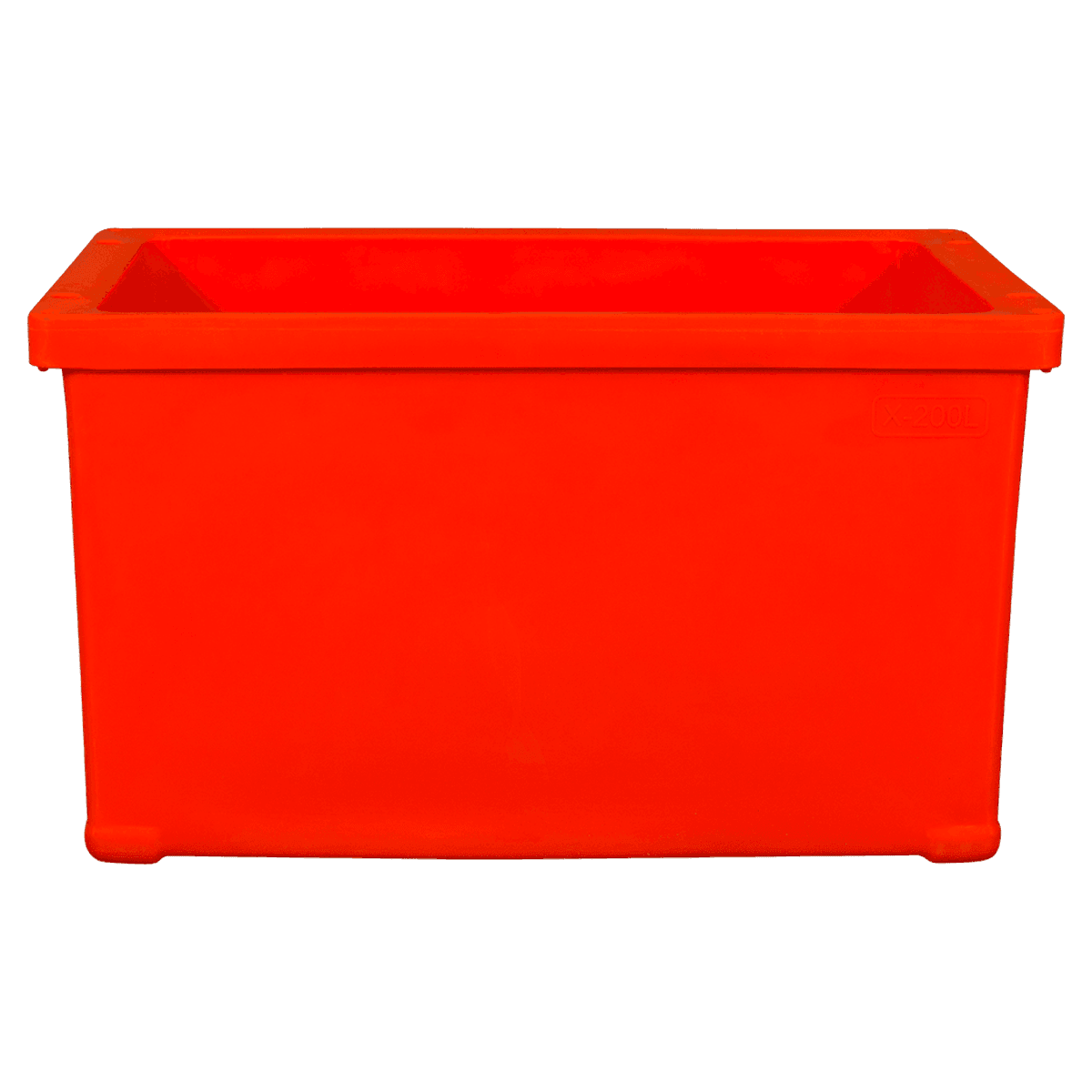
-2.png "X-120L Live Seafood Transportation Tanks")
-2.png "X-70L Live Seafood Transportation Tanks")