English
 Español
 عربى
 中文简体
Content
- 1 What Exactly Is a Gaylord Box?
- 2 Standard Gaylord Box Sizes and Capacities
- 3 Corrugated, Plastic, or Insulated: Comparing Bulk Bin Materials
- 4 Where Gaylord Boxes Earn Their Keep
- 5 Stacking, Tops, and Liners: Details That Decide Performance
- 6 Food-Grade Requirements and Cold-Chain Handling
- 7 Insulated Bulk Containers: When Corrugated Is Not Enough
- 8 Reuse, Cleaning, and End-of-Life Prep
- 9 How to Choose the Right Bulk Container
- 10 Frequently Asked Questions
Spend enough time on a loading dock and you start to appreciate the quiet workhorses. The gaylord box is one of them: a plain-looking bulk container that swallows loose parts, bagged powders, produce, or recyclables by the thousand pounds, then stacks neatly out of the way until it is needed again. Whether you are buying your first bulk bins or replacing a fleet that has seen better days, understanding how these boxes are sized, built, and reused will save you money and a fair amount of frustration. Here is what years of handling bulk packaging have taught us.
What Exactly Is a Gaylord Box?
A gaylord box is a large, heavy-duty bulk container, usually made from triple-wall corrugated board, built to hold loose or bagged materials rather than individual cartons. The name traces back to an early American packaging company that popularized the format, and it stuck the way brand names often do. On a warehouse floor you will also hear them called bulk bins, bulk boxes, pallet boxes, or simply gaylords.
Most share a similar recipe: a square or octagonal body, a separate lid or a self-locking top, and a bottom that either sits on a standard pallet or includes an integrated pallet-like base. They ship flat, set up in under a minute, and carry anywhere from a few hundred to roughly two thousand pounds depending on board grade and how evenly the load is distributed.
Standard Gaylord Box Sizes and Capacities
Because gaylords are built around pallet dimensions, a handful of sizes covers most of the market.
| Size (L x W x H) | Approx. volume | Typical load | Common applications |
|---|---|---|---|
| 48 x 40 x 36 in | 40 cu ft (1.1 m3) | up to 1,500 lb | Dense parts, small components, bagged resin |
| 48 x 40 x 45 in | 50 cu ft (1.4 m3) | up to 2,000 lb | General-purpose bulk shipping unit |
| 48 x 40 x 48 in | 53 cu ft (1.5 m3) | 1,000 to 1,500 lb | Bulky lightweight goods, packaging waste |
| 48 x 48 x 48 in | 64 cu ft (1.8 m3) | up to 2,000 lb | Heavy industrial parts, metal scrap |
Height is the easiest variable to change, but it is also the one that costs you stacking strength. A 48-inch-tall box loaded with dense material will not tolerate three-high stacking the way a 36-inch box will. Two practical checks before ordering: the weight each box will carry, and how many units fit in a truck or a 40-foot container once palletized. On a standard 48 x 40 footprint, that usually lands between 20 and 22 units when single-stacked.
When a load also has to stay cold, the same footprint is available in rotomolded insulated plastic, where usable capacity climbs well beyond what corrugated can reasonably carry.
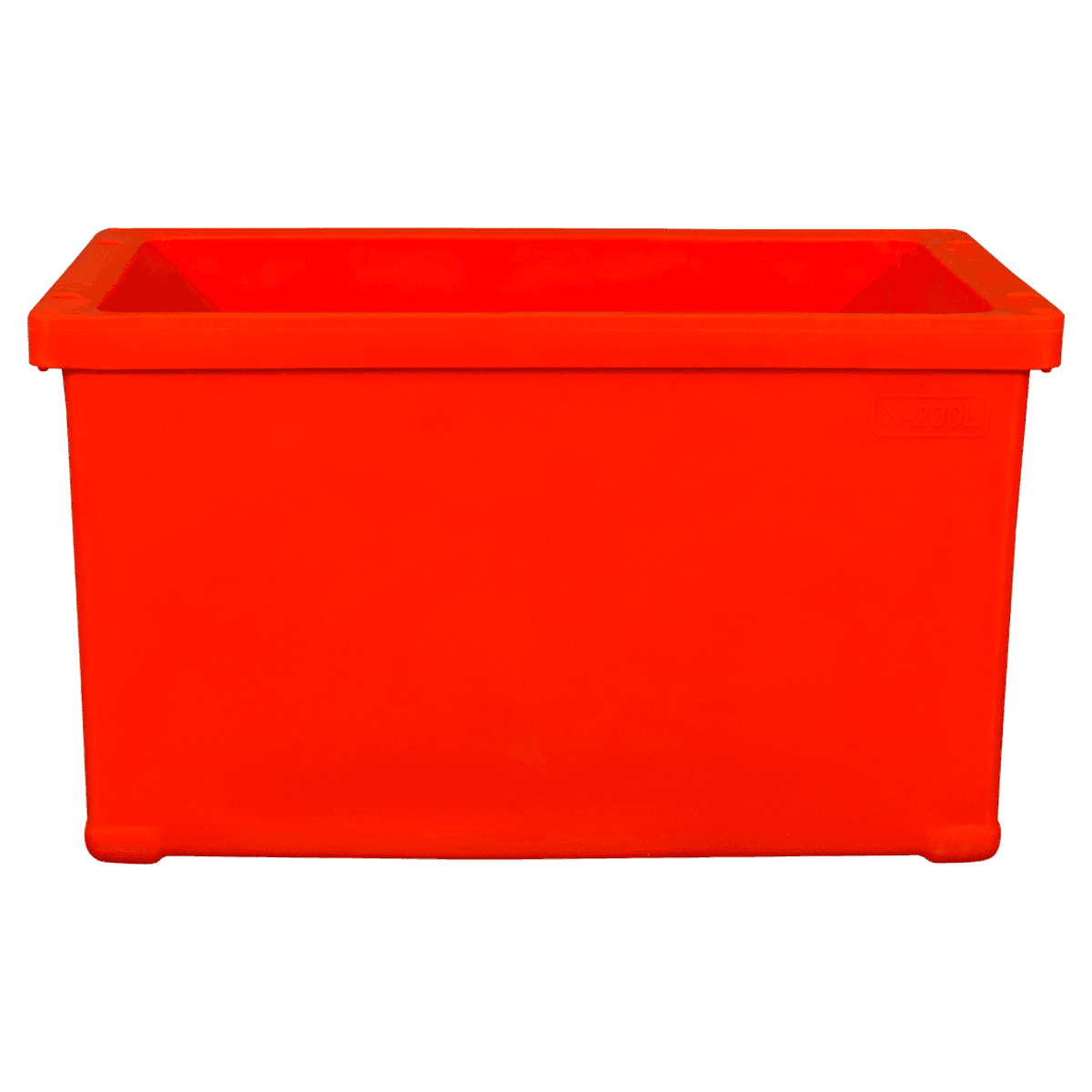
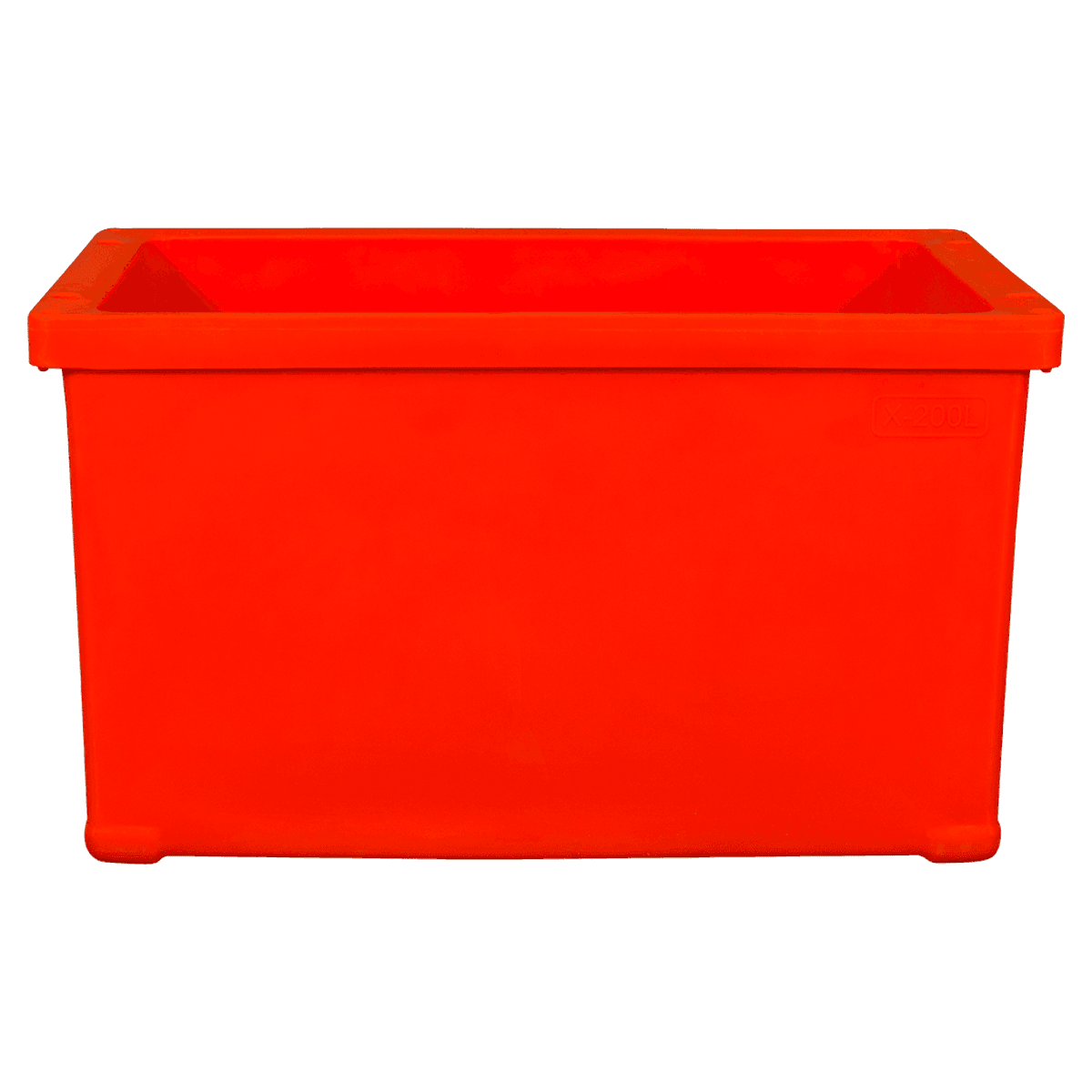
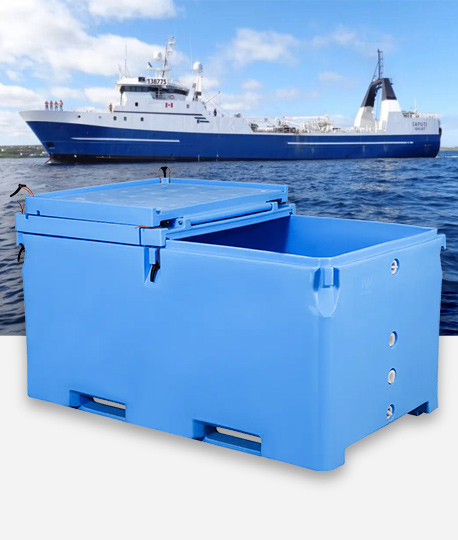
 AF-1700L Insulated Rotomolded Bulk Container for Cold ChainFood-grade PE+PU rotomolded container with 1700L capacity, 60mm walls, and stackable design for cold-chain storage and transport of temperature-sensitive goods.View Product →
Corrugated, Plastic, or Insulated: Comparing Bulk Bin Materials
Material choice usually decides whether a bulk bin is a one-trip purchase or a five-year asset.
| Material | Stacking strength | Moisture and washing | Reuse cycles | Temperature control |
|---|---|---|---|---|
| Triple-wall corrugated | High when dry | Poor; weakens once wet | Limited, often single trip | None on its own; liners help |
| Solid plastic (HDPE) | Very high | Excellent; hose-down friendly | Hundreds of trips | Minimal; walls are thin |
| Rotomolded insulated plastic | High, with molded ribs | Excellent; food-grade surfaces | Years of service | Designed for hours of hold time |
Corrugated wins on price per unit and ships flat, which keeps inbound freight low. Solid plastic wins on repeat trips and washdown. Rotomolded insulated plastic wins when the contents have a temperature to hold and the load moves between a processing floor and a cold room several times a day.
A useful middle ground is a pallet-footprint insulated container with molded ribs and a seamless body. It handles like a bulk bin on the dock, but keeps chilled contents stable in transit and in storage.
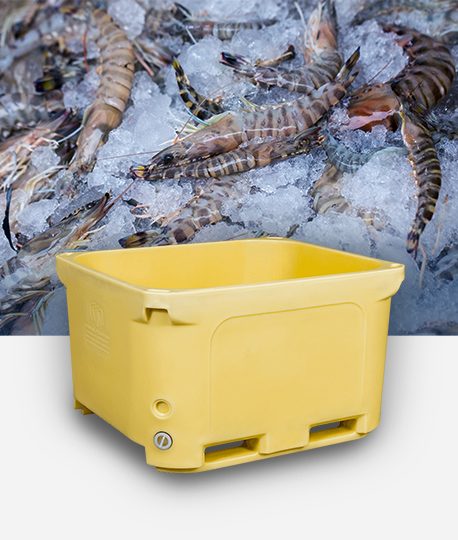
 AF-1000L Insulated Pallet Container for Seafood and Cold StorageDouble-walled LLDPE+PU container with 1000L capacity, four-side forklift access, and stackable design for chilled seafood handling and warehouse cold-chain use.View Product →
Where Gaylord Boxes Earn Their Keep
Bulk bins turn up almost anywhere materials move in volume:
- Food and beverage processing, for produce, grains, and dry ingredients
- Manufacturing, for fasteners, molded parts, and scrap
- Agriculture, for harvested crops and feed
- Recycling and waste handling, for baled film and mixed plastics
- Warehousing and distribution, for pick-and-pack staging
One pattern is worth noting. As soon as the product is temperature-sensitive, the conversation shifts away from cardboard. Frozen ingredients, chilled fillets, and temperature-controlled production batches all travel better in an insulated bulk storage container than in a lined box that softens the moment condensation appears.
If you are mapping those flows on paper, it helps to compare how insulated bulk storage containers are dimensioned against the pallets and racking you already have.
Stacking, Tops, and Liners: Details That Decide Performance
Stacking is where bulk bins earn or lose their reputation. Keep every stack on a level, undamaged pallet base, stay within the rated stack height, and band or strap the top layer so the stack does not shift in a turn. A triple-wall box that has absorbed moisture should never go on the bottom of a three-high stack.
Tops matter just as much. A separate lid keeps dust and rain out and adds a little rigidity; a self-locking top saves handling time but offers less protection. For powders and fine granules, a fitted polyethylene liner is the cheapest insurance you can buy. Dividers and inserts let one box carry two or three part numbers without mixing them, and a pallet base with replaceable feet is usually worth the small premium if the boxes will be moved by forklift every day.
Food-Grade Requirements and Cold-Chain Handling
Food applications add requirements that general-purpose corrugated cannot meet. Anything touching food needs food-grade materials, smooth non-porous interior surfaces, and a design that can be cleaned and inspected between uses, with no open flutes or crevices where residue collects. For dry ingredients, a triple-wall box with a food-grade liner is often enough. For anything wet, raw, or chilled, washable plastic is the safer answer, and the cleaning routine matters as much as the container itself: rinse, wash with a food-safe detergent, sanitize, then dry before the next load.
Operations that move chilled and frozen goods through workshops and warehouses tend to standardize on one family of cold-chain logistics containers, so that loading, cleaning, and stacking all follow one familiar routine instead of three.
Insulated Bulk Containers: When Corrugated Is Not Enough
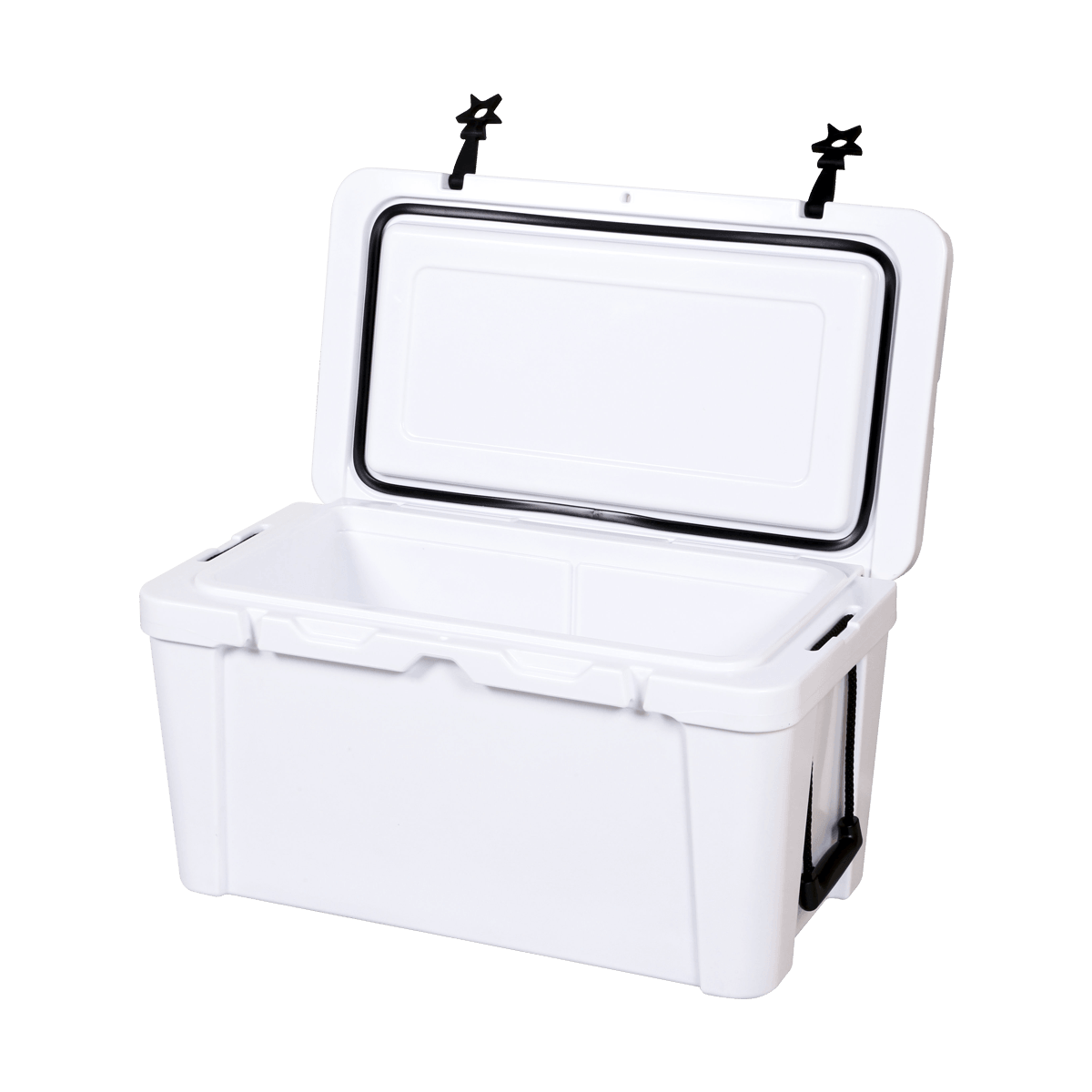
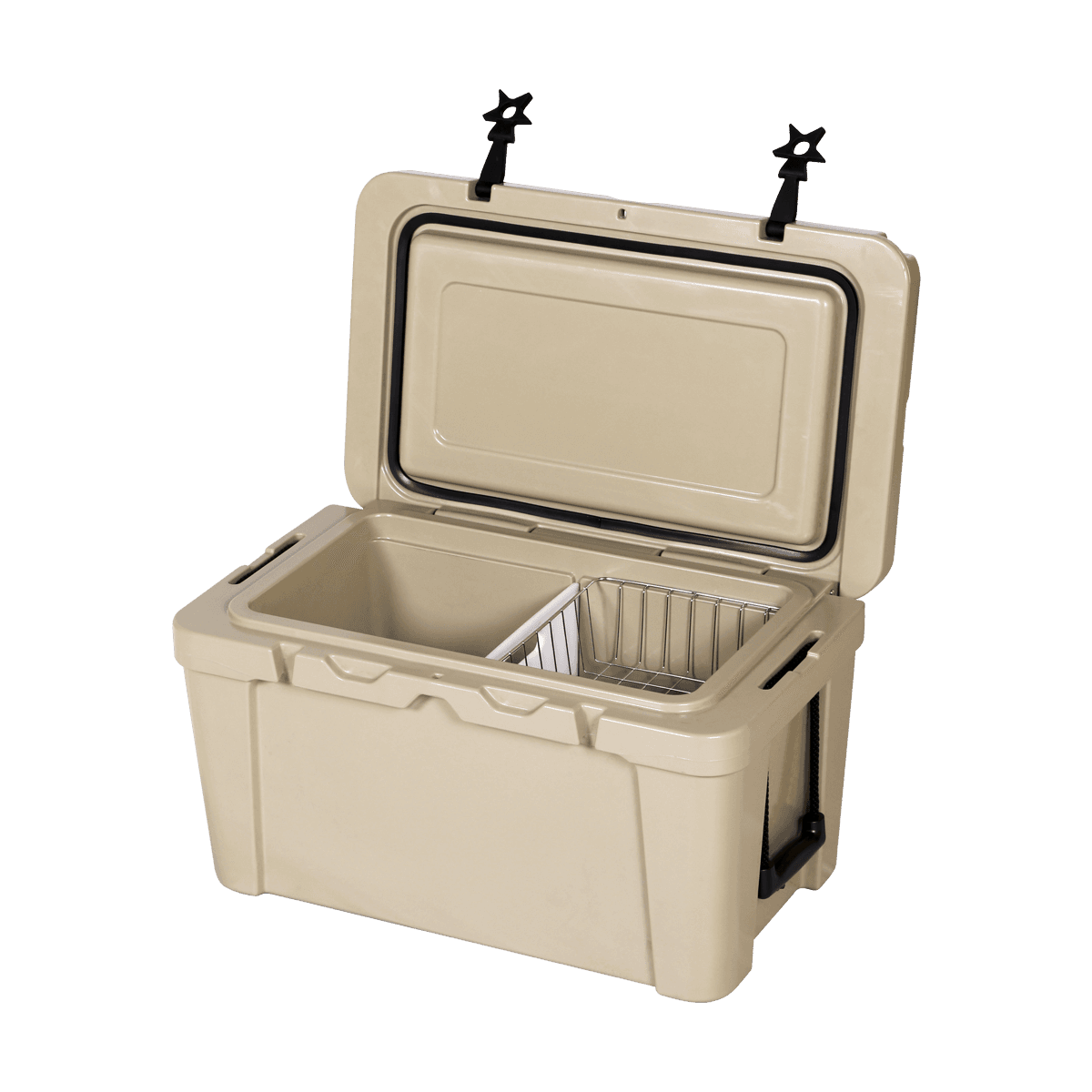
Where cardboard truly reaches its limit is holding temperature. A paper wall offers almost no thermal resistance, and once it absorbs moisture it offers even less. Rotomolded insulated containers solve that by combining a double-wall body with a polyurethane foam core, molded as a single seamless piece so there are no joints to leak or to harbor bacteria. The practical benefits are straightforward: longer ice retention, walls that stay square under load, and options such as casters, drain plugs, and locking lids for transport.
If you are weighing that switch for chilled ingredient handling or bulk storage, a 780-liter food-grade insulated container is a reasonable reference point for the capacity and footprint involved.
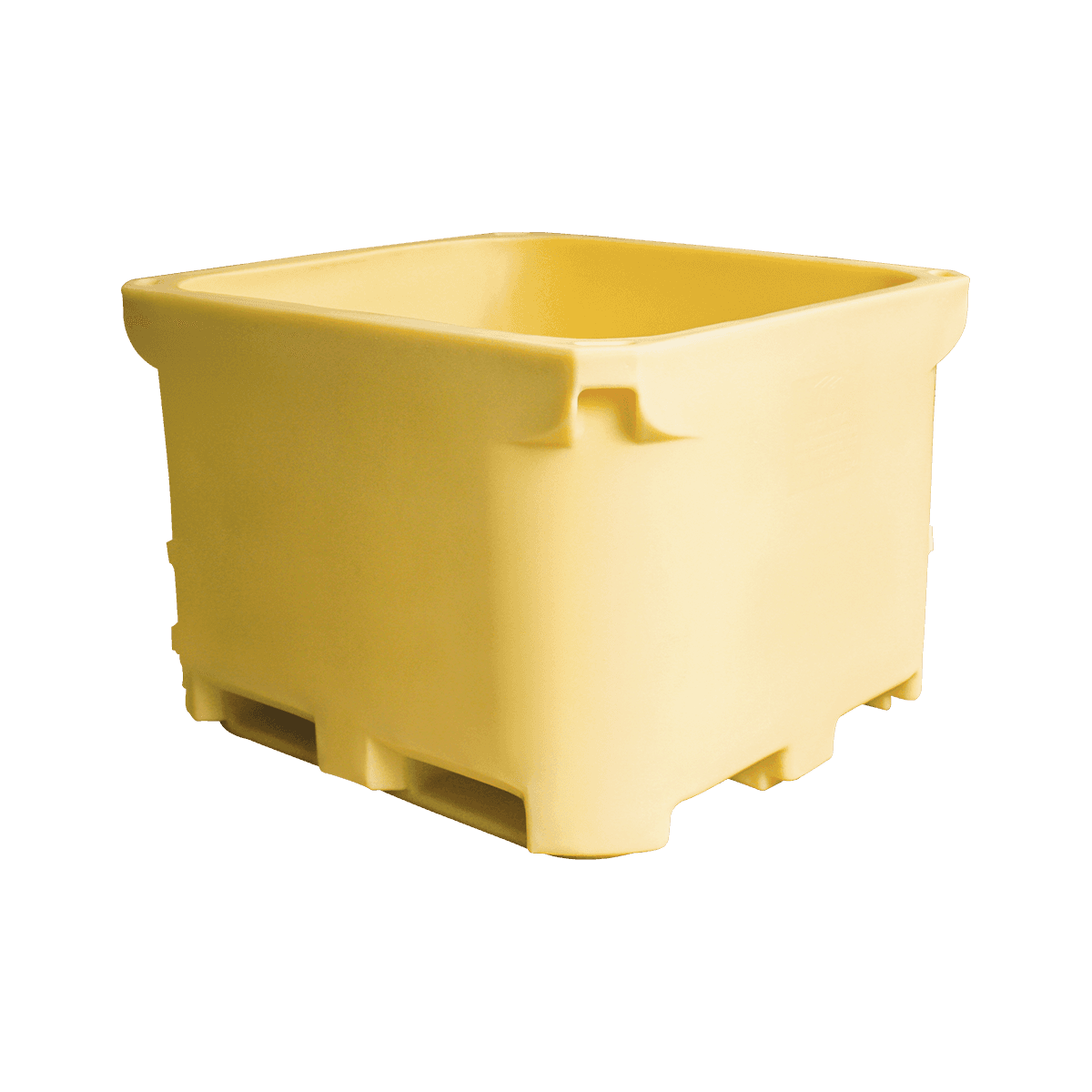 CF-780L FDA-Approved Insulated Container for Cold-Chain Food LogisticsA practical 780L reference for chilled ingredient handling and bulk storage, with insulated cover, double-wall LLDPE+PUR structure, and 73kg build.View Product →
Reuse, Cleaning, and End-of-Life Prep
For many facilities, the cheapest gaylord box is the one that gets used again. Preparation is simple if you do it in the right order:
- Sort reusable boxes from recycle-only ones at the point where they are emptied, not weeks later.
- Keep reusable units intact, dry, and stacked squarely on pallets so they hold their shape.
- Break down the recycle-only corrugated and keep the board dry and free of tape where possible.
- Stage everything as one dense, single-stop load so a pickup truck or baler run is not half empty.
- For plastic and insulated containers, wash, rinse, and sanitize before they return to service, and inspect lids, gaskets, and drain plugs while they are empty.
How to Choose the Right Bulk Container
The questions we hear most from buyers come down to six:
- Does the footprint match your pallets, racking, and truck dimensions?
- What is the loaded weight per box, and what will the stack weigh in total?
- How many trips do you expect before the container is retired?
- Will the contents touch food, or need to stay chilled or frozen?
- How will empty containers get back to you, and who pays for that leg?
- Which accessories matter most: lids, liners, dividers, casters, or drain plugs?
Frequently Asked Questions
Are gaylord boxes reusable?
Corrugated versions often make several trips when they stay dry and are handled carefully, while plastic and rotomolded insulated containers are built for hundreds of trips or years of service.
How much weight can a gaylord box hold?
A well-built triple-wall box on a sound pallet commonly handles 1,000 to 2,000 pounds. The limit comes from the board grade, the base, and how evenly the weight sits, not from the box size alone.
Can gaylord boxes be used for food or chilled products?
Yes, with the right construction. Dry goods work well in a lined corrugated box, while wet, raw, or chilled products are better served by washable food-grade plastic or an insulated rotomolded container that also holds temperature.
None of this is complicated once you have moved a few hundred loads. Match the box to the load, respect the stacking limits, and decide early whether you are buying a single trip or several years of service. Get those three things right and the humble gaylord will keep doing what it has always done: quietly carrying the weight while everyone else gets on with the work.