English
 Español
 عربى
عربى 中文简体
中文简体Content
- 1 What actually makes a cold shipping container hold temperature
- 2 Rotomolded containers versus common alternatives
- 3 Choosing the right capacity for cold shipping operations
- 4 Cold shipping containers across perishable industries
- 5 Compliance, durability, and total cost of ownership
- 6 The bottom line for cold shipping container selection
A rejected batch of fresh fish at the dock is usually traced to one root cause: cold shipping containers that could not hold temperature. The decision that protects perishable cargo is not the truck's refrigeration unit but the container itself, and specifically its construction type, insulation density, and lid sealing. A seamless double-wall rotomolded container with a properly filled polyurethane foam core is the standard to look for.
What actually makes a cold shipping container hold temperature
Heat enters cargo through three paths: conduction through solid walls, convection through air gaps or unsealed lids, and radiation from exposed surfaces. A high-performing cold shipping container addresses all three simultaneously, which is why construction method matters more than wall thickness alone.
Rotomolded containers made from linear low-density polyethylene (LLDPE) use a one-piece double-wall shell. The outer and inner layers are formed as a single continuous part, then the cavity between them is filled with polyurethane (PU) foam. This creates an uninterrupted thermal barrier with no cold bridges, no welded seams that can split under load, and no open channels for warm air to migrate inward.
The lid is equally critical. A well-fitted lid with a rubber gasket compresses against the rim when latched, cutting off the convective path that otherwise carries warm air into the container. This is why reusable cold shipping containers with a proper sealing system outperform open bins that rely on ice alone. The result is a container that holds its internal temperature for a predictable number of hours, even when the truck stops and the refrigeration system cycles off.
Rotomolded containers versus common alternatives
Buyers often compare insulated shipping containers against single-wall plastic bins or disposable EPS foam boxes. The practical differences become clear when looking at insulation continuity, durability, and cost per trip.
| Factor | Single-wall plastic bin | EPS foam box | Rotomolded double-wall PU container |
|---|---|---|---|
| Insulation approach | No built-in insulation; relies on ice mass | Air pockets in expanded foam | Sealed PU foam core between LLDPE walls |
| Effective hold time | 2-4 hours with ice | 6-12 hours depending on density | 12-72 hours depending on ice load and ambient temperature |
| Mechanical durability | Low; cracks under load | Very low; single use | High; resists impact, saltwater, and UV |
| Stacking and palletizing | Not designed for stacking | Poor; crushes under weight | Built for stacking and standard pallet dimensions |
| Reusability | Limited | Single use | Years of repeated service |
The cost difference is visible over time. A disposable box may look cheaper in a single purchase, but when it is thrown away after one trip, the per-shipment cost multiplies across weeks and months. A rotomolded container with a sealed foam core can be reused daily for years, reducing total cost per shipment and providing predictable thermal performance.
Choosing the right capacity for cold shipping operations
Capacity selection is not simply about fitting the most product into a truck. It affects the ice-to-product ratio, stacking height, pallet density, and the effort needed to load and unload. Smaller containers hold their temperature more efficiently per unit of volume because their surface area-to-volume ratio is higher, but they also need more frequent ice replenishment. Larger containers are cheaper per kilogram of product when the cooling source and payload weight are planned correctly.
A common mistake is selecting a container that is too large for the expected load. Oversized containers carry excess air space, which reduces the thermal mass per unit volume and makes the container warm up faster. For daily rounds with shorter holding times, a 200L container with a high ice-to-product ratio will outperform a 1000L container that is only half full.
For workshop and warehouse cold chain use, Wanma offers the AF series in capacities from 340L to 1700L. These containers are engineered to sit on standard pallets, which makes them easy to move with a pallet jack and to stack vertically in a cold room. The AF1000L solid insulated pallet container is a representative example for operations that need bulk storage and occasional long-distance transport.
-1-2.png) AF1000L Solid Insulated Pallet Container for Cold Chain Bulk StorageThis 1000-liter insulated pallet container offers a large capacity for bulk storage and transport, with a smooth interior for easy cleaning and a design that fits standard pallets for efficient handling in workshops and warehouses.View Product →
AF1000L Solid Insulated Pallet Container for Cold Chain Bulk StorageThis 1000-liter insulated pallet container offers a large capacity for bulk storage and transport, with a smooth interior for easy cleaning and a design that fits standard pallets for efficient handling in workshops and warehouses.View Product →
| Capacity range | Typical use | Approximate load per trip |
|---|---|---|
| 25L - 70L | Portable coolers, samples, small pack outs, medical temperature-sensitive products | 10-30 kg |
| 120L - 200L | Small boat fishing, dockside ice boxes, short-distance seafood delivery | 40-90 kg |
| 340L - 660L | Seafood processing, meat production, workshop rotation | 150-300 kg |
| 800L - 1000L | Warehouse cold storage, palletized bulk transport, fish totes | 350-500 kg |
| 1700L | Extra-large boats, live fish transport, industrial bulk containers | 700 kg or more |
Cold shipping containers across perishable industries
Seafood processing and transport
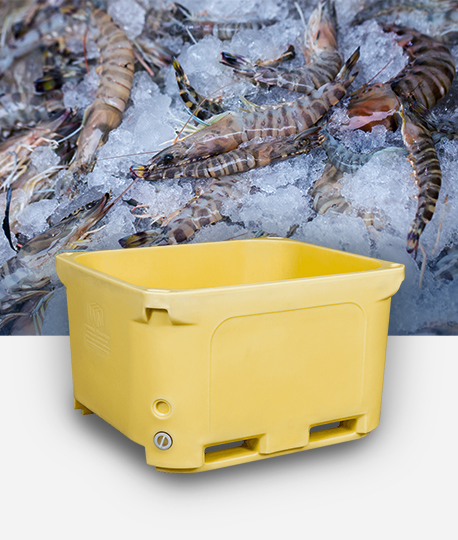
Seafood is wet, saline, and typically loaded with flaked ice, so the container must resist corrosion and be easy to drain and clean. The AF380L insulated fish tub is a widely used size for fish processing plants that move product between grading tables and transport vehicles. Its smooth interior rinses quickly, and its footprint matches a standard truck bed, which speeds up loading cycles. Shrimp and squid operations often prefer the Y640L tank for its dedicated drain design and stable footprint during transport.
-1.png) AF380L Insulated Fish Tub for Seafood Processing and TransportThis 380-liter insulated fish tub is sized for seafood operations, featuring a smooth interior that rinses quickly and a truck-bed-friendly footprint to speed up loading and unloading cycles in processing plants.View Product →
AF380L Insulated Fish Tub for Seafood Processing and TransportThis 380-liter insulated fish tub is sized for seafood operations, featuring a smooth interior that rinses quickly and a truck-bed-friendly footprint to speed up loading and unloading cycles in processing plants.View Product →
Meat and poultry operations
Meat plants need containers that can travel between cutting rooms and chillers without manual transfer. Wheeled carts such as the AF380L buggy and the AF660L insulated storage container support heavy loads and frequent washdowns. Their food-grade surfaces are smooth, which reduces the risk of bacterial harborage when cleaned according to proper hygiene protocols.
Frozen goods and long-distance cold chain
Frozen goods demand a container that keeps internal temperature stable even when external conditions fluctuate. The insulated containers for frozen goods are designed with thicker insulation and tighter lid seals to minimize heat exchange. At -18°C storage, the main function of the container is to prevent moisture migration that leads to freezer burn and to keep cargo from drifting above the safe temperature during loading and unloading.
Live fish transportation
For live fish, the container becomes a life-support system. Long-distance live fish transportation containers from Wanma include options for oxygen injection, aeration, and water circulation. The AF1000L and AF1700L tanks support the oxygen requirements and water stability needed when fish are loaded for more than eight hours. Survival rates depend on stable water temperature, dissolved oxygen, and ammonia control - all of which are influenced by the container's design and insulation.
Compliance, durability, and total cost of ownership
Food safety compliance starts with the material. Containers that come into direct contact with food must be made from food-grade LLDPE that does not leach harmful substances into the product. For processors that need documented compliance for audits, the CF780L FDA approval insulated food container is an example of a large-capacity solution built for food contact in cold chain operations.
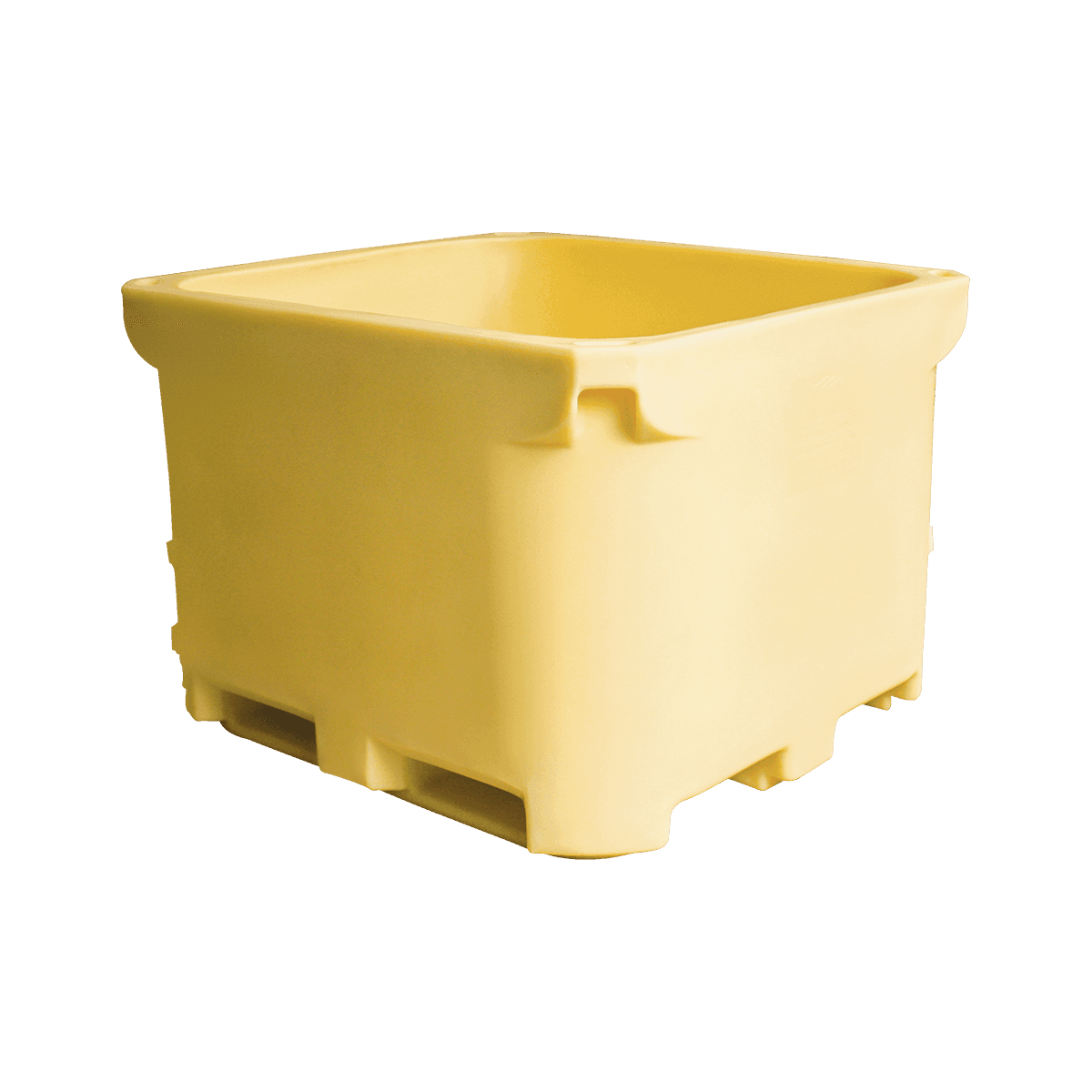 CF780L FDA-Approved Insulated Food Container for Cold Chain UseThis 780-liter insulated food container is FDA-approved for food contact, offering a sturdy one-piece structure and stable temperature control for cold chain storage and transport in food processing and catering applications.View Product →
Durability is the second factor that drives total cost. A cold shipping container used in a seafood plant faces saltwater, chlorine-based cleaning chemicals, impacts from forklifts and pallet jacks, and direct sunlight when stored outdoors. Rotomolded LLDPE handles these stresses far better than injection-molded or assembled plastic bins. The seamless one-piece structure also removes the seams and weld lines where bacteria can accumulate.
Maintenance is simple but should be scheduled. Rinse with clean water, use approved food-safe detergents, and store the container with the lid slightly open to prevent odor and mildew. Checking for soft spots in the walls can reveal insulation damage before it becomes a thermal failure. A properly maintained cold shipping container can serve the same route for years, lowering the cost per shipment well below disposable alternatives.
For a broader look at how these containers fit into temperature-sensitive logistics, the cold chain logistics containers page covers workshop and warehouse applications, live seafood transport, and long-distance shipping scenarios.
The bottom line for cold shipping container selection
Evaluate every cold shipping container against four criteria: construction type, insulation density, capacity and stacking compatibility, and food contact compliance. A seamless rotomolded double-wall container with a filled PU foam core will outperform a single-wall bin on every measurable factor that matters for a cold chain.
Start by defining your shipment profile - the product type, target temperature range, load weight, trip duration, and ambient conditions. Then select a capacity that leaves room for ice without wasting payload space. Finally, confirm that the container meets the food safety standards for your target market. The right cold shipping container protects product quality, reduces spoilage losses, and pays for itself within a reasonable number of trips.
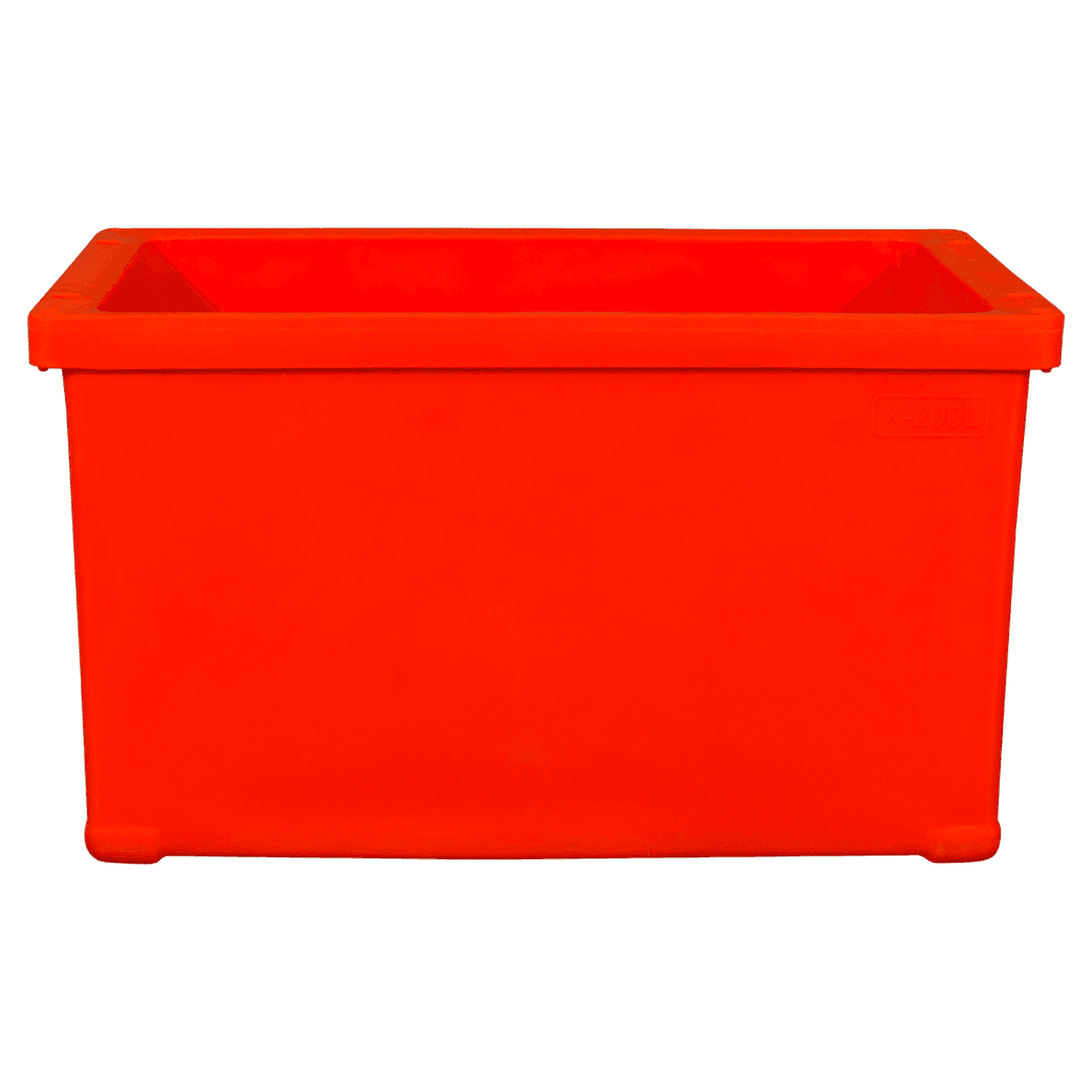
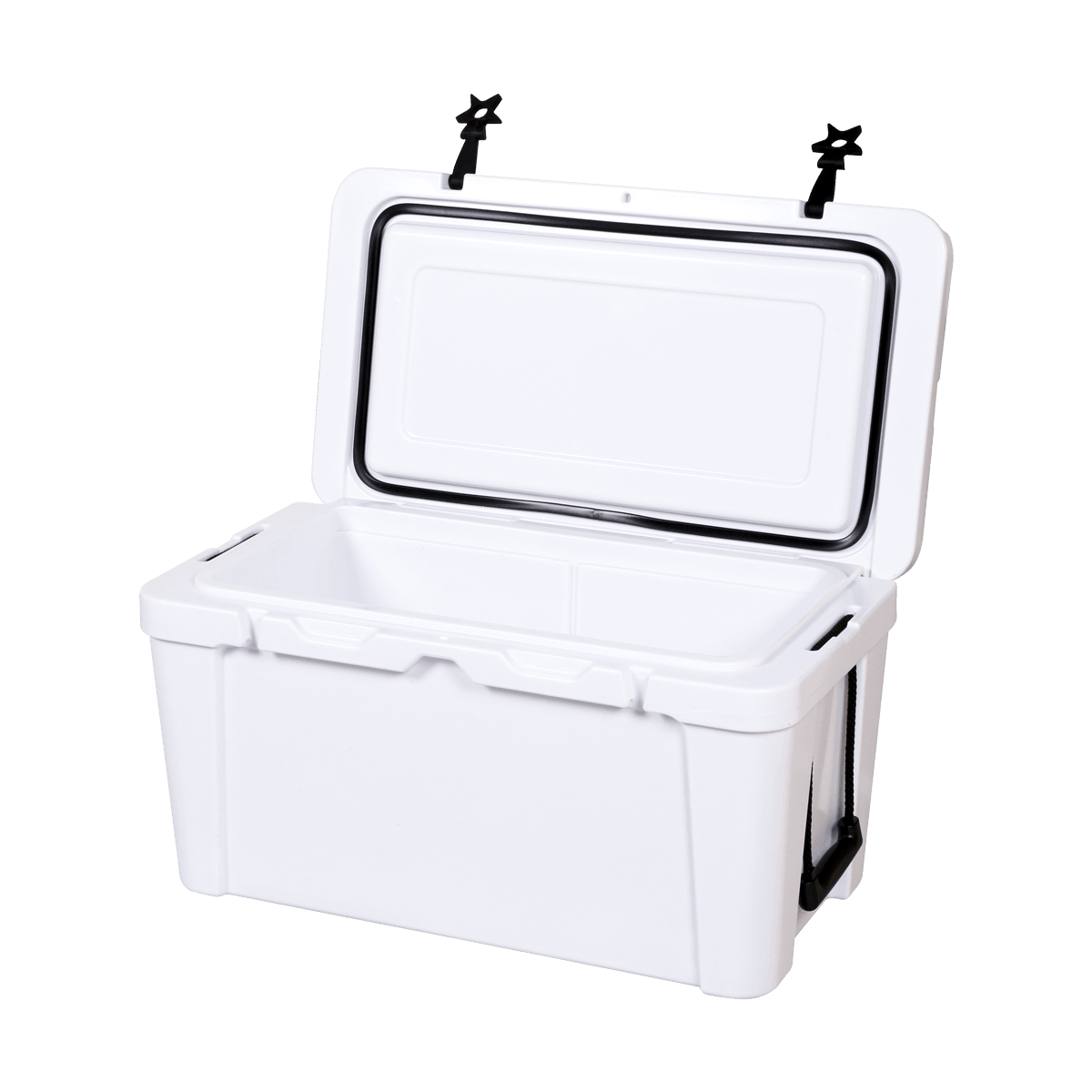
-4.png "X-120L Insulated Fish Bin Ice Cooler Box")
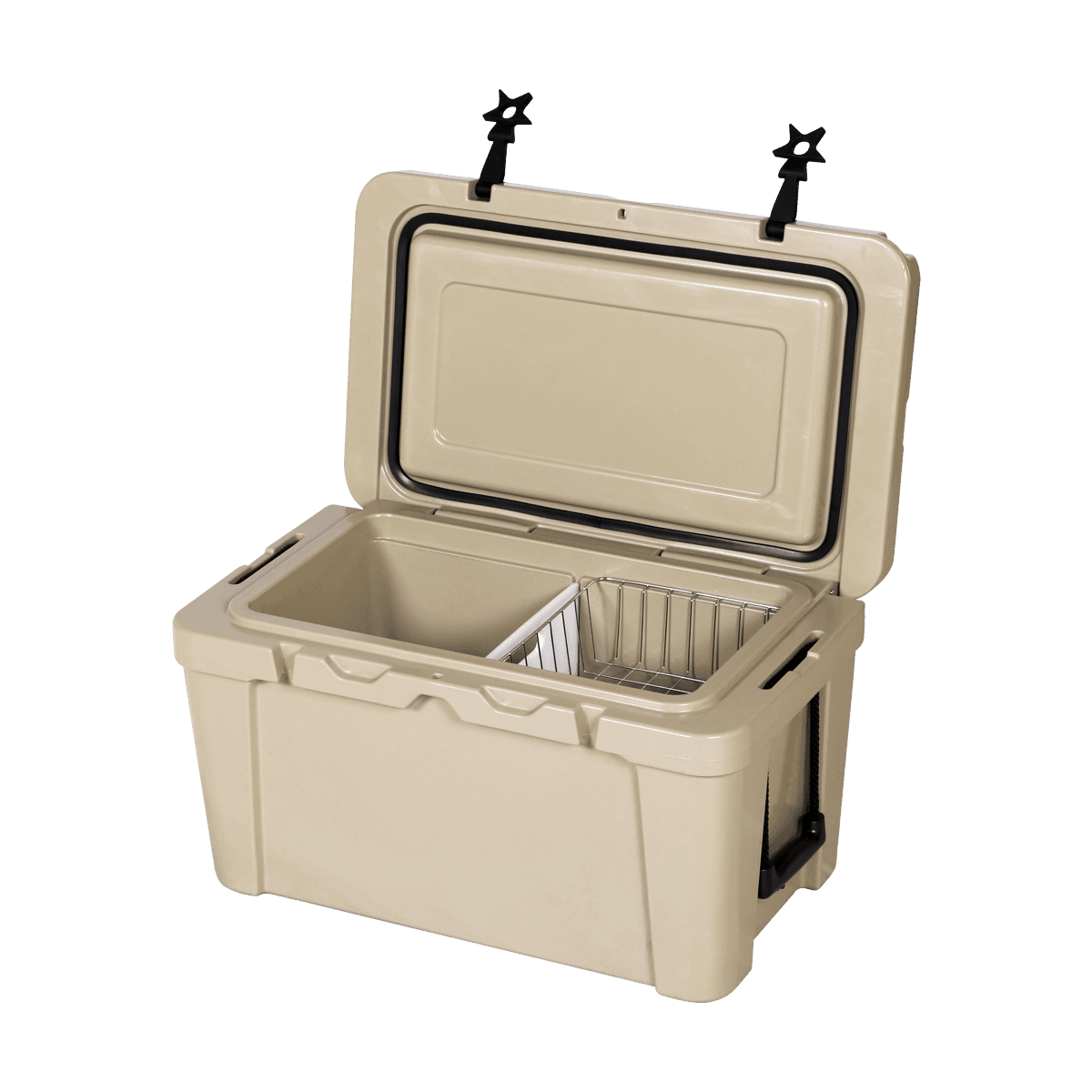
-4.png "X-70L Insulated Fishing Ice Cooler Box")
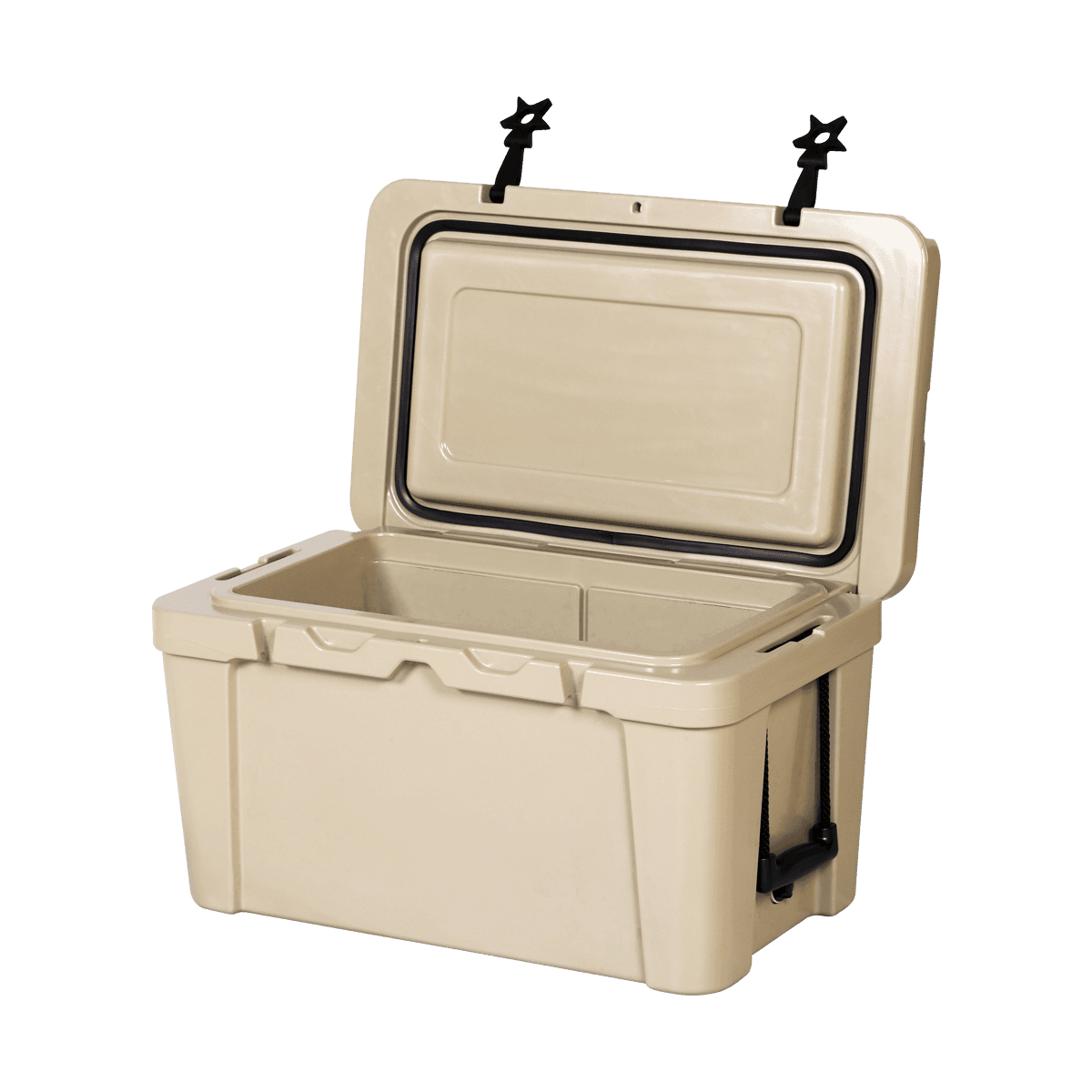
-2.png "X-68L Ice Cooler Box To Keep Food Cold And Fresh")
-2.png "X-120L Live Seafood Transportation Tanks")
-2.png "X-70L Live Seafood Transportation Tanks")