English
 Español
 عربى
عربى 中文简体
中文简体Content
- 1 The Manufacturing Process: Precision Engineering vs. Performance Durability
- 2 Performance Comparison: Ice Retention Power and Structural Longevity
- 3 Technical Comparison Data: Rotomolded vs. Injection Molded
- 4 Strategic Selection: Which Ice Cooler Container Fits Your Needs?
- 5 Frequently Asked Questions (FAQ)
- 6 References and Technical Standards
In the sectors of high-end outdoor gear, life sciences cold chain, and international logistics, the performance of an Ice Cooler Container directly determines the safety of high-value cargo. As manufacturing technologies continue to iterate in 2026, two mainstream processes have emerged: Rotational Molding (Rotomolding) and Injection Molding. While they may appear similar in color and shape to the untrained eye, the internal fiber structures, molecular densities, and heat transfer efficiencies vary fundamentally. For procurement managers or seasoned outdoor explorers, understanding these process differences is not just a matter of budget—it is a strategic decision regarding reliability.
The Manufacturing Process: Precision Engineering vs. Performance Durability
To understand why one Ice Cooler Container can keep ice frozen for 10 days in 40°C heat while another begins to leak within 48 hours, one must trace back to how the plastic shell is formed. The manufacturing process determines whether the container has physical weak spots, which in turn affects overall structural integrity.
Rotational Molding (Rotomolding): The One-Piece Heavy-Duty Standard
Rotomolding is a slow but extremely robust manufacturing method. The process involves placing powdered polyethylene resin into a hollow mold, which is then rotated on two axes while being heated, causing the resin to coat the inner walls of the mold evenly.
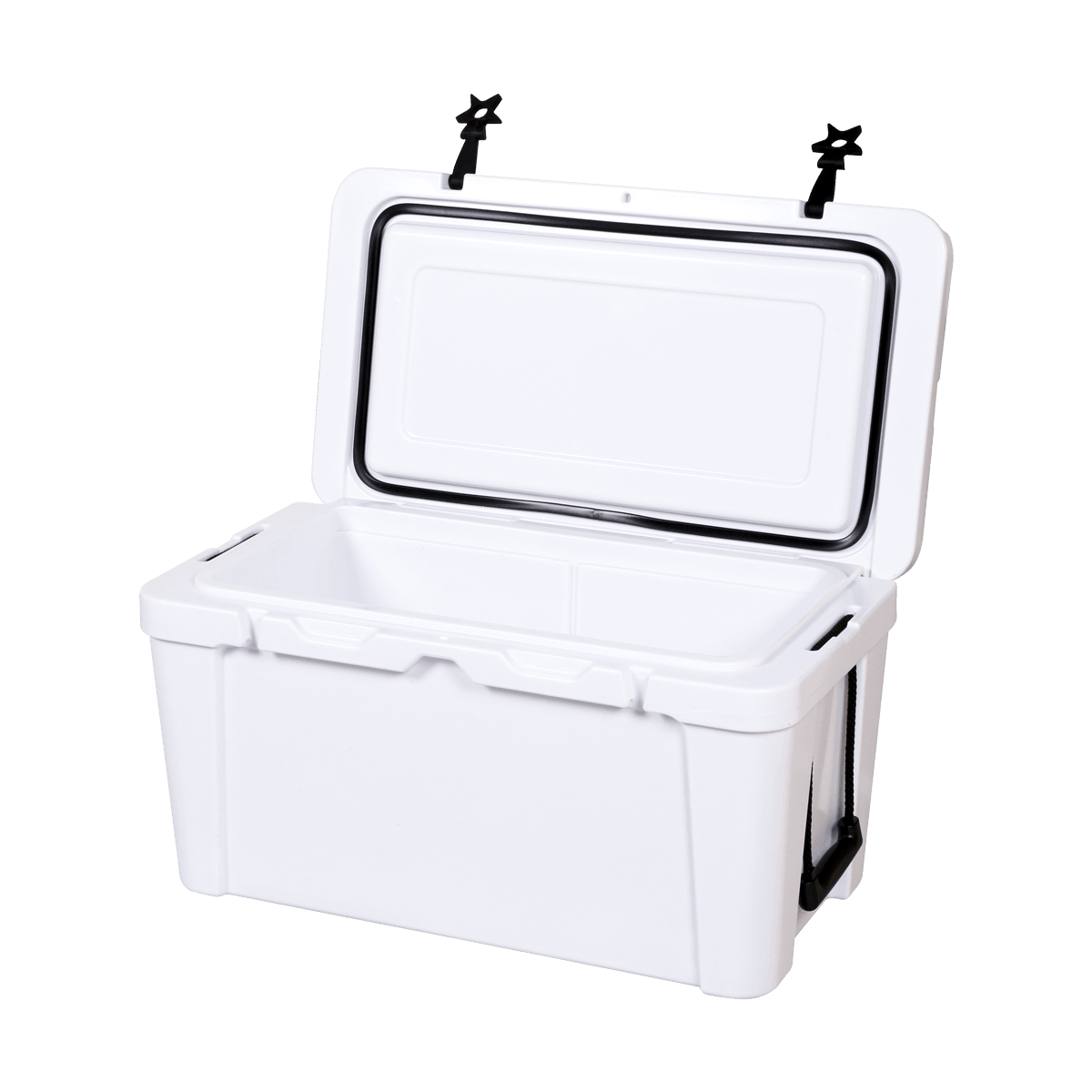
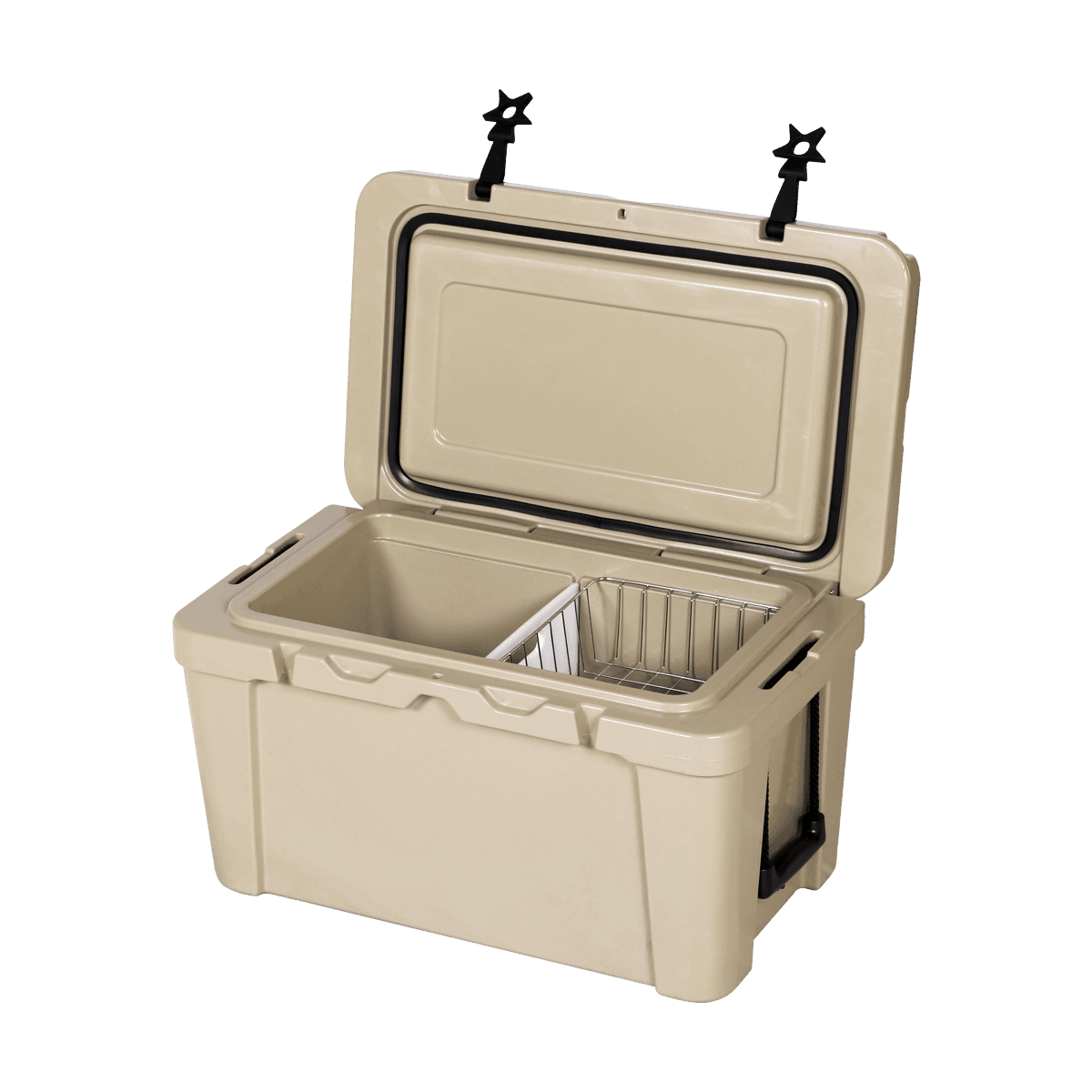
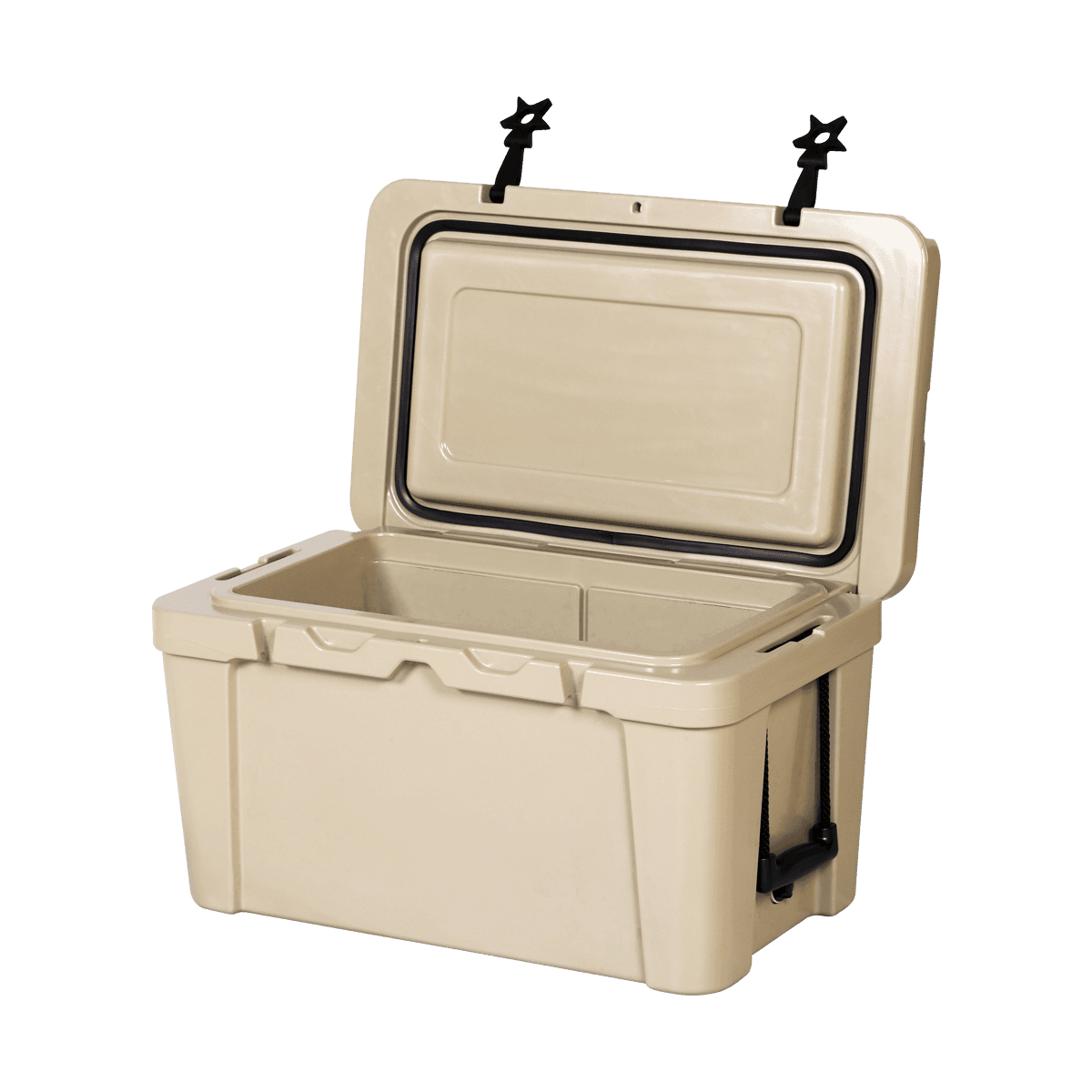
- Seamless One-Piece Construction: The greatest advantage of rotomolding is that the resulting shell is a single, seamless piece. No seams mean no pathways for air leakage and no joints prone to stress. This “totality” is the core reason high-end coolers can resist extreme external pressure.
- Uniform and Reinforced Wall Thickness: During rotation, centrifugal force naturally drives material toward the corners of the mold. This ensures that the corners of the Ice Cooler Container—the areas most prone to impact—actually have the thickest protective layers. This “structural reinforcement” is the technical foundation for why rotomolded products are certified as “Bear-proof.” In SEMrush search trends, “indestructible cooler” almost always refers to rotomolded technology.
Injection Molding: High-Precision Efficiency and Lightweight Logic
Injection molding involves forcing molten plastic into a sealed metal mold at high pressure. It is an extremely fast and efficient production method suitable for large-scale mass production.
- Exquisite Detail: Injection molding allows for extremely fine design details, such as integrated latch systems, complex hinge structures, and ergonomic handles. Under the search term “portable cooling solutions,” injection-molded products dominate due to their lower self-weight.
- Material Density and Flexibility: Although injection-molded walls are typically thinner than rotomolded ones, advanced copolymers in 2026 allow these coolers to maintain lightweight portability while offering impressive impact resistance. However, because the process involves high-pressure injection, there may be residual stresses within the plastic molecules, which can occasionally lead to minor deformation under extreme temperature fluctuations.
Performance Comparison: Ice Retention Power and Structural Longevity
When we put an Ice Cooler Container to the test in real-world extreme environments, the performance gap between the two processes narrows quickly. The core of the comparison lies in “Thermal Resistance” and “Fatigue Strength.”
Thermal Insulation and Ice Retention Capability
Ice retention time is the “gold standard” for measuring cooler performance. This depends not only on the insulation material but also on the protection provided by the shell.
- The Dominance of Rotomolding: Rotomolded shells are typically 2 to 3 inches thick, providing massive space for high-pressure polyurethane (PUR) foam injection. This “thick-wall design” creates a powerful thermal barrier that blocks over 95% of infrared radiation. Tests show that top-tier rotomolded Ice Cooler Containers can retain ice for 7–14 days, making them the only choice for long-haul sailing and wilderness expeditions.
- The Suitability of Injection Molding: Due to wall thickness constraints, injection-molded coolers have thinner insulation layers, typically offering 1–4 days of ice retention. This is more than sufficient for weekend camping, family gatherings, or medical sampling where ice packs are replaced daily. Their higher cost-effectiveness makes them more attractive in the consumer market.
Impact Resistance and Product Lifespan
In long-term industrial use, durability directly relates to Return on Investment (ROI).
- Rotomolded Containers: These require almost no maintenance. The low-pressure molding process leaves the plastic in a relaxed state, making it less likely to become brittle under UV exposure. In the SEMrush category for “heavy-duty logistics containers,” rotomolded units are highly regarded for their 15+ year lifespan.
- Injection-Molded Containers: While they may not be as rugged as rotomolded units in extreme drop tests, modern injection molding utilizes ribbing structures to greatly enhance torsional rigidity. These products are more modular, allowing handles or latches to be easily replaced if damaged, which extends their economic life.
Technical Comparison Data: Rotomolded vs. Injection Molded
To help decision-makers choose effectively, the following table summarizes the key technical parameters of both Ice Cooler Container types.
| Technical Feature | Rotomolded Cooler | Injection Molded Cooler |
|---|---|---|
| Shell Construction | 100% Seamless One-Piece | Modular / High-Pressure Formed |
| Avg. Wall Thickness | 50mm - 75mm+ (Ultra-Thick) | 15mm - 30mm (Moderate) |
| Ice Retention | 7 - 14 Days (Extreme) | 1 - 4 Days (Standard) |
| Durability Grade | Extremely Rugged (Bear-proof) | Good (Standard Commercial) |
| Self-Weight | Heavy (Needs wheels) | Lightweight (Easy to carry) |
| Production Efficiency | Slow / High Manual Input | Instant / Fully Automated |
| Primary Applications | Cross-border Cold Chain, Off-road | Urban Delivery, Weekend Camping |
| Price Point | Premium ($$$) | Economic ($ - $$) |
Strategic Selection: Which Ice Cooler Container Fits Your Needs?
Choosing the right Ice Cooler Container requires a deep evaluation based on business scenarios. It is not just buying a box; it is purchasing “temperature insurance” for your supply chain or outdoor experience.
When to Choose a Rotomolded Container
If your application meets the following characteristics, rotomolding is the only scientific choice:
- Extreme Environment Challenges: Such as scientific expeditions in deserts, tropical rainforests, or remote areas without electricity.
- High-Value Cargo Protection: Transporting biological products or expensive deep-sea ingredients that require strict temperature control.
- High-Frequency Industrial Wear: The container needs to be frequently dragged, stacked, or tossed in truck beds and docks.
- Long-term Asset Investment: You want a single purchase to last over 10 years, reducing long-term depreciation costs.
When to Choose an Injection Molded Container
Injection molding shows higher efficiency and flexibility in the following scenarios:
- Last-Mile Delivery: Urban food delivery or grocery distribution; lighter weight means higher delivery efficiency and lower fuel consumption.
- Short-term Leisure Activities: 2-3 day trips where users prioritize a container that fits easily into a trunk and can be carried by anyone.
- Large-scale Standardized Deployment: When thousands of uniform cooling units need to be deployed at once, the production capacity and cost control of injection molding are unrivaled.
Frequently Asked Questions (FAQ)
Q1: Does the color of a rotomolded cooler affect its performance?
Yes. Darker colors (like black or deep blue) absorb more UV radiation, heating up the outer shell and accelerating ice melt. For maximum ice retention, white, light grey, or tan is recommended.
Q2: Why does my Ice Cooler Container “sweat” on the outside?
This usually happens due to a massive temperature differential between the interior and exterior in a high-humidity environment. If sweating is excessive, it may indicate a void in the insulation or an aging seal. Rotomolded containers are much less prone to this due to their thick-wall design.
Q3: How does “Pre-chilling” extend ice life?
About 12 hours before use, place “sacrificial ice” or frozen gel packs inside to bring the inner wall temperature down to 0°C. This ensures that when you add your actual ice and cargo, energy isn’t wasted cooling the container walls, extending ice life by over 30%.
References and Technical Standards
- ASTM D1998: Standard Specification for Polyethylene Upright Storage Tanks (Principles of Rotational Molding).
- ISO 16396-2: Plastics — Polyamide (PA) molding and extrusion materials.
- IGBC (Interagency Grizzly Bear Committee): Testing protocols for Bear-Resistant Ice Cooler Containers.
- HACCP Guidelines: Standards for cold-chain food safety and thermal retainment in commercial logistics.
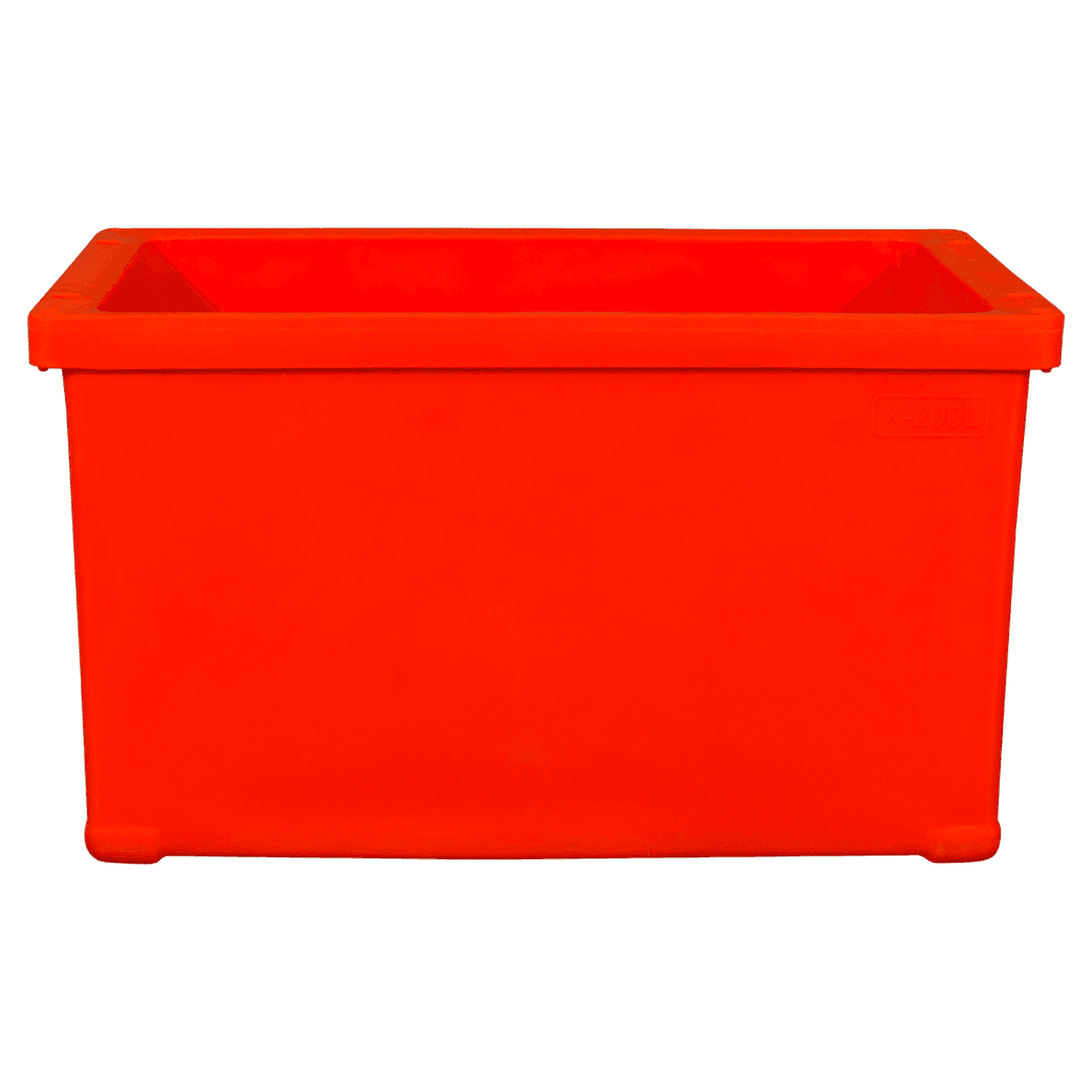
-4.png "X-120L Insulated Fish Bin Ice Cooler Box")
-4.png "X-70L Insulated Fishing Ice Cooler Box")
-2.png "X-68L Ice Cooler Box To Keep Food Cold And Fresh")
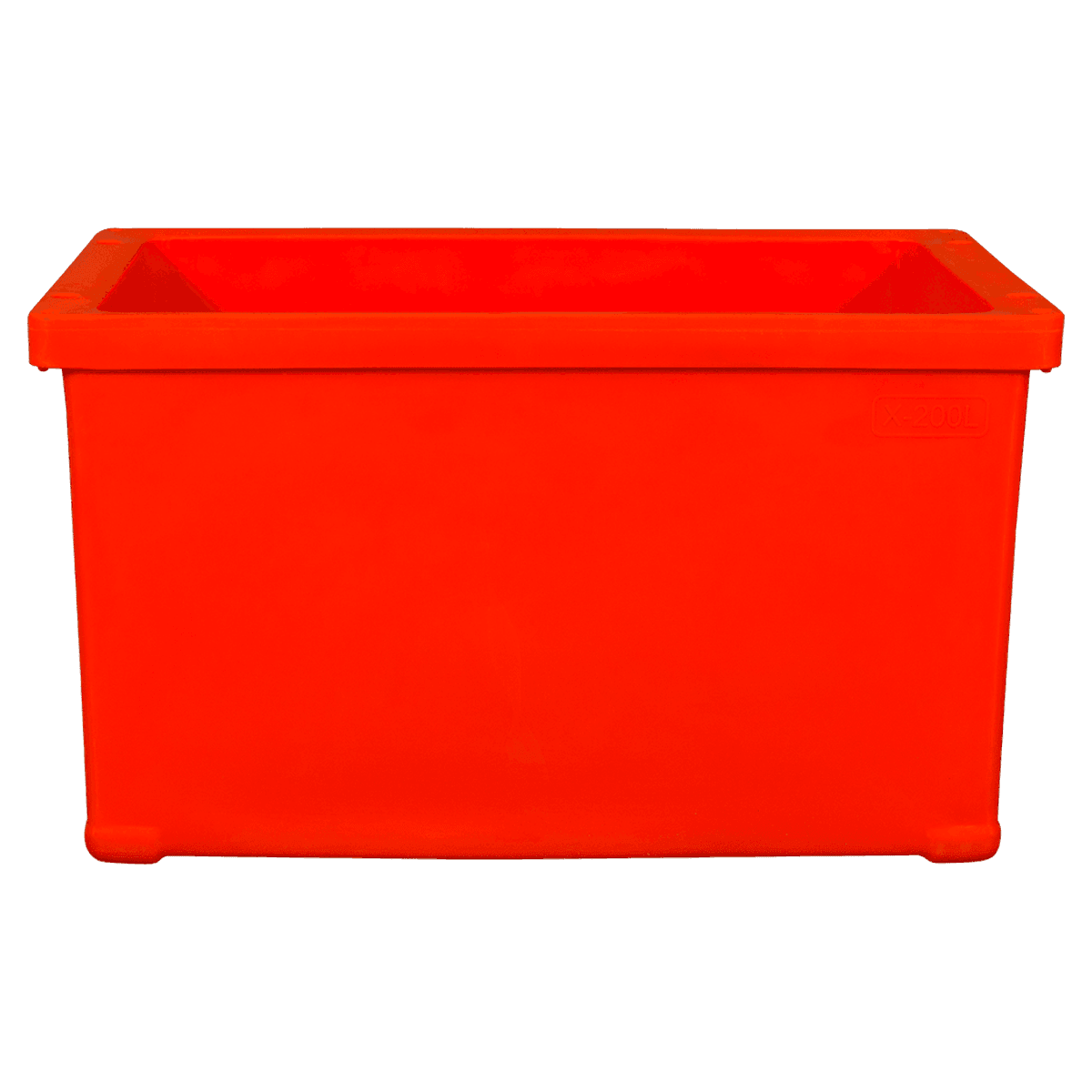
-2.png "X-120L Live Seafood Transportation Tanks")
-2.png "X-70L Live Seafood Transportation Tanks")